 Megan Thériault
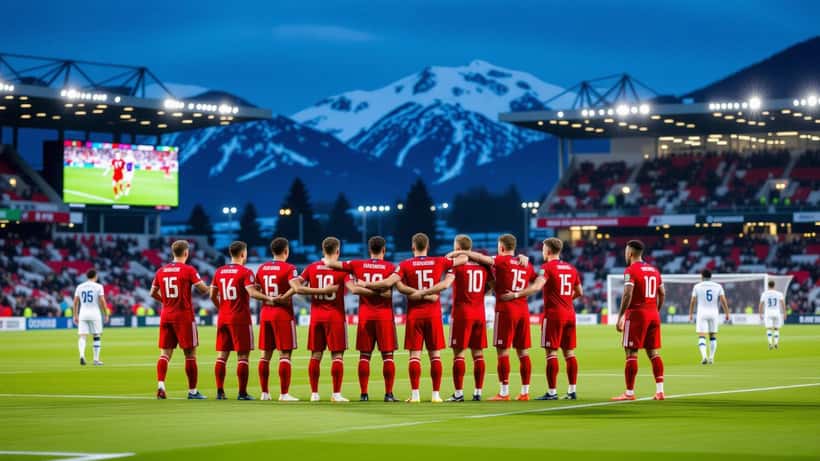
The Norway national football team enters the final stretch of the 2026 FIFA World Cup cycle as one of the most intriguing underdog stories in international soccer. After decades of near-misses and qualification heartbreak, the Lions have assembled a golden generation led by two of Europe's most influential players. With kickoff in Canada, Mexico and the United States drawing closer, Norwegian football is no longer asking whether it belongs on the global stage—it is asking how deep the run can go.
For much of the last thirty years, Norway occupied an awkward space in European football: competitive enough to trouble bigger nations, yet rarely consistent enough to reach major tournaments. The 1994 and 1998 World Cup appearances remain fondly remembered, but the long drought that followed tested the patience of supporters and administrators alike. The 2026 campaign has felt different from the start. A balanced squad, a clear tactical identity and the leadership of a world-class duo have transformed expectations both at home and among neutral observers.
Erling Haaland remains the headline name. The Manchester City striker has redefined scoring efficiency at club level, and his presence in a Norway shirt forces opponents to rethink their entire defensive shape. His movement off the shoulder of the last defender, combined with an ability to finish with either foot and his head, makes him one of the most difficult assignments in world football. Yet Norway's evolution is not simply the story of one prolific forward. Martin Ødegaard provides the creative compass from midfield, dictating tempo, finding pockets of space and supplying the service that allows Norway to convert possession into danger.
The chemistry between Haaland and Ødegaard has become the tactical cornerstone of the national team. Where earlier Norwegian sides relied on set pieces and defensive organisation, the current squad can control matches through the centre of the pitch. Ødegaard's capacity to receive between the lines and switch play quickly suits Haaland's desire to attack open channels. It also helps that both players have matured into leaders. Ødegaard captains the side with composure, while Haaland's influence in the dressing room has grown alongside his goal tally.
Manager Ståle Solbakken has built a structure that protects the team's defensive vulnerabilities without stifling its attacking intent. Norway has historically struggled against possession-dominant opponents, but recent qualifiers have shown a more patient approach. The back line stays compact, the midfield presses selectively, and transitions are directed toward Haaland as early as possible. This pragmatic balance has produced improved results against top-tier opposition and has reduced the erratic performances that once characterised Norwegian campaigns.
The draw for the 2026 tournament will ultimately shape the path, but the mood within the squad is unmistakably confident. Competing at a World Cup on North American soil presents logistical and climatic challenges that differ from European championship football. Travel, time zones and varying temperatures will test squad management and recovery protocols. Teams that adapt fastest to these conditions often gain an edge in the group stage, where marginal differences frequently decide qualification. For Norway, preparation will be as important as talent.
From a sports science perspective, the demands of a summer World Cup following a long European club season raise genuine questions about player freshness. The issue of fixture congestion and athlete workload has become a central debate across international football, with several federations investing more heavily in recovery monitoring and load management. Lessons from other qualified nations highlight the importance of protecting key players during the buildup. Any injury to Haaland or Ødegaard would reshape Norway's prospects, making medical and conditioning support a high-stakes priority.
Fan engagement has also reached new levels. Ticket demand from Norwegian supporters for the North American tournament has surged, reflecting a belief that this team can finally deliver a knockout-stage appearance. Domestic broadcasting numbers for qualifiers have climbed, and sponsors have shown renewed interest in aligning with the national team. The economic ripple effects extend beyond the federation to tourism operators, merchandise retailers and grassroots clubs hoping to capitalise on the wave of enthusiasm.
For Canadian audiences following the tournament from a host-nation perspective, Norway represents exactly the kind of compelling narrative that makes a World Cup memorable: a talented but historically unfulfilled nation chasing a breakthrough. Other qualified teams have already begun examining how squad depth and preparation routines influence performance under tournament pressure, as seen in recent coverage of Ecuador's approach to managing player fatigue ahead of the finals.
Football experts note that Norway's progress also reflects broader trends in Scandinavian player development. Investment in youth academies, data-driven recruitment and multi-sport athletic foundations has produced a generation comfortable with both technical skill and physical intensity. The national team benefits from a club system that exports players to competitive leagues early, giving them experience against elite opposition before they reach their prime.
The commercial side of the journey matters too. Brands are increasingly drawn to athletes who combine on-field excellence with global marketability. Haaland's international profile makes Norway an attractive association for companies looking to reach European and North American audiences simultaneously. Sponsorship negotiations, image rights and media appearances all require professional guidance, which is why players and federations increasingly consult specialists in sports law, finance and communications before major tournaments.
Looking ahead, the key question is whether Norway can translate individual brilliance into collective success at the World Cup. Talent alone rarely wins knockout matches; organisation, mentality and a degree of luck all play their part. The 2026 tournament offers Norway a rare opportunity to change the narrative around its national team. A strong showing would cement the legacy of this generation and inspire the next wave of young players in Oslo, Bergen, Trondheim and beyond.
As the countdown to kickoff continues, the Norway national football team stands as a case study in patience, planning and the payoff of investing in generational talent. Whether they emerge as tournament darlings or fall short once again, their presence at the 2026 World Cup already signals that Norwegian football has returned to the international conversation.
