 Chloé Dubois
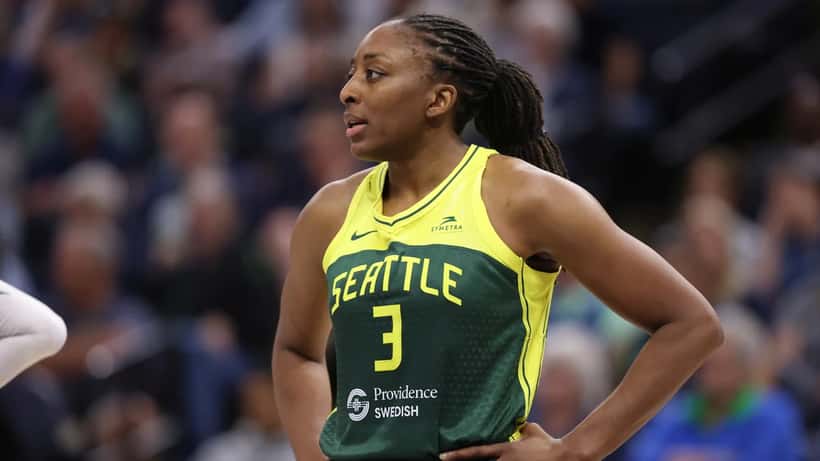
On August 19, 2026, Nneka Ogwumike announced she will retire from the WNBA at the end of this season — ending a 15-year career that produced an MVP, 11 All-Star selections, and arguably the most consequential collective bargaining agreement in professional women's sport history. The 36-year-old Los Angeles Sparks forward is averaging 16.9 points and 8.7 rebounds in her final campaign and will continue playing professionally in Project B's inaugural January schedule.
What deserves equal attention alongside her on-court numbers is the legal architecture she leaves behind. As President of the Women's National Basketball Players Association (WNBPA) since 2016, Ogwumike steered negotiations for the 2026 CBA — a deal that lifted the WNBA salary cap from $1.5 million to $7 million overnight. For Canadian athletes competing in American professional leagues, this moment is more than a retirement headline. It is a case study in what collective bargaining can achieve — and a reminder that Canadian players have a separate set of legal rights most of them never fully exercise.
Fifteen Seasons That Changed the Business of Women's Basketball
Ogwumike was selected first overall by the Los Angeles Sparks in 2012 after four seasons at Stanford. She won the 2016 MVP award, was named to 11 All-Star teams, and spent most of her career with the Sparks before joining the Seattle Storm and returning to Los Angeles for this final season.
Her statistical record is impressive. Her institutional record may be more durable. Ogwumike assumed leadership of the WNBPA at a time when the average WNBA salary sat below $80,000 — less than the league minimum for most NBA two-way contracts. She repeatedly framed the disparity not as a charity issue but as a labour rights issue, a distinction that shaped every negotiation she entered.
The 2026 CBA, signed in March of this year, reflects that approach. According to front office data published by Front Office Sports, the deal pushed average WNBA salaries above $583,000, introduced recognition payments for retired players, expanded mental health and family-planning benefits, and raised the year-one maximum salary to $1.4 million. It is, by any measure, a transformation — and it arrived through the same mechanism available to workers in nearly every industry in Canada: collective bargaining.
What the 2026 CBA Actually Established
The salary numbers draw the most attention, but the structural protections matter more to any athlete evaluating a professional contract. The 2026 CBA, as reported by CBS Sports and Front Office Sports, put in place several mechanisms that Canadian athletes crossing into American leagues should understand before signing anything.
The salary cap increase — from $1.5 million to $7 million per team — is the headline figure, but the agreement also standardized how termination works when a player is waived or injured, what the league owes a player in benefits if her contract is cut short, and how much advance notice a team must provide before releasing a player. These clauses determine what a player actually walks away with when a deal goes wrong, not just what she earns when it goes right.
The new CBA also sets retirement contribution standards, which are relevant to any Canadian player wondering what happens to her pension entitlements after the league years end. Per the agreement, the WNBA will make contributions tied to games played — a model that differs significantly from Canada's Registered Retirement Savings Plan structure, which has implications for cross-border tax planning.
None of these protections apply automatically, however. They apply only to players and teams that fall under the CBA's scope — and for Canadian athletes playing for US-based franchises, the question of which country's employment law actually governs their relationship is more complicated than most players realize.
The Legal Dimension Canadian Athletes Often Miss
Legal scholars have documented what they call the "Canada Problem" in professional sports collective bargaining. The core issue is this: most North American sports league CBAs are negotiated under American labour law, specifically the National Labor Relations Act (NLRA). Canadian provinces, however, have their own labour relations statutes. Ontario's Labour Relations Act, British Columbia's Labour Relations Code, and Quebec's Labour Code each establish rights and obligations that may not be fully captured in an American-law CBA.
When a Canadian player signs a contract with a WNBA team, she typically enters an agreement that assumes American labour law governs the relationship. But under the Canada Labour Code, workers who perform a meaningful portion of their work in Canada, or whose employment relationship has a substantial Canadian connection, may retain rights under federal or provincial standards regardless of what the contract says.
This matters in practice for several reasons. Ontario's Employment Standards Act (ESA) sets minimum standards for termination notice and severance that cannot be contracted out of — even in a CBA. If a WNBA team with Canadian exhibition games, training camp activities, or commercial obligations in Canada releases a player without the notice required under Ontario's ESA, the player may have a claim that the CBA's American-law framework does not resolve.
The growing presence of the Toronto Tempo — the WNBA's newest Canadian franchise — makes this more than a theoretical issue. Any player on that roster, Canadian or American, is working in Ontario on Canadian soil. The "Canada Problem" applies directly.
For guidance on an article from a related employment rights situation involving another WNBA player, see how waiving works under current league employment standards.
Maya's Contract: A Concrete Look at What's at Stake
Take the scenario of Maya, a 24-year-old point guard from Mississauga, Ontario, selected in the second round of the 2026 WNBA Draft. The team offers her a two-year contract at $95,000 per year — well below the new CBA average but within the rookie tier. She is told the contract is "standard league paperwork."
Scenario A — signing without legal review: Maya signs. The contract governs under American labour law and the 2026 CBA. If the team cuts her in year two due to roster restructuring, she receives the guaranteed portion of her contract: $47,500. She does not realize that because the team conducted its 2026 training camp at the OVO Athletic Centre in Toronto, her employment had a significant Ontario nexus. Under Ontario's ESA, an employee with one year of service is entitled to one week of termination notice or pay in lieu — approximately $1,827 — plus any benefits continuation rights owed under the contract. These amounts are recoverable regardless of what the American-law CBA says, but only if she pursues them through Ontario's Ministry of Labour.
Scenario B — with a Canadian sports employment lawyer (one-time consultation: $500 to $1,500): Her lawyer identifies the Ontario nexus and inserts a governing-law addendum clarifying that ESA minimums apply to Canadian activities. The lawyer also reviews the injury protection clause, which, as written, would cut salary after 14 days on the injured list — a trigger that could have cost Maya $3,650 if she missed three weeks with an ankle sprain. The addendum extends that window to 30 days in line with Ontario's job-protected leave provisions.
Total financial benefit of the consultation: between $5,500 and $12,000 over a two-year contract — versus $500 to $1,500 in legal fees. The return on a single consultation can exceed 700%.
What Athletes and Their Advisors Should Do Now
Ogwumike's retirement announcement is a useful moment to do something practical. The 2026 CBA sets a floor — the best collective bargaining outcome in women's professional sport history — but it is an American-law floor. Canadian athletes, and particularly those who will play for the Toronto Tempo or who have any Canadian commercial obligations baked into their contracts, should treat the following as non-negotiable steps before signing.
Request the full CBA, not just your contract. The standard player agreement references dozens of CBA provisions. You cannot evaluate your contract without reading both documents.
Ask about governing law explicitly. If your agent or the team cannot answer clearly which country's employment law governs disputes, that is itself a red flag. It means nobody has thought it through — and you will be the one who pays when something goes wrong.
Consult a Canadian sports employment lawyer before you sign, not after. The best time to negotiate protective addenda is before the contract is executed. Once signed, changing the governing-law framework requires the team's consent — which rarely comes after the fact.
Understand your CBA rights under the new deal. The 2026 WNBA CBA — the agreement Nneka Ogwumike spent a decade helping to build — entitles you to more than your predecessors ever had. Average salary above $583,000. Retirement contributions. Mental health support. Recognition payments when you retire. Know what you are owed before anyone tells you what you are getting.
This article is intended for general informational purposes only and does not constitute legal advice. Employment law varies by province and by the specific facts of an individual's situation. Consult a qualified Canadian employment or sports law lawyer before making decisions based on this content.
format_used: Expert reaction produced: 1 (out of max 3) early_stop_reason: hard cap reached (1/1 topic)
