 Olivia Tremblay
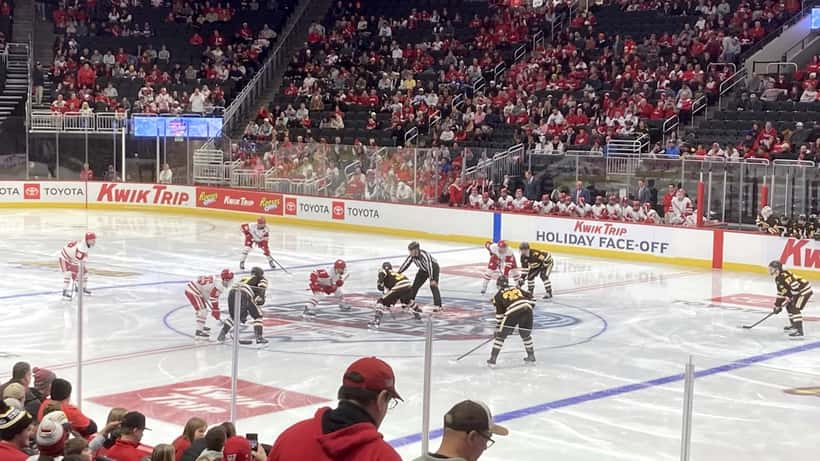
The 2026 NCAA Men's Hockey Championship came down to Wisconsin and Denver on April 11 at T-Mobile Arena in Las Vegas — a national final broadcast live on ESPN that drew tens of thousands of viewers across North America, including hundreds of thousands of Canadian hockey families watching the careers of tomorrow's NHL stars. What those families rarely discuss: the financial decisions facing these 19- to 22-year-old athletes are more complex — and more consequential — than the games themselves.
Las Vegas, the Frozen Four, and the NIL Revolution
Wisconsin edged North Dakota 2-1 in the April 9 semifinal, with defenseman Daniel Hauser posting a 21-save performance and the Badgers killing off five penalties including a critical 5-on-3 advantage. Denver defeated Michigan 4-3 in double overtime to advance. The stage was set for a championship matchup between two storied programs.
But off the ice, both programs are navigating a landscape that did not exist four years ago: Name, Image, and Likeness (NIL) compensation for college athletes.
Since the NCAA's landmark policy shift in 2021, college hockey players have been permitted to earn money from their name, image, and likeness through endorsements, social media partnerships, autograph sessions, and branded content. For elite Frozen Four players, this can mean tens of thousands of dollars per year — sometimes six figures for marquee names in high-visibility programs.
According to Opendorse, a leading NIL platform, the average annual NIL compensation for a Division I men's hockey player in a top-10 program reached approximately $18,000 in the 2025-26 academic year, up from $11,200 in 2022-23. For the top 10 players in a given season, that figure climbs above $75,000.
The Financial Literacy Problem No One Talks About
The challenge is that most 20-year-old college athletes have had no financial education. They are not yet professional athletes with agent representation, they are students — often on partial scholarships — who are suddenly managing real income, tax obligations, and business relationships.
Common financial mistakes among first-year NIL earners, according to the Financial Industry Regulatory Authority (FINRA)'s 2024 athlete financial literacy report, include:
- Failing to register as self-employed with the relevant state or provincial tax authority within 30 days of first NIL payment
- Treating NIL income as scholarship money — exempt from tax — when it is in fact taxable self-employment income
- Signing multi-year NIL agreements without legal review, which can restrict future endorsement opportunities after turning professional
- Ignoring the impact of NIL income on athletic eligibility in states or provinces that have not fully aligned with NCAA guidelines
For Canadian players competing in U.S. college programs — and there are 327 Canadians on NCAA Division I hockey rosters this season, according to USA Hockey — the complexity doubles. NIL income earned in the United States must be reported both to the IRS and, in most cases, to the Canada Revenue Agency under self-employment income rules and bilateral tax treaty obligations.
What Canadian Families Need to Know
If your child is a high-school hockey prospect being recruited by U.S. colleges, the financial conversation needs to start long before they sign a National Letter of Intent.
Three categories of professional advice are typically required:
1. A cross-border tax specialist. NIL income earned by a Canadian citizen studying and competing in the U.S. may be subject to withholding tax on U.S. payments and reporting obligations under CRA's Foreign Income Verification (T1135) rules if total foreign assets exceed $100,000. This threshold is reached faster than most families expect.
2. A sports lawyer familiar with NIL agreements. Not all NIL deals are equal. Some contain exclusivity clauses that prevent an athlete from signing with a competing brand in the same product category for up to three years — a window that overlaps directly with potential NHL entry-level contract years. A poorly reviewed NIL agreement signed at age 20 can complicate professional negotiations at age 22.
3. A certified financial planner for early-career athletes. The core message: NIL money is real income, taxable and finite. A young athlete who deposits $50,000 in NIL earnings into a TFSA-equivalent structure versus spending it on lifestyle has a meaningfully different financial position by the time their first NHL contract arrives.
The Broader Picture for Canadian Student-Athletes
The Wisconsin vs. Denver final on April 11 was more than a hockey game. It was a visible moment in an ecosystem that now includes real commercial value for players who, five years ago, could not have legally accepted a free meal from an agent.
Canada has not yet created a parallel NIL framework for university athletics (U SPORTS). Canadian student-athletes competing domestically cannot currently earn NIL income — a policy gap that Canada's sports law community has flagged as increasingly problematic as top Canadian talent continues to migrate to U.S. schools to access NIL opportunities.
The question for Canadian hockey families is no longer just "which program offers the best path to the NHL?" It is also "which program offers the financial literacy infrastructure to help our child manage what they earn along the way?"
A financial advisor with experience in athlete NIL planning and cross-border taxation can help families navigate these decisions before scholarship papers are signed. Expert Zoom connects Canadian families with wealth managers and legal specialists who understand the full picture.
Disclaimer: This article is for educational purposes and does not constitute tax, legal, or financial advice. Consult a licensed professional for advice specific to your situation.
