 Olivia Dubois
Tens of thousands of Canadian fans attended Muse's two summer 2026 shows at Toronto's RBC Amphitheatre (July 15) and Quebec City's Festival d'été de Québec (July 17), celebrating the release of the band's tenth studio album The Wow! Signal. Now, two months on, audiologists across the country are fielding a familiar wave of questions: why does the music still haven't stopped — specifically, that persistent high-pitched ringing that no one warned you about when you bought your ticket?
The News: The Wow! Signal Tour Delivered a Wall of Sound
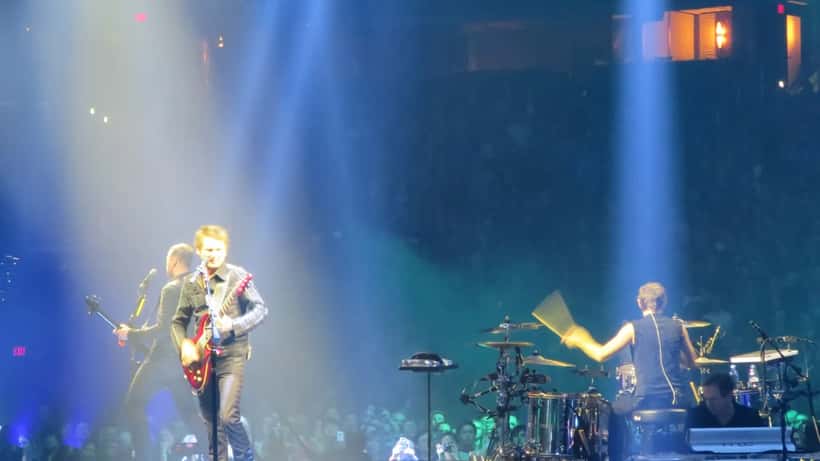
Muse released The Wow! Signal on June 26, 2026 — their most ambitious record to date, built around themes of cosmic mystery, existential wonder, and the exhilarating possibility of contact with something beyond our world. Onstage, that ambition translated into a spectacle of extraordinary volume. Concert-goers and venue staff at Toronto's RBC Amphitheatre reported sound levels regularly hitting and exceeding 110 decibels during the July 15 set, with peak moments approaching 120 dB near the front mixing position. The Quebec City show drew nearly identical reports.
Muse has long been one of the loudest live bands on the planet — a reputation that dates to the band's 2006 Wembley stadium shows, where onstage monitors reportedly pushed beyond 130 dB. The Wow! Signal tour continued that tradition. For the majority of fans, the spectacle was the point. For audiologists, it represents a predictable and preventable public health moment.
Health Canada and the Canadian Centre for Occupational Health and Safety (CCOHS) identify 85 dB as the upper threshold for safe, prolonged noise exposure over an eight-hour period. At 110 dB — the average level measured at the Toronto venue — the CCOHS noise exposure guidelines indicate that safe, unprotected exposure drops to approximately 1 minute and 53 seconds before cumulative hearing damage risk begins. Muse played for roughly 100 minutes.
Expert Reaction: What Audiologists Are Seeing Post-Tour
Toronto audiology clinics reported a measurable uptick in booking requests in the weeks following the July concerts — a pattern audiologists describe as consistent with any major loud rock event. The presenting complaint is almost always the same: patients arrive describing what they're calling "temporary" tinnitus — the ringing, buzzing, or hissing in one or both ears that started within a few hours of the show. What they don't realize is that the word "temporary" can become dangerously misleading if they assume it will simply go away on its own.
Noise-induced hearing loss (NIHL) is the second most common form of hearing loss among Canadians after age-related decline, and it is entirely preventable before the fact and almost entirely permanent after it occurs. The inner ear's cochlear hair cells — which translate sound vibrations into electrical signals sent to the brain — do not regenerate. A single high-volume exposure event lasting more than a few minutes can destroy thousands of these cells. That damage accumulates silently; the hearing decline may not become functionally noticeable for years, but the audiogram signature appears immediately after the damaging event.
What makes post-concert NIHL particularly underdiagnosed is timing: the acute, treatable window following acoustic trauma is extraordinarily brief. Within 72 hours of a high-volume exposure event, the medical literature supports a short course of systemic or intratympanic corticosteroids as a potentially effective intervention for sudden sensorineural hearing loss and acoustic trauma. After that window closes — typically around Day 7 for oral treatment and Day 14 for intratympanic injection — the therapeutic options narrow sharply. For most patients, what remains is monitoring, hearing aid assessment, and tinnitus management rather than any prospect of recovery.
According to the CCOHS, noise-induced hearing damage is one of the most prevalent yet preventable occupational and environmental health conditions in Canada. The condition disproportionately affects younger adults — the core demographic of a live rock concert — because recreational noise exposure through concerts and personal audio devices accumulates over decades before manifesting as functionally noticeable hearing loss.
When Timing Is Everything: A Concrete Case
Consider a 34-year-old Muse fan from Mississauga who attended the Toronto show on July 15, standing in the general admission section approximately 18 metres from the main speaker stack, without hearing protection. At that distance from a PA system delivering 110 dB average SPL, he would have been exposed to approximately 107–108 dB sustained over the 100-minute set — a figure that represents roughly 850% of the CCOHS maximum recommended daily noise dose for unprotected workers in a single evening.
On the morning of July 16, he noticed sharp tinnitus — a high-pitched tone in his left ear — and a mild sense of muffled hearing, as though he were listening through cotton wool. He assumed it would clear within a day or two, as it had after previous concerts.
By July 20 — Day 5 — the tinnitus had softened but had not resolved. He still chose to wait.
By September 8 — the date of this article — the tinnitus was faint but present during quiet moments, particularly when trying to sleep. The muffling sensation was largely gone, but a quiet frequency hiss remained.
If he had consulted an audiologist by July 18 (within 72 hours), he would have been a candidate for intratympanic corticosteroid treatment and may have recovered full auditory function in the affected frequency range. If he books an appointment now, an audiogram will likely reveal a characteristic "noise notch" — a dip in hearing sensitivity between 3,000 and 6,000 Hz that is the clinical signature of permanent NIHL. That notch is not recoverable, though documenting it now is still valuable: it establishes a baseline for future monitoring and is essential if any future workplace noise exposure or insurance claim arises.
The cost of a private audiological consultation in Ontario ranges from $150 to $300. The cost of a custom-moulded musician earplug set — which would have prevented the entire scenario — is $150 to $400.
Recognizing the Warning Signs
Audiologists identify four symptoms that warrant immediate professional assessment after any loud concert, not just a Muse show:
Tinnitus persisting beyond 24 hours. Temporary post-concert ringing that clears by the following morning is common and generally not alarming. Tinnitus still present at 24 hours, especially if constant rather than intermittent, warrants same-week audiology referral.
Muffled hearing or ear fullness. This sensation — acoustic stuffiness — indicates the inner ear is still processing overstimulation. If it does not resolve fully within 24 to 48 hours, an assessment is warranted.
Hyperacusis — sudden sensitivity to sounds that did not previously bother you. This specific form of auditory overreaction can follow intense noise exposure and, if left untreated, can develop into a chronic condition significantly affecting quality of life.
Tinnitus combined with dizziness or balance disturbance. This combination may indicate cochlear involvement beyond typical NIHL and should be treated as a medical urgency rather than a wait-and-see situation.
A practical note for concert-goers who may have attended other loud summer shows this season: the summer 2026 concert calendar was exceptionally busy across Canada, with major stadium tours filling every major venue from Vancouver to Montreal. If your ears are still talking to you in September, that is not normal — and it is not simply because "you're getting older."
Practical Implications: Protection for the Next Show
Muse will continue touring in North America through the remainder of 2026, and Muse's reputation means their shows are not going to get quieter. For fans planning to attend future dates — or any high-volume live event — the single most effective intervention is also the least complicated: hearing protection.
Custom-moulded musician earplugs, fitted by an audiologist or hearing instrument specialist, reduce sound levels by 15 to 25 dB without distorting the frequency balance of the music. At 110 dB average, that brings the listening experience to a safe 85–95 dB range, preserving both the concert experience and long-term auditory health. Foam earplugs from a pharmacy reduce volume by 28–33 dB and are far less expensive — approximately $2–$5 — but many concert-goers find they muffle music to an uncomfortable degree. Even foam protection, however, is considerably preferable to nothing.
Canada's national guidelines on noise-induced hearing loss and safe exposure thresholds are published by the Canadian Centre for Occupational Health and Safety, whose online noise dose calculator allows anyone to estimate their personal exposure risk based on sound level and duration.
If you attended Muse's Canadian summer shows and are still experiencing tinnitus, muffling, or heightened ear sensitivity, the first step is a consultation with a registered audiologist — not a walk-in clinic or a family doctor, who typically lack the diagnostic equipment for audiological assessment. The summer concert season has been particularly active this year; for more on what Canadian venues and fans should know about the live music landscape in 2026, see our coverage of Pink's stadium tour economics and the Canadian concert industry.
Audiologists registered with the Canadian Academy of Audiology can be found through the Expert Zoom health directory, where direct consultation booking is available without a physician referral.
This article is for informational purposes only and does not constitute medical advice. For symptoms affecting your hearing or balance, consult a qualified audiologist or physician.
