 Willow Bergeron
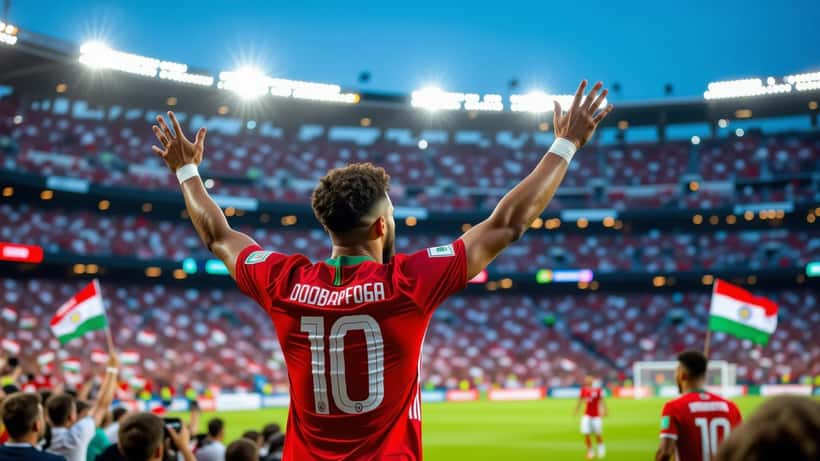
Iran winger Mohammad Mohebi scored a 64th-minute equaliser against New Zealand at the 2026 World Cup in Los Angeles, rescuing a 2-2 draw for Team Melli — but it was his celebration, not the goal, that dominated the headlines. The 25-year-old's gesture, which many viewers read as miming a "gun," landed him in the one arena every player fears more than a penalty shootout: a possible FIFA disciplinary review. Mohebi insists it was "just a celebration" meant to thank the Iranian community in Los Angeles. Whether FIFA agrees is now a legal question, not a footballing one.
What Happened in Los Angeles
Mohebi, a right winger who plays his club football for Sepahan, came off the bench and struck in the 64th minute to level the match at 2-2. After scoring, he pointed two fingers toward his arm, then extended two fingers on his right hand and moved them through the air. To some it looked like a tribute; to others, a firearm mime. Mohebi later said he simply wanted to say "thank you" to the Iranians who live in Los Angeles, where a large diaspora turned out to watch the game.
The ambiguity is precisely the problem. Under FIFA's rules, what a gesture means to the player matters far less than how it can reasonably be interpreted on a global broadcast.
Why a Goal Celebration Becomes a Legal Matter
Football's governing body polices on-field conduct through the FIFA Disciplinary Code, a binding rulebook that applies to every player at the tournament. The Code gives FIFA's Disciplinary Committee authority to sanction "provocative, derisory or inflammatory" gestures, as well as conduct that brings the game into disrepute or carries a political or offensive message.
Crucially, intent is not a complete defence. A player can be sanctioned for a gesture that a reasonable observer would find provocative or political, even if the player says it meant something innocent. That is why the Committee weighs context — the venue, the audience, the broadcast reach and the surrounding circumstances — rather than simply accepting the player's stated motive.
Sanctions available to FIFA range from a warning or fine to a match suspension. At a World Cup, even a one-game ban is enormous: it can rule a player out of a decisive group-stage fixture or a knockout tie. For Iran, already fighting for qualification from the group, losing Mohebi to a suspension would be a sporting blow far heavier than any fine.
The Expert Take: How a Sports Lawyer Reads This Case
A sports lawyer assessing Mohebi's situation would start with the evidence FIFA actually reviews: the television footage, the angle of the gesture, and any official match-day reports from the referee or match commissioner. The disciplinary process is documentary and fast, and a player rarely gets to argue his case in person before an initial decision.
The defence almost always turns on framing. Was the gesture directed at opponents or officials — which aggravates — or at the player's own supporters, which mitigates? Was there any political symbol, slogan or message attached to it? A gesture aimed at thanking fans, with no political content, sits in very different territory from one aimed provocatively at the other bench.
The lawyer would also prepare for the appeal track. A first-instance decision by the Disciplinary Committee can usually be appealed to the FIFA Appeal Committee, and ultimately to the Court of Arbitration for Sport. Each step has strict deadlines measured in days, so the legal work often happens faster than the football. Players who miss a filing window lose the right to challenge a ban, regardless of how strong their case is.
What This Means for Athletes Everywhere
Mohebi's moment is a high-profile version of a problem that reaches far below the World Cup. Any athlete with a public platform — and any professional whose conduct is governed by a federation, league or employer code — can find a spontaneous act reframed as a disciplinary offence. The principle is the same in a Sunday-league sanction as in a global tournament: the rules judge perception and context, not just intention.
That is why athletes increasingly retain legal advisers before a controversy, not after. A short briefing on what a governing body's code prohibits, how its evidence process works, and what the appeal deadlines are can be the difference between a quick fine and a missed match. The cost of that advice is trivial next to the value of staying on the pitch.
What To Do If You Face a Conduct Charge
For any athlete or professional facing a disciplinary allegation, the steps mirror Mohebi's situation. First, preserve the evidence — footage, photos and any official report — exactly as it stood. Second, read the applicable code and identify the precise provision you are accused of breaching; a charge is only as strong as the rule it cites. Third, note every deadline immediately, because appeal windows are short and unforgiving. Fourth, get specialist advice early rather than waiting for the ruling.
Anyone wanting to understand the rules that govern player conduct can consult FIFA's own published regulations through its official legal and regulatory portal, which sets out the Disciplinary Code and the bodies that enforce it.
The Bottom Line
Mohebi may yet escape with nothing more than a note in the match report — many celebrations are reviewed and cleared. But the episode is a reminder that at the modern World Cup, the final whistle is not the end of the scrutiny. A two-second gesture can trigger a legal process with real sporting consequences, decided not on what the player felt but on what the world saw. For athletes, the lesson is simple: know the code before you celebrate, and know who to call if the celebration is questioned.
This article is general information, not legal advice. Disciplinary outcomes depend on the specific rules and facts involved; consult a qualified sports lawyer about any individual case.
