 Clara Thompson
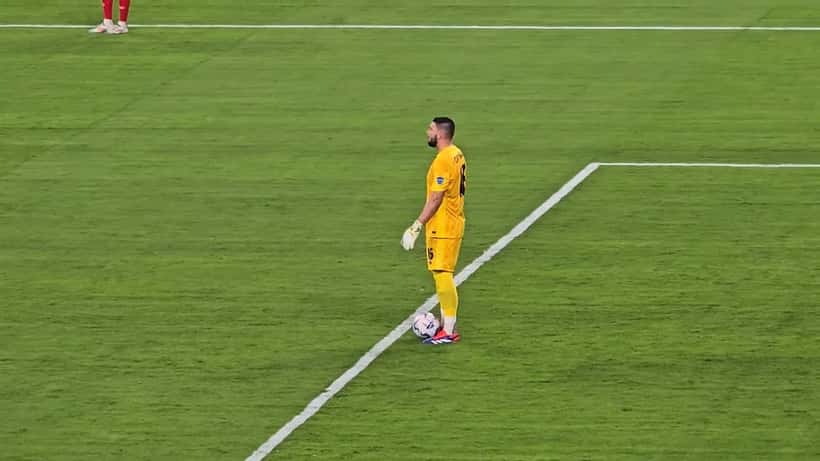
On July 4, 2026, goalkeeper Maxime Crépeau and defender Richie Laryea played their final minutes of Canada's landmark World Cup campaign — a 3-0 loss to Morocco in the Round of 16 in Houston. It was the farthest a Canadian men's team has ever advanced at a FIFA World Cup. Just 25 days later, both athletes are scheduled to take the field again in Charlotte as selected members of the 2026 MLS All-Star squad. The recognition is well-earned — but the compressed timeline raises questions that sports medicine experts have been tracking closely all summer.
From the World Cup to the All-Star Game: A Packed Summer for Canadian Soccer
The 2026 MLS regular season paused on May 25 to accommodate the FIFA World Cup, with the league originally planning a return on July 16. For players who participated in the tournament, that pause was anything but a rest period. Crépeau and Laryea logged competitive matches at the highest level of international football from late June through early July, culminating in Canada's historic but ultimately unsuccessful Round of 16 run.
The 2026 World Cup, hosted across Canada, the United States, and Mexico, introduced new stresses for players. The expanded 48-team format stretched the tournament window to nearly six weeks. Venues spread across three countries created travel loads, time-zone disruptions, and exposure to widely varying climates — from the intense summer heat of Houston to cooler northern sites. According to sports medicine researchers, the physical cost of this type of multi-city tournament extends well beyond match minutes alone.
By the time Crépeau and Laryea return to Charlotte for the July 29 All-Star Game, they will have had 25 days since their last competitive match. Whether that is enough — and what risks come with it — depends almost entirely on how those 25 days were structured.
What Sports Medicine Experts Are Tracking This Summer
The science of post-tournament recovery has evolved significantly in recent years, with growing research focused specifically on the physiological demands of major international tournaments like the FIFA World Cup.
The Aspetar Sports Medicine Journal — published by the FIFA-affiliated hospital treating elite football players — identifies post-World Cup recovery as one of the most critical phases in an athlete's calendar. Tournament fatigue is multifactorial. It encompasses neuromuscular damage from repeated sprints and decelerations, immune suppression from prolonged physical stress, and cortisol elevation that can persist three to five weeks post-competition. Psychological fatigue from the intensity of elimination football compounds all of it.
One finding repeated across sports medicine research is particularly relevant: time-based clearance alone poorly predicts re-injury risk. In other words, the number of days since a player's last match is not, by itself, a reliable indicator that the body has fully recovered. The quality of recovery — structured rest phases, progressive physiotherapy, load monitoring, and neuromuscular testing — matters far more than the calendar.
For World Cup players, arriving in Charlotte at full capacity versus arriving with residual fatigue debt comes down to one thing: the protocol followed in the days immediately after elimination.
What Happens When a 30-Year-Old Defender Returns Too Soon: A Concrete Scenario
Consider a composite profile similar to Richie Laryea's: a 30-year-old professional defender who played all four Canadian World Cup matches between June 22 and July 4, averaging 85 minutes per game. That represents approximately 340 minutes of elite competitive play in 12 days, with training sessions, travel, and pre-match protocols stacked on top.
Standard post-tournament recovery guidelines for elite athletes prescribe a tiered timeline:
- Days 1–5 (July 5–9): Passive recovery only — contrast therapy, sleep extension (9+ hours), low-intensity movement. No technical or tactical work.
- Days 6–12 (July 10–16): Active recovery — pool sessions, light physiotherapy targeting hamstring and hip flexor reloading, nutritional replenishment focused on anti-inflammatory protocols.
- Days 13–20 (July 17–24): Progressive reloading — structured field sessions at 60–70% training intensity, GPS-monitored to cap high-speed running volume.
- Days 21–25 (July 25–29): Return to match-intensity training — full sessions with tactical work, one or two short-sided games.
If the athlete skips the passive recovery phase and resumes club training on Day 4, research suggests an estimated 20–35% increase in soft-tissue injury risk. That elevated window spans four to six weeks — exactly when MLS playoff positions are decided. This window coincides directly with the MLS regular-season stretch run and playoff qualification period.
In practical terms: a defender who cuts corners on post-World Cup recovery for the sake of an All-Star showcase event may spend September — when playoff positions are decided — on the injured list.
How MLS Clubs Are Managing the Risk in 2026
Elite MLS franchises have significantly upgraded their sports performance infrastructure in recent years, and the post-World Cup period is precisely the scenario those investments are designed for.
GPS vest tracking during training sessions allows performance staff to monitor cumulative load and flag when an athlete's high-speed running volume is elevated beyond their recovery baseline. Blood testing for creatine kinase — an enzyme that spikes when muscle damage is present — gives club physicians an objective marker of physical readiness that goes beyond what players report subjectively. Heart rate variability (HRV) monitoring, increasingly standard at MLS clubs, provides daily data on the autonomic nervous system's recovery state.
For returning World Cup players, clubs typically implement individualized match-minute caps during the first two weeks of re-integration, regardless of training performance. The fact that Messi and Rodrigo De Paul were reportedly excused from the roster — citing recovery needs — shows how seriously the league now treats this issue at the highest level.
The confirmation that Crépeau and Laryea will participate signals that their respective club medical teams have assessed them as ready. But readiness for a low-stakes showcase event and readiness for six weeks of competitive playoff football are different clinical benchmarks.
What This Means Beyond Professional Sport
Crépeau and Laryea are elite athletes supported by full-time performance staffs. But the same physiological principles apply at every level of competitive sport in Canada — and that is where the relevance of this conversation extends well beyond professional soccer.
Coaches running competitive youth programs, parents of academy players, recreational athletes returning from provincial tournaments, and adult weekend warriors all face the same pattern: a compelling reason to return quickly after a demanding competition.
The critical question, according to sports medicine practitioners, is not "can the athlete play?" but "at what injury risk, and what is the cost to their next four to six weeks of performance?"
A sports medicine consultation — available through specialists on platforms like ExpertZoom — typically involves assessment of baseline fatigue markers, a personalized return-to-sport protocol, and injury risk stratification for planned competitions. For a recreational player returning from a tournament weekend who wants to be healthy for fall league, that consultation can prevent a hamstring strain from becoming a three-month setback.
The MLS All-Star Game on July 29 is a celebration of what Canadian soccer has achieved this summer. For Crépeau and Laryea, it represents another chapter in a historic year. Understanding the science behind the recovery that makes performances like theirs possible is a conversation worth having at every level of sport — not just the professional one.
This article is for informational purposes only and does not constitute medical advice. Consult a qualified sports medicine professional for personalized guidance.
