 Eleanor Dubois
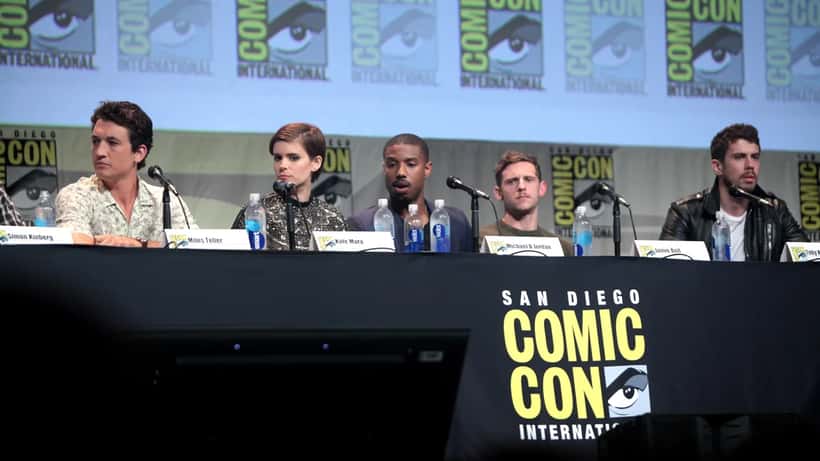
When Michael — the authorized biopic of Michael Jackson directed by Antoine Fuqua — grossed $710 million worldwide after its April 24, 2026 release, most attention focused on Jaafar Jackson's portrayal of his uncle. But it was Miles Teller's role as John Branca, Michael Jackson's legendary entertainment lawyer, that quietly told the more important story: the person sitting across the table from the artist can define the arc of an entire career.
Teller, who also appeared at the 79th Festival de Cannes on May 16, 2026 for the premiere of Paper Tiger, plays a character whose real-life counterpart helped Jackson navigate some of the most complex entertainment negotiations in music history — from ATV Music Publishing acquisitions to posthumous estate management. For Canadian musicians, visual artists, and content creators, Branca's story is not just Hollywood drama. It is a case study in why legal representation is not optional.
What an Entertainment Lawyer Actually Does
Entertainment law is a subspecialty of contract and intellectual property law that covers the business arrangements underlying creative careers. In Canada, the field touches copyright, licensing, personality rights, defamation, labour law, and tax — all simultaneously, and often in the context of deals that move quickly and leave little room for revision after signing.
A skilled entertainment lawyer does several things that a manager or agent cannot:
Drafts and negotiates contracts. Record deals, publishing agreements, sync licensing, brand partnerships, and performance contracts all carry terms that lock artists into obligations for years. An entertainment lawyer reviews each clause — not just the headline royalty rate — and negotiates for terms that protect the artist's long-term interests.
Manages intellectual property. In Canada, copyright in a musical composition and copyright in a sound recording are two separate rights. The Copyright Act grants authors certain moral rights — including the right to be associated with a work and to protect the work's integrity — that cannot be waived by contract, only by explicit written agreement. Understanding this distinction is critical when negotiating with labels, streaming platforms, and sync licensors.
Advises on personality rights. Canada's approach to personality rights — the right to control commercial use of your name, image, voice, and likeness — varies by province. Ontario, British Columbia, and Manitoba have statutory protections; in other provinces, personality rights are largely governed by common law and trade-mark principles. When a brand wants to use your image in an advertisement, or when a biopic wants to depict your life story, an entertainment lawyer interprets what you can protect and what you cannot.
The Michael biopic was possible in part because John Branca, as executor of the Jackson estate, controlled the estate's cooperation rights. An unauthorized biopic of a living Canadian artist would face a very different legal landscape — one explored in detail in this analysis of personality rights in Canadian biopic disputes.
The Biopic Scenario: When Your Life Story Has Commercial Value
For established Canadian artists — or any public figure — the prospect of a biopic or unauthorized documentary raises immediate legal questions. Under Canadian law, the right to control your own life story is not absolute. A filmmaker can legally create a docudrama or fictional account inspired by a public figure's life, provided certain conditions are met.
However, the line between permissible biographical commentary and tortious misappropriation of personality is genuinely blurry, and courts interpret it differently depending on:
- Whether the depiction is commercial in nature (more protected if journalistic or commentary)
- Whether false statements of fact are presented as true (defamation exposure)
- Whether the subject's image or likeness is used to imply endorsement of a product or service
- Whether the project is authorized by the subject or their estate
This is exactly where an entertainment lawyer earns their fee. The negotiation between a filmmaker and a subject (or their estate) determines whether the project is authorized, what compensation is paid, what final cut approval exists, and what indemnifications apply if the film generates legal claims.
Publishing Rights: The Area Artists Most Often Underprotect
John Branca's most famous achievement for Michael Jackson was arguably his role in advising the purchase of the ATV Music Publishing catalogue — the rights to thousands of song compositions, including early Beatles songs. Jackson paid $47 million for those rights in 1985. The catalogue was eventually merged into Sony/ATV and sold decades later for a fraction of the combined Sony/ATV portfolio's value, but the underlying principle remains: publishing rights are often worth more than artist royalties.
In Canada, many emerging musicians sign publishing deals without fully understanding what they are surrendering. A publishing agreement typically transfers the copyright in compositions to the publisher in exchange for royalties and administrative services. An entertainment lawyer can structure co-publishing arrangements, reversion clauses (which return rights after a defined period if earnings targets are not met), and synchronization fee approval rights that preserve the artist's long-term control.
Under Canada's Copyright Act, a "reversion right" applies to certain assignments: after 25 years, the original author may reclaim rights in a work if the assignee is no longer actively exploiting it. This statutory protection exists specifically because Parliament recognized the imbalance of power in early-career negotiations.
When to Hire an Entertainment Lawyer in Canada
Many Canadian artists wait until a crisis — a stolen song, an unauthorized use of their image, a bad contract dispute — before engaging legal counsel. By that point, options are significantly constrained.
The right time to retain an entertainment lawyer is before you sign anything. Even if your first deal is small, the habits and structures you establish early shape every negotiation that follows. Specific moments that warrant immediate legal consultation include:
- Any recording contract, even a one-single independent deal
- Licensing your music for film, television, advertising, or streaming
- Establishing a corporation or other legal structure for your creative work
- Responding to a cease-and-desist or copyright claim
- Negotiating a brand endorsement, sponsorship, or merchandise agreement
- Planning your estate if your work has commercial value
The Copyright Board of Canada provides information on copyright licensing and tariff structures at its official website — cb-cda.gc.ca — which is a useful resource for understanding the regulatory framework governing music rights in Canada.
The Character Behind the Character
Miles Teller's portrayal of John Branca brought a particular kind of professional to the cinema screen: the advisor who understands both the creative and the commercial, who protects the artist's interests with the same intensity the artist brings to the performance. For Canadian creators at any stage of their career, that archetype is not a movie character. It is a professional relationship worth investing in.
ExpertZoom connects Canadian musicians, artists, authors, and creative professionals directly with entertainment lawyers who specialize in Canadian intellectual property, licensing, and contract law — so that the next deal you sign is one you can live with for the long term.
This article is for informational purposes only and does not constitute legal advice. Consult a qualified entertainment lawyer for guidance specific to your creative and business situation.
