 Genevieve Martel
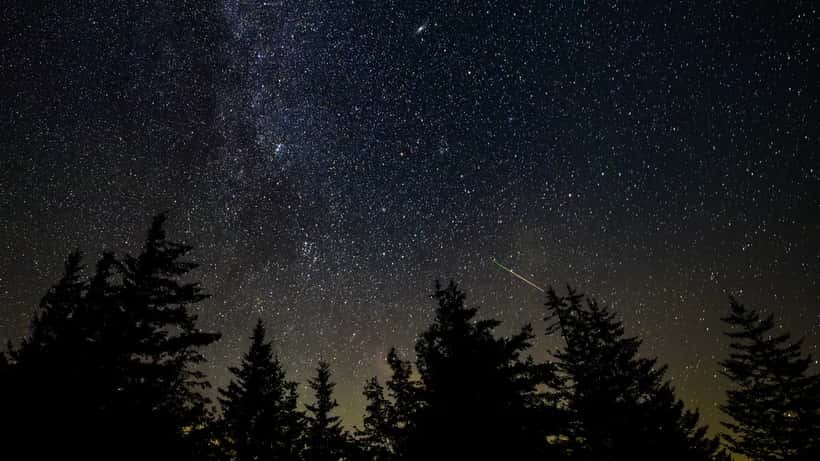
Canada's June Bootids meteor shower is peaking this week, with the best displays expected on the nights of June 27–28, 2026. Visible from coast to coast after midnight when the sky darkens, this annual shower — caused by Earth crossing the debris trail of Comet 7P/Pons-Winnecke — is already drawing attention from families looking for a free, hands-on summer activity. For students who just finished the school year, it is also one of the most underrated science classrooms in the country.
Private tutors and science educators have long known that real-world phenomena spark genuine curiosity in children who tune out textbooks. A meteor shower checks every box: it is free, visible without equipment, and tied directly to concepts tested in every Canadian provincial science curriculum from Grade 4 through Grade 12.
Here are five lessons the 2026 June Bootids meteor shower can teach Canadian students — and how to turn a night of stargazing into a head start for September.
1. What Causes a Meteor Shower? (Orbital Mechanics)
A meteor shower occurs when Earth passes through the debris trail left by a comet. Comet 7P/Pons-Winnecke, the parent body of the June Bootids, sheds dust and small rocky fragments each time it swings near the Sun. When Earth's orbit intersects this trail, those particles hit our atmosphere at roughly 18 kilometres per second. The air in front of them compresses so rapidly it heats to thousands of degrees, causing the streaks of light we call meteors.
Most visible meteors are no larger than a grain of sand. Students often assume they must be enormous rocks. Correcting that misconception — and discussing scale, velocity, and energy conversion — is a natural entry point for Grade 7 and 8 science curricula focused on forces and motion.
Challenge for students: If a particle the size of a grain of sand produces a streak of light visible 100 kilometres away, what does that tell us about the energy released per gram of mass?
2. Light Pollution: A Measurable Environmental Problem (Environmental Science)
From downtown Toronto or Vancouver, the average observer might spot only two or three meteors per hour during this week's shower. From a rural field in Manitoba or the hills of Cape Breton, that number could be ten times higher. The culprit is light pollution — the artificial brightening of the night sky caused by poorly designed streetlights and illuminated buildings.
Canada is home to several International Dark Sky Preserves, including Jasper National Park in Alberta and Bruce Peninsula National Park in Ontario. These designations reflect a growing scientific consensus that light pollution harms nocturnal wildlife, disrupts human sleep cycles, and obscures the night sky for millions.
A simple science project: count the number of meteors visible from two different locations — one urban, one darker — over the same 30-minute window. The difference is a direct, real-world measurement of light pollution intensity. It is the kind of data collection that environmental science teachers love to see in September portfolios.
3. Fireballs and Thermodynamics (Physics)
The most dramatic meteors — called fireballs — occur when a larger fragment, roughly the size of a marble, survives long enough to burn brightly before disintegrating. The heat is produced primarily by the rapid compression of air ahead of the object, a process called adiabatic heating, rather than simple friction.
According to the Canadian Space Agency, Canada operates one of the world's most sophisticated meteor detection networks, with cameras and sensors tracking incoming space debris from coast to coast. When a major fireball is recorded, scientists use the footage to triangulate its trajectory and sometimes recover fragments — called meteorites — on the ground.
For students in Grade 10 or 11 physics, this connects directly to unit content on thermodynamics, energy transfer, and the ideal gas law. Younger students can start with a simpler question: why does a bicycle pump get warm when you use it quickly? The mechanism is identical.
4. Calculating Your Expected Meteor Count (Mathematics)
Meteor showers are measured by their Zenithal Hourly Rate (ZHR) — the number of meteors a single observer would theoretically see per hour under a perfectly dark sky with the meteor source directly overhead. For the June Bootids, the ZHR ranges from 10 to 100 in a typical year, with rare outburst years producing much higher counts.
Actual observed rates are almost always lower than the ZHR, adjusted for sky conditions, the observer's field of view, and how high the radiant — the point in the constellation Boötes from which the meteors appear to radiate — is above the horizon.
This is a real-world application of proportional reasoning, fractions, and basic statistics, all tested in the Canadian curriculum from Grade 5 onward. Have your child calculate a predicted count before going outside, then compare the prediction against the real tally. The gap between prediction and result is itself a lesson in experimental design and measurement uncertainty.
5. Canada's Role in Space Exploration (Science and Citizenship)
Watching a meteor streak overhead becomes richer when students understand Canada's active role in space science. The Canadian Space Agency, headquartered in Longueuil, Quebec, has contributed the Canadarm robotic arm to the International Space Station and the upcoming Lunar Gateway, developed Earth observation satellites used for Arctic monitoring, and trained six Canadian astronauts — including Jeremy Hansen, who is training for the Artemis II lunar flyby mission.
For students who feel disconnected from "big" science, this national framing matters. Astronomy is not an abstract pursuit happening somewhere else — it involves Canadian engineers, Canadian institutions, and Canadian data. A student who counts meteors from a backyard in Saskatoon is contributing to the same tradition as the researchers operating detection networks from coast to coast.
This is exactly the kind of broader context that a private tutor, especially one with a background in physics or environmental science, can weave into curriculum review sessions to make concepts feel relevant rather than rote.
Make the 2026 Meteor Shower a Learning Moment
The June Bootids peak on the nights of June 27–28, 2026. Head outside after midnight, face away from any streetlights, and give your eyes 20 minutes to fully dark-adapt. No telescope required — meteor showers are best observed with the naked eye and a wide field of vision.
If the shower sparks a genuine curiosity about astronomy, physics, or mathematics in your child, that curiosity is worth nurturing before September. A private tutor can help connect the excitement of a summer sky event to the curriculum concepts that will appear on tests and exams in the fall.
ExpertZoom connects Canadian families with qualified science, math, and physics tutors who know how to use real-world events — like a meteor shower — as entry points into deeper learning. You can also explore how another dramatic sky event captured student attention this year in our article on WOH G64, the dying star on the edge of becoming a supernova.
Book a session today and turn summer stargazing into a September advantage.
