 Adèle Chartrand
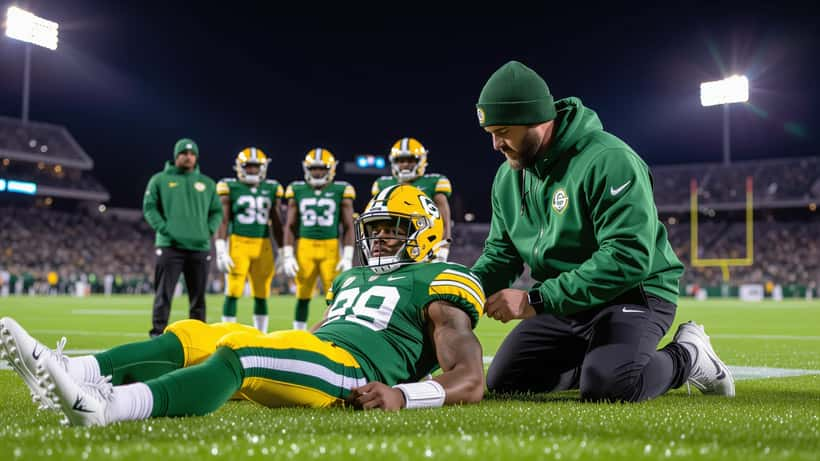
Green Bay Packers wide receiver Matthew Golden caught a touchdown pass at Lambeau Field on Sunday, October 18, 2026, in a Week 6 Sunday Night Football game against the Dallas Cowboys. The score came days after head coach Matt LaFleur said the team is "working through" whether Golden will also return punts while Moore recovers from an ankle injury.
That second storyline is the one worth a closer look. A star receiver who also fields punts takes more high-speed contact, and the same question applies to any recreational athlete who plays through a heavy schedule.
What happened this week
Golden opened the scoring against Dallas with a 9-yard touchdown reception, finishing the first quarter with two catches for 46 yards, according to NBC Sports and Yahoo Sports game coverage. A Cowboys defender also returned an interception intended for Golden for a touchdown, though officials reviewed the play and ruled that Golden had barely touched the defender.
The week before, Golden posted a career-best 123 receiving yards in a 31-7 Packers win over Chicago, per Yahoo Sports. Coverage from Yahoo Sports and ClutchPoints then turned to LaFleur's comments on special teams, where Golden is a candidate to field punts until Moore returns.
Reports from earlier in Golden's career also mention a wrist injury that cost him games. We could not confirm the exact dates, so this article does not rely on them.
Why punt returns raise the injury question
A punt returner catches a ball in the air while coverage players sprint toward him from 40 or 50 yards away. He often cannot see the first tackler until contact is imminent. That exposes the head, neck, shoulders and knees to impacts that a receiver running a planned route rarely faces.
Sports medicine physicians point to three risks. The first is concussion from helmet-to-ground or helmet-to-helmet contact. The second is shoulder and wrist trauma from awkward falls. The third is cumulative load, since a player who already runs 60 or more routes a game adds fatigue to every extra touch.
The U.S. Centers for Disease Control and Prevention notes that a concussion can happen without loss of consciousness, and that symptoms such as headache, dizziness or confusion can appear hours later. Its HEADS UP resources describe the warning signs athletes and parents should watch for.
What a sports medicine specialist would tell weekend athletes
Most Canadian readers will never field an NFL punt. Many do play recreational hockey, soccer, football or basketball, often after a full workweek and with less conditioning than a pro. A sports medicine physician or physiotherapist looks at the same three factors for them.
First, load management: how many sessions per week, and how much recovery between them. Second, protective equipment that actually fits. Third, a return-to-play plan after any head or joint injury, rather than a self-assessment on the sideline.
Specialists also stress that a "minor" wrist sprain that never gets imaged can hide a small fracture. Playing through it can turn a six-week problem into a surgical one. A professional assessment costs far less than a missed season.
A realistic scenario: the Thursday-night league player
Consider a 34-year-old who plays in a Thursday-night recreational football league in Calgary and works at a desk the rest of the week. In week six of the season he lands hard on an outstretched hand while catching a pass, and his wrist swells slightly.
If he ices it and plays again the following Thursday, six days later, the outcome depends on what is actually injured. If it is a mild sprain, most patients recover in two to four weeks with a brace and controlled loading. If it is a scaphoid fracture, a small wrist bone with a poor blood supply, he risks a delayed or failed union, and treatment can stretch to 8 to 12 weeks in a cast or require surgery.
The difference is not visible on the first day, and an initial X-ray can miss it. If the wrist is still painful at the base of the thumb after 7 to 10 days, then a repeat image or an MRI is warranted. That is a decision a clinician makes, not the player.
The same logic applies to his head. If he took a hit and felt foggy for even a few hours, then he should not return to full contact until a medical professional clears him. Returning too early raises the chance that a second impact causes a longer and more serious injury.
Returning from injury: what the timeline usually looks like
Return-to-play protocols exist because tissue heals on its own schedule, not the calendar's. After a concussion, clinicians typically use a graduated sequence: rest, light aerobic activity, sport-specific drills, non-contact practice, and only then full contact. Each stage lasts at least 24 hours, and a symptom flare sends the athlete back one step.
For soft-tissue injuries, the pattern is similar. A physiotherapist tests range of motion, strength and balance against the uninjured side before clearing a player. A common benchmark is 90 percent of the strength of the healthy limb. Skipping that test is how a two-week strain becomes a recurring problem.
Professional teams have trainers, imaging on site and staff who can bench a player. Amateurs have none of that, so the first practical step is often an outside opinion. A 30-minute assessment can separate a sprain from a fracture, or a mild concussion from one that needs weeks of rest.
Rehabilitation also protects against the injury that follows the injury. Players who return early often change how they move to protect the sore area, and that compensation overloads the knee, hip or lower back instead.
Questions to ask a specialist
- Which activities are safe this week, and which are not?
- What warning signs mean I should stop and come back immediately?
- How will we know I am ready for contact or competition?
- Is any equipment, such as a brace, taping or a better-fitted helmet, worth buying?
Written answers to these four questions give you a plan you can follow without guessing.
When to book an appointment
Seek a professional assessment when any of the following applies:
- Pain, swelling or reduced grip strength persists beyond 7 days after a joint injury.
- Headache, nausea, light sensitivity or concentration problems follow a blow to the head, even a mild one.
- A previously injured joint feels unstable or gives way during normal movement.
- You are returning to sport after a gap of several weeks and want a progressive training plan.
A family physician can refer you to sports medicine, and many physiotherapists accept direct bookings. For a faster route, you can compare health professionals on Expert Zoom and ask your question about a specific injury before you commit to an appointment.
Bottom line
Golden's week is a reminder that the most visible athletes also carry the most exposure. Whether a coach adds punt returns to a receiver's workload is a team decision. Whether you ignore a swollen wrist or a post-hit headache is yours, and a qualified professional can help you decide.
This article is for general information and does not replace medical advice. If you suspect a fracture or concussion, consult a physician or visit an emergency department.
