 Aria Nguyen
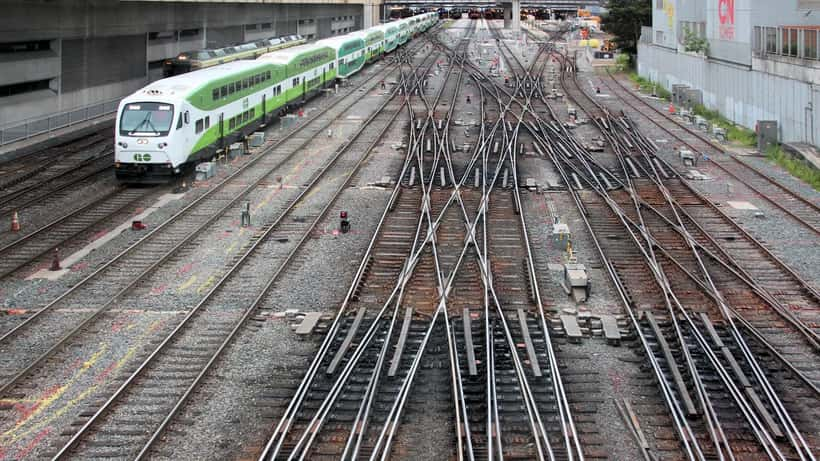
On September 25, 2026, Lakeshore West GO Train service was thrown into chaos when Metrolinx confirmed a person had been struck west of Exhibition GO station, causing significant delays across the entire line during the morning rush hour. The incident compounded an already fraught situation: since September 8, GO Transit has been running a reduced schedule on the Lakeshore West, Barrie and Stouffville lines — cuts that Metrolinx says will remain in place until at least spring 2027. For the tens of thousands of Hamiltonians and Mississauga residents who depend on the Lakeshore West corridor to reach their Toronto-area jobs, the question is no longer whether delays will happen. It's what happens at work when they do.
What Changed on Lakeshore West Starting September 8
Metrolinx cut weekday and weekend train frequency beginning September 8, citing crew training needs, recovery from unusually high FIFA-related ridership earlier in the year, and preparation for future service expansion. Some cancelled trains are being partially replaced by additional GO bus routes, including routes 12, 65, 68 and 71. Weekend service on portions of the Lakeshore West line was reduced to 30-minute headways starting September 12, according to NOW Toronto.
Compounding the scheduled cuts, freight partners have ordered reduced speeds on segments between Confederation GO and Niagara Falls GO, creating cascading delays of up to 30 minutes even on trains that are still running. Then came this morning's incident — a pattern many commuters find familiar. "We keep absorbing the consequences of Metrolinx's decisions," one Oakville resident told CBC Hamilton. "Missing meetings, getting marked late, walking on eggshells with managers."
That tension — between transit failure and workplace accountability — is precisely where employment law becomes relevant.
When Transit Fails, Who Pays at Work?
Employment lawyers in Ontario say this is one of the most misunderstood areas of workplace rights. The short answer: Ontario's Employment Standards Act, 2000 (ESA) does not create a blanket right to be late because of transit problems. But it does constrain what employers can actually do about it — and many employers overreach.
"Under the ESA, an employer can establish punctuality requirements, but any discipline or termination must still meet the test of reasonableness," explains the type of analysis a labour and employment lawyer would provide. "If delays are systemic — caused by infrastructure your employer knows is outside your control — unilateral discipline becomes much harder to defend at a tribunal."
The key concept is proportionality. A single warning for repeated documented lateness is permissible. Immediate termination for an employee with a clean record who was late three times in two weeks because of a known, publicly reported transit disruption is almost certainly not. The Ontario Human Rights Code adds another layer: if you have a disability that makes alternative commuting options (driving, cycling) inaccessible, a chronic transit disruption may trigger an employer's duty to accommodate — and refusing to do so can expose the company to a human rights complaint.
The ESA's termination provisions are equally relevant. For any employee who has worked longer than three months, wrongful dismissal without proper notice or pay-in-lieu is illegal. Terminating someone largely because of transit-related absences — without first documenting progressive discipline, exploring flexible start times, or offering remote work accommodations — creates significant legal exposure for employers according to Ontario's Employment Standards Act, 2000.
A Commuter's Dilemma: The Clarkson Scenario
Consider a realistic case that employment lawyers would recognize immediately.
A 38-year-old project coordinator commutes daily from Clarkson GO station to downtown Toronto. Her 9:00 a.m. meeting schedule is non-negotiable — her employer, a financial services firm, has made clear that attendance at morning stand-ups is mandatory. Under the pre-September 8 schedule, she caught a 7:41 a.m. train that reliably got her to Union at 8:22 a.m. Under the new schedule, that train no longer exists. The next available departure arrives at Union at 8:54 a.m. — six minutes before her mandatory meeting, with no buffer for connection delays.
In the first two weeks under the new schedule, she arrived late four times, ranging from 8 to 22 minutes late. On September 25, the person-struck incident on the line pushed her arrival to 9:47 a.m. Her manager issued a formal written warning citing "patterns of unprofessional tardiness."
If this were adjudicated before an employment tribunal, here's what would likely matter:
- Did the employer know about the Metrolinx service cuts? (Yes — they're publicly reported)
- Was the employee given a reasonable opportunity to adjust before discipline began? (A two-week window is arguably inadequate)
- Did the employer consider accommodations like a 9:15 a.m. start time or two remote days per week? (Apparently not)
- Is the employee's role one where a 10-15 minute window matters operationally? (Debatable for a morning stand-up)
Under these facts, a labour lawyer would assess the written warning as legally premature and potentially retaliatory — and if the employer escalated to termination without further progressive steps, the exposure for wrongful dismissal damages could reach 3-4 months of salary (roughly $16,000–$22,000 on an average $65,000 salary) based on established Ontario jurisprudence.
The if/then framework: if Metrolinx disruptions are publicly documented and systemic (as of September 2026 they are), then unilateral discipline without first exploring accommodation creates a legal vulnerability that an employment lawyer can help you act on — whether you're the employee protecting your job or the HR manager trying to protect the organization.
The Employer Side of the Equation
The disruptions aren't only a legal risk for employees. Organizations with large transit-dependent workforces in the Hamilton-to-Toronto corridor face real operational and liability questions.
Companies that have not updated their attendance and tardiness policies since the September 8 service cuts — or that have rigid 9-to-5 structures without written accommodation processes — are more exposed than those that have proactively addressed the disruption. A policy that doesn't distinguish between chronic, avoidable lateness and lateness caused by documented infrastructure failures will face credibility problems in any dispute.
HR professionals are increasingly consulting with employment lawyers to draft transit-disruption accommodation frameworks: temporary flexible start-time windows, pre-approved remote days as contingency options, and written guidance to managers on how to document attendance issues during known disruption periods. Getting this in writing before a dispute arises is significantly cheaper than defending against a wrongful dismissal or human rights claim afterward.
Understanding Employer Obligations Under Ontario Law
There are three core legal obligations Ontario employers carry during a prolonged transit disruption like the current Lakeshore West situation:
Reasonable accommodation (Human Rights Code): If a disability, age-related limitation, or family status constraint means a worker cannot reasonably find an alternate commute, the duty to accommodate applies. It extends to the point of undue hardship — a standard courts have set quite high.
Progressive discipline (ESA and common law): Employers cannot jump to termination or significant sanctions without a documented progression of warnings, meetings, and opportunities to correct. The bar for summary dismissal is very high in Ontario.
Good faith obligations: Courts consistently hold that employers in Ontario owe employees a duty of good faith in how they exercise managerial authority. Penalizing workers for circumstances clearly beyond their control — while publicly documented transit infrastructure fails — tests that obligation significantly.
What to Do If You're Affected
Whether you're already facing discipline or worried about it, there are concrete steps an employment lawyer would recommend for September 2026:
Document every delay. Screenshot GO Transit real-time alerts, save your Presto card tap-in/tap-out records, and keep a log with times and dates. Metrolinx issues service advisories through its official channels — these create a paper trail proving the disruption was systemic, not personal.
Request a conversation with your manager proactively. Frame it as problem-solving: "Given the confirmed service cuts until spring 2027, I'd like to discuss whether a temporary adjustment to my start time or one remote morning per week is feasible." Proactive engagement looks better than reactive excuse-making if the matter later reaches HR.
Get a legal opinion before a formal warning becomes termination. A 30-minute consultation with an employment lawyer costs significantly less than navigating an Employment Standards Act complaint or wrongful dismissal claim without guidance. Many lawyers offer free initial assessments for transit-disruption situations, which are becoming common enough that practitioners have clear frameworks for them.
The Lakeshore West disruptions are not going away before spring 2027. The legal landscape around transit and workplace rights in Ontario is clearer than most workers — and many employers — realize. Getting informed early is the best hedge against a situation that escalates unnecessarily.
This article provides general information only and does not constitute legal advice. Employment situations vary significantly based on individual circumstances, collective agreements, and applicable legislation. Consult a qualified Ontario employment lawyer for advice specific to your situation.
format_used: News brief
