 Victoria Stewart
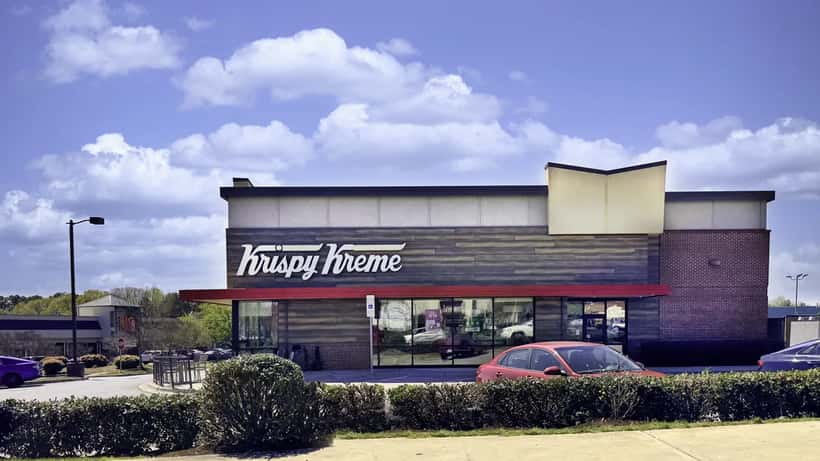
Krispy Kreme's cafe-style debut on West Broadway in Vancouver, opened in December 2025, has put the doughnut chain back on the radar of Canadian franchise investors heading into summer 2026. The brand confirmed during its Q1 2026 earnings report that it expects to open more than 100 shops in 2026, nearly all of them franchised, while exiting underperforming corporate stores in a $90 million refranchising transaction. For Canadians eyeing the food-service space, the numbers behind the turnaround matter as much as the National Doughnut Day giveaway lines on Broadway.
Industry analysts at QSR Magazine reported that Krispy Kreme's profit gains in Q1 2026 came largely from the refranchising shift — selling company-owned shops to operators willing to bet capital on the brand. A wealth-management advisor with experience in franchise structures can help a prospective owner decide whether the post-turnaround economics justify the entry cost and personal-guarantee exposure.
What is actually changing in Canada
Canadian operations sit under franchisee Krispy K Canada of Toronto, with the Delta, B.C. location managed separately. The Vancouver West Broadway opening near Cambie marked the chain's first cafe-format shop in the city — a smaller footprint than the highway-side "Hot Light" locations that defined the brand in the 2000s. That format change is part of a broader push: cafe shops can fit into mall pads or urban high streets that would never accommodate the older 4,000-square-foot fryer-floor layouts.
The Hamilton, Ontario opening in May 2025 followed the same template. According to Restaurant Dive, the parent company's $90 million transaction with WKS Restaurant Group accelerated similar conversions in U.S. markets, freeing capital that Krispy Kreme has signalled will flow toward new market entries — including the Netherlands later in 2026.
The franchise economics behind the headlines
A Krispy Kreme franchise is not a low-ticket investment. While the company does not publish a single fixed Franchise Disclosure Document figure for the Canadian market, industry reporting and SEC filings indicate the total initial investment for a U.S. cafe-format Krispy Kreme typically runs between $440,000 USD and $2.6 million USD depending on real-estate costs, build-out, equipment and working capital. Royalty fees sit at 4.5% of gross sales and marketing contributions add another 1% to 2%.
For Canadian investors, three numbers drive the underwriting:
- Initial cash equity: most lenders, including BDC and major chartered banks, require 30% to 40% of total project cost in unborrowed equity. On a $1 million build-out, that means $300,000 to $400,000 the investor must put up before any debt closes.
- Personal guarantee: nearly all franchise loans in Canada attach a personal guarantee to the principal. The signature exposes personal real estate and registered investments to the lender if the location underperforms.
- Break-even timing: industry benchmarks for new Canadian quick-service openings suggest 18 to 30 months to operational break-even, with full capital recovery in 5 to 7 years if same-store sales meet plan.
Where a wealth-management advisor adds value
A wealth-management advisor specializing in business owners works on four fronts before the franchise agreement is signed.
They model the after-tax return. A franchise that nets $180,000 in pre-tax income looks different through a Canadian-Controlled Private Corporation (CCPC) than through a personal holding pattern. The small-business deduction, capital-gains exemption planning and shareholder loan strategies can shift the long-run number by tens of thousands of dollars annually.
They pressure-test the personal guarantee. By isolating registered accounts (RRSP, TFSA, RESP) from creditor reach, and by reviewing existing matrimonial property exposure, an advisor can map exactly which family assets are on the line if the location fails.
They build a diversification floor. Concentrating net worth in a single franchise location is a textbook risk failure. Advisors typically recommend that the franchise represent no more than 40% to 50% of household investable net worth at peak exposure.
They coordinate with a franchise lawyer. Wealth advisors do not draft or interpret the Franchise Disclosure Document, but they brief the lawyer on the family's risk capacity so legal terms can be negotiated in line with what the household can absorb.
What to do this month if you're seriously considering it
- Request the most recent Franchise Disclosure Document directly from Krispy Kreme Canada. In Ontario, Alberta, B.C., New Brunswick, Manitoba, P.E.I. and Saskatchewan, the document must be delivered at least 14 days before signing.
- Audit your liquid net worth and unencumbered equity. Anything below $400,000 CAD makes a Krispy Kreme cafe build-out a stretch.
- Speak to two existing Canadian Krispy Kreme operators. The Canadian Franchise Association at cfa.ca maintains a directory and member best-practice guides that include questions to ask current operators.
- Engage a wealth advisor and a franchise lawyer in the same meeting. The advisor flags personal-finance risks; the lawyer translates them into red-line negotiations.
- Build a 5-year cash flow projection with two scenarios: same-store sales hitting plan, and same-store sales 20% under plan. If you cannot absorb 36 months of the lower-case scenario, the deal is not affordable.
This article is general information, not financial or franchise advice. For a specific decision about purchasing a Krispy Kreme or any other franchise in Canada, consult a licensed wealth-management advisor, a franchise lawyer and a Chartered Professional Accountant familiar with quick-service-restaurant economics.
