 Ethan Pellerin
Kīlauea Volcano's 44th Eruption Episode: What Canadian Homeowners Need to Know About Volcanic Ash Damage to Their Properties
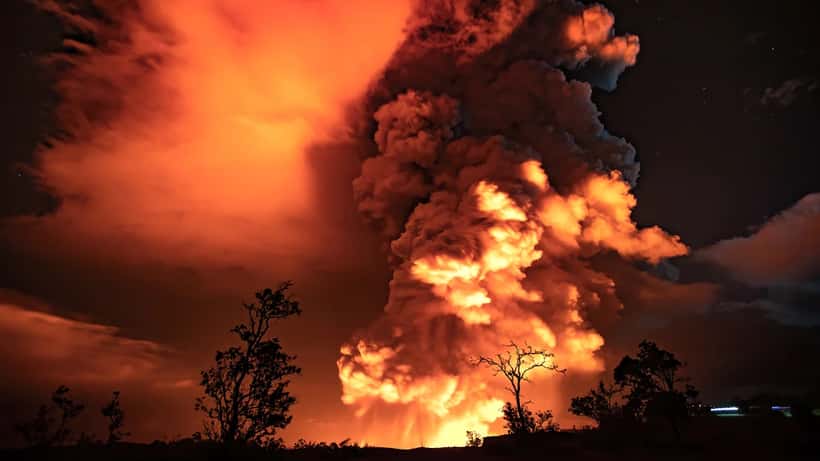
On April 9, 2026, Hawaii's Kīlauea volcano entered its 44th eruptive episode, sending lava fountains soaring 800 feet into the air and ejecting softball-sized chunks of tephra that rained down on surrounding communities. Hawaii Volcanoes National Park was forced to close, over 300 students were evacuated from a nearby school, and the U.S. Geological Survey elevated the volcano alert level to red. The National Weather Service issued an ashfall warning for communities north and northeast of the crater, including the town of Volcano and Mountain View.
While this eruption is centred on the Big Island of Hawaii, the event has sparked an important question for homeowners everywhere: if volcanic ash or natural disaster events affect your region — whether from distant eruptions or local geological activity — do you know what damage to look for, and when to call a professional contractor?
How Volcanic Ash Actually Damages Homes
Volcanic ash is not like regular dust. According to the U.S. Geological Survey's Volcano Hazards Program, it is abrasive, mildly acidic, and electrically conductive when wet. Even a light coating of ash can cause serious problems if not addressed quickly.
The primary risk is roof loading. Volcanic ash is significantly heavier than snow or rain. Just 100 millimetres of wet ash on a flat or low-pitched roof can be enough to threaten structural integrity, according to USGS research on roof loading from ashfall. Non-engineered roofs, long-span structures, and buildings with aging materials are the most vulnerable.
Secondary damage includes:
- Gutter blockage and collapse: Ash forms an almost immovable mass in gutters when it dries. Blocked gutters can redirect water beneath roofing materials or cause the gutters themselves to collapse under the combined weight.
- Cladding and siding abrasion: The sharp, glass-like particles in volcanic ash scratch and pit exterior surfaces, degrading paint and waterproof coatings over time.
- Electrical hazard: Wet ash is conductive. Ash accumulation near electrical panels, HVAC intake vents, or junction boxes poses a real risk of short-circuit and fire.
- Ventilation system contamination: Ash drawn into air handling systems can damage HVAC motors and degrade air quality inside the home for weeks.
- Foundation drainage: Heavy ashfall can clog weeping tile systems and surface drains, causing water to pool against foundations.
Why Cleanup Is Dangerous Without Expert Guidance
Many homeowners instinctively want to begin cleanup immediately after an ash event — but this is where serious injuries occur. USGS safety documentation notes that a significant number of injuries and fatalities during volcanic ashfall events happen during the cleanup phase, not the eruption itself.
Falls from ash-laden roofs, which become extremely slippery when wet, are the leading cause of injury. Roof surfaces that appear intact can have hidden structural weakness caused by the ash load. A contractor trained in post-disaster assessments knows how to evaluate structural load paths before setting foot on a potentially compromised surface.
There is also a respiratory risk. Fine volcanic ash particles — some smaller than 10 microns — can penetrate deep into lung tissue. Professional contractors working in ash conditions use appropriate PPE; homeowners attempting DIY cleanup with inadequate masks risk long-term respiratory damage.
What a Home Improvement Expert Would Assess After an Ash Event
A qualified home contractor conducting a post-ashfall inspection would typically examine:
1. Roof structure and load capacity Before removing any ash, a contractor checks for signs of structural stress: visible sag, cracked ridge boards, displaced rafters, or distorted eaves. If any of these are present, ash removal must be done in controlled stages to avoid sudden load shifts.
2. Gutters and downspouts Gutters may need to be replaced rather than cleaned if ash has formed a hardened mass. A contractor will also check the fascia boards behind gutters for water ingress and rot.
3. Exterior walls and seals Window seals, door frames, and cladding joints are examined for ash infiltration. Even small gaps that were previously unproblematic can become entry points for moisture once ash abrades exterior sealants.
4. Ventilation and HVAC A contractor may coordinate with a mechanical specialist to flush and inspect HVAC systems, replace filters, and assess whether ductwork has been compromised.
5. Drainage and landscaping Proper surface drainage must be restored around the foundation. Ash can compact into an impervious layer that redirects groundwater toward the home's footings.
The Canadian Context: Why This Matters Closer to Home
Canada has its own volcanic risk zones. The Anahim Volcanic Belt in British Columbia, the northern extension of the Cascade volcanic arc, and various dormant volcanic fields in the Yukon and B.C. interior represent real, if low-probability, geological hazards. The 2016 Haida Gwaii earthquakes reminded Canadians that seismic and volcanic activity is not a purely American concern.
More practically, Canadian homeowners in wildfire-prone regions already cope with another airborne hazard — wildfire ash and soot — that causes similar damage patterns to volcanic ash. The inspection and remediation protocols are nearly identical.
When to Call a Professional
If your property is affected by any form of heavy ashfall, soot, or debris from a natural disaster event, the general rule is: get a professional assessment before attempting cleanup. This applies whether the source is a distant volcanic eruption, a nearby wildfire, or an industrial incident.
A home improvement expert can provide:
- Structural load assessment before any ash is disturbed
- Safe removal protocols that minimize secondary damage
- Damage documentation for insurance claims — crucial for getting fair compensation
- Prioritized repair schedule that addresses the most time-sensitive vulnerabilities first
Insurance adjusters frequently challenge claims where homeowners attempted DIY repairs before a professional documented the pre-repair damage state. Hiring a contractor first, before cleanup begins, protects your claim.
Connecting With an Expert
Whether you are dealing with the aftermath of a natural disaster or simply want a seasonal inspection to assess your home's resilience, consulting a qualified home improvement professional is always the right first step.
On ExpertZoom Canada, you can connect directly with home improvement specialists — from structural contractors to roofing experts — who can assess your property and provide clear, actionable advice based on your specific situation.
Disclaimer: This article provides general information only and does not constitute professional engineering or structural advice. Consult a licensed contractor or structural engineer for assessments specific to your property.
