 Adèle Chartrand
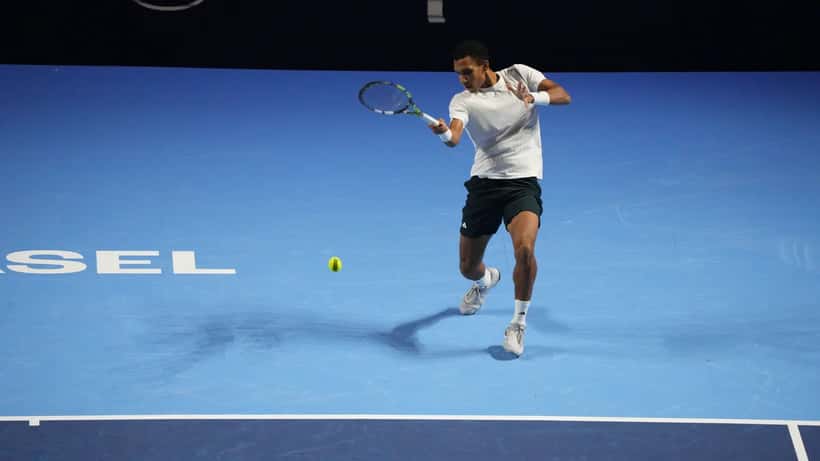
Karen Khachanov's Round of 16 victory at the 2026 US Open on September 7 made headlines across Canada — not because of his clean, commanding tennis, but because of who he beat. Felix Auger-Aliassime, Canada's No. 1 and the tournament's third seed, competed while visibly unwell: players, commentators, and spectators watching on Canadian television observed FAA "dizzy and seeing spots" across long stretches of the match.
In a tournament with a record $108 million prize pool, few athletes at that level choose to retire from a match. FAA's decision to continue is understandable. But for the millions of Canadians who exercise, play recreational sport, or work physically demanding jobs, the spectacle raises a question that sports medicine experts field every week: when does dizziness during physical activity become a medical warning rather than an inconvenience to push through?
Khachanov Wins — But Canada Is Focused on FAA's Health
Khachanov entered the 2026 US Open ranked World No. 50, coming off a solid season that included a quarterfinal at the Italian Open. He had already eliminated three opponents before facing Auger-Aliassime, competing under the ATP's neutral athlete framework — the eligibility structure all Russian-born players have operated under since 2022.
Auger-Aliassime, by contrast, spent critical service games and rallies visibly struggling to maintain equilibrium. The world's cameras captured one of Canada's most decorated athletes attempting high-precision athletic performance while experiencing documented neurological symptoms. The ATP permits players to continue competing if they choose to do so; FAA chose to. He lost.
This moment did not occur in a vacuum. According to the Government of Canada's guidance on heat-related illnesses, dizziness and visual disturbances during or after physical exertion in warm conditions are classified as warning signs of heat exhaustion — a condition that can escalate to heat stroke within minutes if cooling and rest are not applied. New York's heat index on September 7, 2026, reached 37°C, well above the threshold at which the body's thermoregulation systems begin to fail under sustained athletic output.
What Sports Medicine Experts Say About 'Seeing Spots'
Dizziness and "seeing spots" during exercise are not a single condition. They represent a spectrum, and identifying which end of that spectrum a patient occupies requires clinical context, not just the symptom itself.
The most common cause in athletic settings is exertional heat-induced vasodilation: as core body temperature rises, blood vessels in the skin dilate to allow heat dissipation, temporarily reducing blood pressure reaching the brain. The brain responds with dizziness. When this reduction is sharp or sustained, the visual cortex — one of the brain's most oxygen-sensitive regions — produces photopsia: the visual disturbance known as "seeing spots" or visual static.
A second frequent cause is hypoglycaemia — low blood sugar resulting from extended exertion without adequate carbohydrate replenishment. Its symptoms are nearly identical to heat exhaustion, and the two often occur simultaneously.
The more serious end of the spectrum includes cardiac arrhythmia (an irregular heart rhythm that impairs the heart's ability to maintain adequate output), orthostatic hypotension (a blood pressure drop triggered by rapid changes in body position), and in rarer cases, transient ischaemic events. All of these require assessment rather than self-management.
What separates "probably fine, rest and rehydrate" from "needs an appointment this week" is not the symptom in isolation — it is how often it occurs, whether it resolves fully with rest, whether it is accompanied by additional features, and whether the physical conditions at the time plausibly explain it.
What Canadian Recreational Athletes Consistently Get Wrong
Most Canadians who experience dizziness during sport assume that rehydration and a few minutes of rest resolve the issue — and for isolated incidents during hot summer activity, they are usually right. The error is in pattern recognition.
Sports medicine physicians across Canada report that patients regularly arrive at clinics weeks after a first episode, having dismissed it as overheating. By the time they present, the episode has recurred — sometimes in conditions where heat alone cannot plausibly explain it: an early morning run in 18°C, an indoor gym session, or a moderate-intensity recreational tennis match in September.
The groups most likely to underreport or dismiss these symptoms include:
- Recreational athletes over 40 who have not had a cardiovascular screening in the past two years
- Adults recently started on antihypertensive medications, which alter heat tolerance and blood pressure response during exercise
- Athletes returning to training after illness, injury, or a break of more than three months
- People with undiagnosed or poorly controlled Type 2 diabetes, where blood sugar regulation under exertion is unpredictable
The absence of an immediate collapse reinforces the belief that each episode was benign. In most cases it is. But the cases where it is not tend to be identified only in retrospect, when the next episode is more severe.
A Concrete Scenario: When the Numbers Change the Decision
Consider a 44-year-old project manager in Ottawa who plays recreational soccer every Sunday through the summer of 2026. He is reasonably fit, non-smoking, and has mild hypertension managed with a beta-blocker prescribed in 2025. On August 10, during a 90-minute game in 29°C heat, he experiences dizziness and briefly sees dark spots in his peripheral vision after a sprint. He walks off, rests for five minutes, drinks water, and rejoins play. The symptoms do not return that day.
If this is a one-off: The explanation is almost entirely consistent with exertional heat stress compounded by the haemodynamic effects of beta-blockers, which limit the heart's ability to increase output during exercise. This is not an emergency. Avoiding peak-heat activity windows, increasing pre-game hydration, and discussing medication timing with his physician are the appropriate responses.
But if the same player experiences identical symptoms on September 6 during a 7:30 AM session — temperature 18°C, low humidity — the equation changes completely. A cool morning eliminates heat as the primary explanation. Beta-blockers are still a factor, but their effect should be consistent and predictable, not newly symptomatic. Recurring visual disturbances across different environmental conditions, in a 44-year-old with managed cardiovascular risk, crosses a clinical threshold.
A Canadian sports medicine physician would at that point recommend a 12-lead ECG and likely a 24-hour Holter monitor. The purpose: rule out atrial fibrillation and other arrhythmias that become symptomatic under exertion but are silent at rest.
The stakes are quantifiable. Undetected atrial fibrillation in adults over 40 increases stroke risk by four to five times compared to age-matched individuals without the condition. Early identification and anticoagulation management can reduce that risk to near-baseline. The cost of investigation is a half-day of clinical appointments. The cost of not investigating, in the wrong case, is vastly higher.
The threshold a sports medicine physician actually applies: dizziness with visual disturbances occurring more than once, or occurring in non-heat conditions, or accompanied by chest pressure, palpitations, or a momentary loss of situational awareness — any one of these features should result in a medical appointment within 48 hours, not at next month's convenience.
What Watching FAA Should Prompt You to Consider
Felix Auger-Aliassime's visible struggle at the 2026 US Open illustrates something that extends far beyond professional tennis: the cultural expectation to perform through symptoms. At Grand Slam level, with eight figures in prize money at stake, that expectation is extreme. At recreational level, it is subtler — but it produces the same delay in seeking assessment.
Canadians in physically demanding professions — construction, landscaping, healthcare, emergency services — face similar implicit pressure. Dizziness on a job site is pushed through until the day ends. The absence of collapse confirms, in the moment, that it was fine. Sports medicine physicians see the downstream consequences of that reasoning regularly.
Health Canada explicitly identifies physical exertion combined with warm temperatures as one of the primary risk contexts for heat-related illness in working-age Canadians. Dizziness with visual disturbances is categorized among the warning symptoms for heat exhaustion — a condition requiring treatment and assessment, not management-in-place.
When to Stop Activity, When to Seek Care
Stop immediately and seek emergency care (call 911):
- Visual disturbances accompanied by chest pain, tightness, or pressure
- Symptoms that persist more than five minutes after stopping activity and moving to a cool, shaded environment
- Any loss of consciousness or near-fainting episode during physical exertion
Schedule a medical assessment within 48 hours:
- Dizziness with visual symptoms occurring on more than one occasion, under any conditions
- Symptoms appearing in cool or moderate weather, where heat is not a plausible explanation
- You are over 40 and have not had a cardiovascular health screening in the past two years
- You are on medication affecting blood pressure or heart rate and are training regularly
Consider a proactive consultation with a health expert:
- Before returning to sport after illness, surgery, or a break of three months or more
- If you are managing any cardiovascular condition while maintaining an active training schedule
- If you want a pre-season fitness and health assessment ahead of an endurance event
This article is for informational purposes only and does not constitute medical advice. Consult a qualified healthcare professional for personal health concerns.
Karen Khachanov's quiet, efficient tennis was impressive on September 7, 2026. But the story that Canadian sport fans will remember from this match is the image of their No. 1 competing through symptoms that, in any other context, would send most of us to a clinic. If that image prompts even a fraction of Canadian athletes to pay closer attention to what their body is signalling during exercise — and to seek expert guidance when the pattern warrants it — that is a far more important outcome than the match result itself.
