 Victoria Stewart
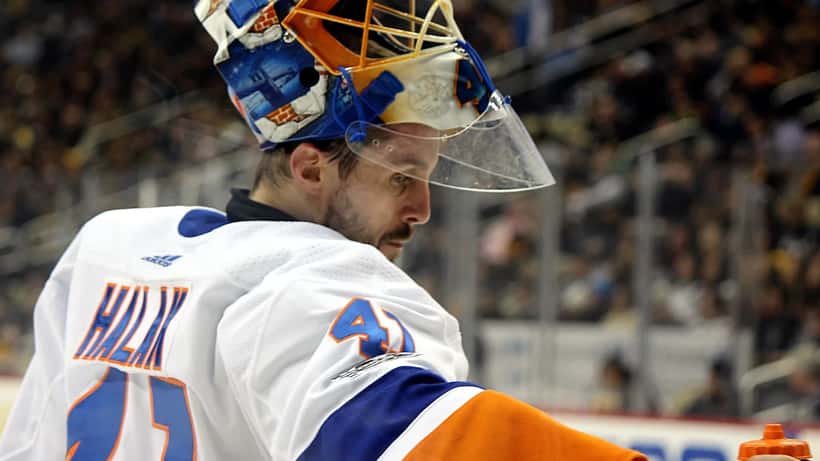
Jaroslav Halak walked into the lower bowl of Montreal's Bell Centre on May 27, 2026, raised the ceremonial torch toward the rafters, and reminded an entire city that his 2010 playoff miracle is now 16 years in the rearview. The 41-year-old Slovak-born goaltender hasn't faced an NHL shot in two seasons. His ovation that night was loud — but so are the financial questions every retired pro now faces in Canada.
Halak carried a stop sign painted with "DOBES" — a nod to current Canadiens netminder Jakub Dobes, who matched Halak's franchise feat of multiple Game 7 wins in a single post-season. The tribute was emotional. The retirement math behind it is colder.
What Just Happened at the Bell Centre
According to The Canadian Press, Halak's torch-bearing walk came before Game 4 of the Eastern Conference final against the Carolina Hurricanes. He is not currently employed by an NHL club. He played his last game in 2024 with the Boston Bruins, after stints with Montreal, the New York Islanders, St. Louis, Washington, Vancouver and Boston.
That career arc — six teams, US and Canadian residency, two currencies — is the exact profile that makes post-NHL financial planning so easy to get wrong.
How the NHL Pension Plan Actually Works
The NHL pension is governed by the Collective Bargaining Agreement between the league and the NHLPA. The headline numbers most players never hear until they retire:
- A player vests in the pension after 160 NHL games played (regular season + playoffs).
- The maximum yearly benefit at age 62 currently sits near the US$255,000 ceiling set by Canada Revenue Agency and IRS pension limits.
- A retired player can elect to start drawing benefits as early as age 45, but the monthly amount drops sharply versus waiting until 62.
- Halak played 581 NHL regular-season games plus 50 playoff games. He is fully vested, and at 41 he is four years away from his earliest pension election.
A wealth-management specialist can model the trade-off for a retiring goaltender: take less money for 17 more years of payments, or wait and lock in roughly double the monthly cheque from 62 onward. The math changes again if the player holds dual residency or plans to retire in a non-treaty country.
The Canadian Tax Trap for Retired Players
Athletes who play part of their careers in Canada — Halak suited up in Montreal and Vancouver — face cross-border tax complexity the average RRSP holder never sees. Three issues come up repeatedly:
Residency at retirement. The Canadian Revenue Agency taxes Canadian residents on worldwide income. A player who finishes their career in a US-based franchise but returns to Canada loses the lower US federal rate on pension withdrawals and Roth IRA-equivalent vehicles.
Treaty withholding. The Canada-US Tax Treaty caps withholding on periodic pension payments at 15%, but lump-sum withdrawals from a 401(k) or US pension trigger 30% withholding plus full Canadian taxation on the gross amount, with a foreign tax credit applied later. The cash-flow gap can run six figures.
CPP and OAS clawbacks. Retired athletes pulling six-figure pensions get their Old Age Security clawed back fully above roughly $148,000 of net income. The federal government publishes the exact thresholds and rules at Canada.ca's Canada Pension Plan page, and the clawback can blindside players who assumed OAS was automatic.
3 Wealth Mistakes Retired Pros Make
Canadian financial planners who work with retired NHLers cite the same three errors year after year:
- Treating the signing bonus like the salary. Halak's career earnings reached roughly US$28 million in salary alone, per public CBA tracking. Bonuses are taxed in the country they are paid in — not where the player lives. Players who don't structure this in advance often pay tax twice.
- No income-smoothing strategy after the last paycheque. The drop from a $4 million annual salary to a deferred pension at 45 creates a 17-year income gap. Without a glide-path investment plan, lifestyle inflation eats the nest egg before the pension even kicks in.
- Ignoring inflation on the pension itself. The NHL pension is not fully indexed to inflation. A $200,000 benefit elected at 45 in 2026 dollars buys materially less in 2050. Hedging that erosion requires holdings outside the pension itself.
For a comparable look at what an active player's signing bonus produces in long-term wealth, see how the Stanley Cup playoff bonus structure compounds over a career. And the recent Mike Matheson contract extension breakdown shows how Canadians playing in Canadian markets are taxed differently from those in no-state-income-tax US markets.
What Halak's Age Tells Us About Timing Withdrawals
At 41, Halak is in what wealth advisors call the "pre-pension dead zone" — too young to elect benefits, too old to easily restart a second career at top earnings. Players in this window typically work with a fee-only planner to:
- Lay out projected income from ages 41 to 62, year by year.
- Stress-test the plan against a 4% real return assumption and a 3% inflation assumption.
- Identify withdrawal sequencing: TFSA first, then non-registered, then RRSP, then pension.
- Decide on US vs Canadian tax residency before the first big withdrawal locks in withholding rules.
The retired-athlete demographic also faces something the average retiree does not: a 25-year horizon where unstructured time, public recognition and access to high-risk private deals all collide. Without a binding investment policy statement, the dead zone becomes the danger zone.
The Takeaway
The torch was symbolic. The pension election clock is real. A retired NHL player in Canada has four to seven critical financial decisions to lock in between ages 35 and 50 — pension election age, residency, withdrawal sequencing, currency hedging, and inflation protection chief among them. Each one can swing lifetime net worth by seven figures.
Halak's ovation will fade by morning. The next 21 years of his retirement math won't. A specialist in athlete wealth planning can map the entire glide path before the first cheque hits the bank.
