 Dimitri
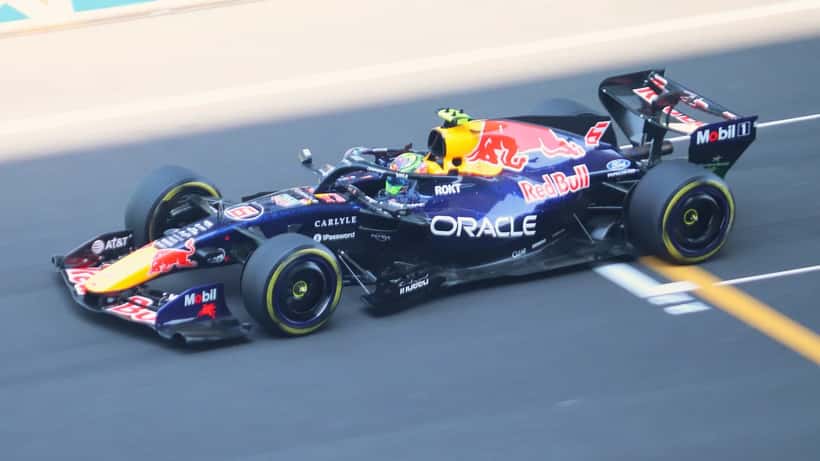
 Isack Hadjar was promoted to Red Bull Racing's senior Formula 1 team for the 2026 season, replacing Yuki Tsunoda and becoming the latest driver to attempt success alongside four-time world champion Max Verstappen. While headlines focus on the 21-year-old French-Algerian's driving talent, the real story lies in the extraordinary mechanical precision and engineering expertise required to keep a modern F1 car competitive.
Hadjar's elevation follows a promising rookie campaign with Racing Bulls in 2025, during which he scored 51 points, secured his first podium at the Dutch Grand Prix, and out-qualified teammate Liam Lawson 16-6 across the season. Red Bull team principal Laurent Mekies praised Hadjar's rapid development, noting that he "demonstrated speed" and "learns quickly." Yet even the most talented driver cannot succeed without a flawless machine beneath them.
The Mechanical Challenge of 2026 Regulations
The 2026 Formula 1 season introduced sweeping technical changes that reset the competitive order. New chassis and engine regulations, including a revised hybrid power unit developed by Red Bull alongside Ford, have forced teams to re-engineer nearly every component on the car. The power unit now relies more heavily on electrical energy, with battery output representing nearly half of total power delivery.
Hadjar discovered just how unforgiving these regulations can be during the 2026 Miami Grand Prix qualifying session on May 2, 2026. Stewards found that a small section of the left and right-hand side floorboard protruded outside the permitted reference volume by just 2mm, according to Formula1.com. The technical infringement resulted in disqualification from qualifying and a pit-lane start. Red Bull accepted the penalty without appeal, with Mekies stating: "We made a mistake and we respect the decision of the Stewards. No performance advantage was intended nor gained from this error."
That 2mm tolerance illustrates the microscopic margins that separate success from failure in modern Formula 1. Mechanics and fabricators work to tolerances measured in hundredths of a millimetre. A single misaligned aerodynamic element can cost seconds per lap, while a power unit component failure — like the one that ended Hadjar's Australian Grand Prix after just 10 laps — can derail an entire race weekend.
What F1 Mechanics Do
Behind every driver stands a team of approximately 20 mechanics responsible for assembling, maintaining and repairing the car. These specialists work across multiple disciplines: power unit technicians handle the complex hybrid systems, gearbox mechanics manage the seamless-shift transmission, and aerodynamicists monitor wing configurations and floor performance.
During a race weekend, mechanics strip and rebuild major components between sessions. An engine change under parc fermé conditions — as Hadjar's team faced in Miami — requires surgical precision under immense time pressure. The 2026 regulations limit drivers to four internal combustion engines and turbochargers per season, plus three MGU-K units, energy stores and control electronics. Exceeding these limits triggers grid penalties that can destroy championship hopes.
Precision Engineering Meets Canadian Expertise
Canada has a surprisingly deep connection to Formula 1 engineering. The Circuit Gilles Villeneuve in Montreal hosts the Canadian Grand Prix, and several Canadian universities produce graduates who work in motorsport engineering worldwide. The Fédération Internationale de l'Automobile governs the technical regulations that teams must follow, setting standards for safety, performance and sustainability.
For Canadian mechanics, engineers and automotive technicians, Formula 1 represents the pinnacle of their craft. The diagnostic equipment used in F1 garages — thermal imaging cameras, vibration analysis sensors and computational fluid dynamics software — eventually filters down to mainstream automotive repair. A mechanic who understands how an F1 team diagnoses a 2mm aerodynamic irregularity possesses skills directly transferable to precision automotive work.
When Precision Matters on the Road
The same principles of mechanical precision that govern Formula 1 apply to everyday vehicles. Modern cars incorporate hybrid systems, advanced driver assistance technology and complex engine management software. When these systems malfunction, drivers need mechanics who understand high-precision diagnostics — not just routine oil changes.
A warning light on a hybrid vehicle dashboard could indicate anything from a minor sensor fault to a failing battery pack. Proper diagnosis requires specialist equipment and training. Attempting to guess the problem or delaying inspection risks cascading failures that multiply repair costs.
Finding the Right Mechanical Expert
Whether your vehicle needs routine maintenance, complex diagnostics or performance tuning, consulting a qualified mechanic saves money and prevents dangerous failures. Look for technicians with manufacturer-specific certifications, experience with your vehicle's particular systems, and access to current diagnostic tools.
Hadjar's 2026 season will test both his driving ability and Red Bull's mechanical reliability. After early-season setbacks in Australia and Miami, the young driver will need flawless machinery to challenge for race wins against McLaren's Lando Norris, Mercedes' George Russell and Ferrari's Charles Leclerc.
Consult a certified automotive mechanic or motorsport engineering expert through Expert Zoom to diagnose complex vehicle issues or upgrade your car's performance with precision expertise.
