 Clara Thompson
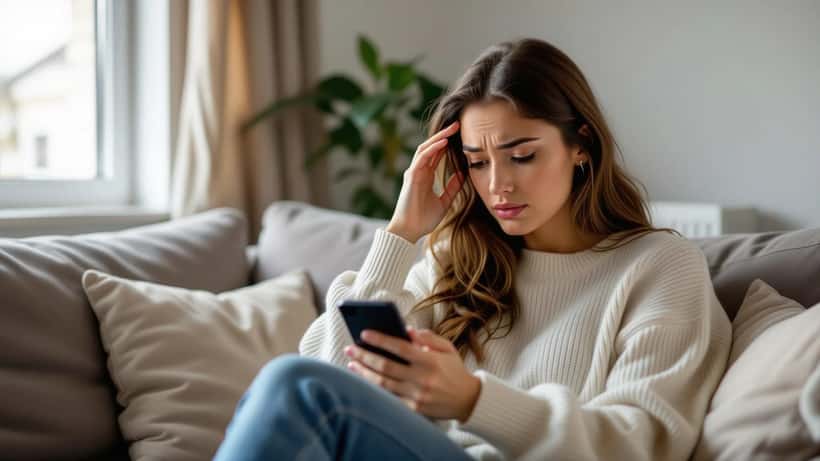
When Instagram, Facebook and Messenger went dark for hours on July 19, 2026, millions of people reached for their phones and found nothing loading. Within the opening hours of the global Meta outage, Facebook complaints alone topped 22,000 rapid reports in the United States, according to Downdetector, with users worldwide reporting frozen feeds, login loops and blank timelines. For many Canadians, the first reaction was not inconvenience — it was a small jolt of anxiety.
That reaction is worth paying attention to. A platform failure is a technical story, but the wave of unease it triggered is a health story, and it points to a question a growing number of Canadians are quietly asking themselves: how dependent have I become?
What actually happened
Meta confirmed that Facebook, Instagram and Messenger suffered a widespread outage on July 19, 2026, before services were restored later the same day. Downdetector data showed complaints spiking sharply and then falling back to baseline once the platforms recovered. The company has not published a full technical cause at the time of writing.
The outage itself lasted only hours. What lingered, for a subset of users, was the feeling of being cut off — the sense that something important was happening somewhere and they could no longer see it.
Why an outage can spike anxiety
Psychologists have a name for that feeling: fear of missing out, or FOMO. It is not a clinical diagnosis, but mental health researchers treat it as a real and measurable emotional experience. Studies published in peer-reviewed journals have found that "FOMO on information" is one of the strongest bridge symptoms linking heavy phone use to both anxiety and depression, particularly among younger adults.
The mechanism is straightforward. Frequent social media use trains the brain to expect a steady drip of updates, likes and messages. When that drip stops abruptly — because the app is down — the absence itself can register as stress. Researchers describe this as technostress: a negative emotional and physiological response driven in large part by the compulsion to stay continuously connected.
In other words, the outage did not create the anxiety. It exposed a dependency that was already there.
The dependency-distress cycle
Health experts increasingly describe problematic social media use as a loop rather than a one-time habit. The pull to check an app relieves a moment of unease; the relief reinforces the checking; and over time the checking becomes automatic. When the platform disappears, the loop is interrupted and the underlying distress surfaces.
Warning signs that the relationship has tipped from habit into something heavier include: feeling anxious or irritable when you cannot access an app, checking your phone within minutes of waking, using scrolling to avoid difficult emotions, and losing sleep to late-night feeds. Poor sleep is a particularly common thread — many Canadians already struggle with rest, and screen habits often make it worse, as covered in our reporting on Canada's sleep crisis.
None of these signs, on their own, means a person has a disorder. But together they suggest a pattern worth examining honestly.
What the evidence says about taking breaks
The encouraging news is that stepping back works, and the research is unusually consistent on this point. A widely cited University of Pennsylvania study found that limiting social media use to about 30 minutes a day produced meaningful reductions in anxiety, depression, loneliness, sleep problems and FOMO over a few weeks. A randomized experiment tied to the 2020 U.S. election found that several weeks away from Facebook or Instagram improved overall well-being — with the largest benefits for Facebook users over 35 and Instagram users under 25.
A forced, unplanned outage is not a healthy detox — it comes with the very anxiety a chosen break is meant to reduce. But it can serve as a useful signal. If a few hours offline felt genuinely distressing, that is information about how much weight the platform is carrying in your daily emotional life.
When to seek professional help
For most people, a moment of outage-related unease is normal and passes quickly. It becomes a reason to seek support when the distress is persistent rather than fleeting — when anxiety about being disconnected interferes with work, sleep, relationships or the ability to concentrate for weeks at a time.
A licensed psychologist, counsellor or family physician can help distinguish an ordinary habit from an anxiety pattern that is worth treating, and can offer evidence-based approaches such as cognitive behavioural strategies for managing compulsive checking. Canadians looking for a starting point can consult the Canadian Mental Health Association, which maintains free resources and local branch listings across the country at cmha.ca. Recovery from an unhealthy relationship with technology is realistic and well-documented, as seen in high-profile mental health recovery stories that have drawn attention this year.
Practical steps after the outage
You do not need to delete your accounts to reset the balance. Small, deliberate changes tend to hold better than dramatic ones:
- Turn off non-essential notifications so the phone stops interrupting you.
- Set a fixed daily window for social apps rather than checking throughout the day.
- Keep the phone out of the bedroom to protect sleep.
- Notice the feeling that drives a check — boredom, loneliness, avoidance — and name it before reaching for the app.
If any of those steps feel impossible, that difficulty is itself worth discussing with a professional.
The July 19 outage will be forgotten within days. The more useful takeaway is the quiet question it prompted for millions of Canadians: if a few hours without Instagram felt like a loss, it may be time to look at what the platform has quietly come to hold — and, for some, to talk to an expert about it.
This article is for general information only and is not a substitute for professional medical or psychological advice. If you are experiencing significant distress, consult a qualified health professional.
