 Maya MacDonald
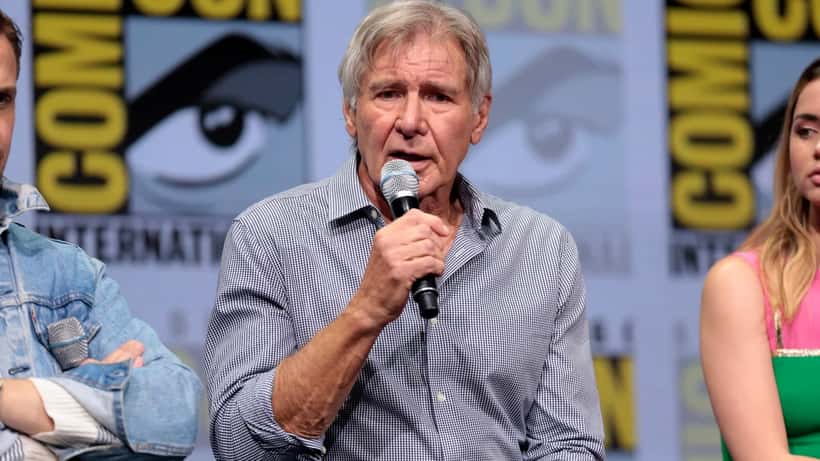
Harrison Ford opened up about struggling with severe clinical depression during his college years on April 9, 2026, in a candid podcast interview — and his story is resonating with millions of Canadians who have faced the same silence. The 83-year-old actor, who received the SAG-AFTRA Lifetime Achievement Award on March 1, 2026, revealed that before he found acting, he was barely functioning.
"I was more than depressed. I think I was ill. I was socially ill, psychologically not well," Ford told The Hollywood Reporter's Awards Chatter podcast, describing how he would spend days in his single dorm room at Ripon College in Wisconsin, ordering pizza and refusing to leave.
Barely Leaving His Room: The Reality of Depression
Ford's description of his college years is a clinical portrait of depression that many Canadians will recognize. He described isolation that went beyond sadness: "I had a single room and I had classes to go to, but I rarely ventured out."
The turning point came unexpectedly. He accidentally enrolled in a drama class and found community among storytellers. "I simply found my place amongst storytellers. It really changed my world, changed my life," he said. That accidental discovery launched one of cinema's most celebrated careers — Indiana Jones, Han Solo, Jack Ryan — and now, at 83, a starring role in Shrinking on Apple TV+, a series about grief, therapy, and mental health.
The timing of his disclosure is not coincidental. Ford currently plays a therapist on Shrinking, a show renewed for Season 4, and his own experience with psychological distress has clearly informed how he portrays someone whose job is to guide others through pain.
1 in 5 Canadians: Depression Is Not Rare
Ford's experience is far more common than many people realize. According to the Centre for Addiction and Mental Health (CAMH), 1 in 5 Canadians experiences a mental illness in any given year — and by age 40, 1 in 2 Canadians have had, or are living with, a mental health condition.
More than 6.7 million Canadians are currently living with a mental health problem, according to CAMH data. Depression specifically has become dramatically more prevalent: major depressive episodes increased from 4.7% of the adult population in 2012 to 7.6% in 2022. The pandemic made things worse: as of 2025, nearly 29% of Canadian adults rated their own mental health as "fair" or "poor" — up from 26.2% in 2020.
Youth are in crisis too. Between 2019 and 2023, the proportion of young Canadians aged 12 to 17 who rated their mental health as "fair" or "poor" more than doubled, from 12% to 26%.
What Ford described — the isolation, the inability to function socially, the retreat from daily life — are hallmark symptoms of clinical depression that many Canadians experience in silence. And like Ford, many find the barrier to help is not the absence of a solution, but the absence of permission to seek one.
The Access Problem: Why Canadians Wait Too Long
Harrison Ford's story had a happy ending: he found accidental community in drama class. But most Canadians don't get lucky breaks. They wait. According to CAMH, an average of 67 days passes before someone who needs counselling actually receives it. For intensive treatment, that wait stretches to 92 days.
A third of Canadians aged 15 and older who reported mental health needs said those needs went unmet. Seventy-five percent of children with mental health disorders lack access to specialized treatment. Approximately 4,000 Canadians die by suicide each year — a number that would be lower if early intervention were more accessible.
This is where professional help matters, and where early consultation with a doctor or mental health specialist can change outcomes. Seeking professional support is not a sign of weakness — it is exactly what Harrison Ford wishes he had known decades earlier.
What Seeking Help Actually Looks Like
Ford's story illustrates both the barrier and the breakthrough. For decades, he suffered alone without naming what he was going through or seeking help. His eventual recovery came through a supportive community — but it also came with professional tools, which is something that a general practitioner or mental health professional can provide to Canadians today.
If you or someone you know is experiencing symptoms of depression — persistent low mood, withdrawal from activities, loss of energy, changes in sleep or appetite, difficulty concentrating — a family doctor or general practitioner can offer an initial evaluation, referral to a mental health specialist, and access to treatment options including therapy, medication, or both.
The YMYL note applies here: this article is informational and does not replace professional medical diagnosis or treatment. If you are in crisis, contact Crisis Services Canada at 1-833-456-4566, available 24/7.
From the Couch to the Screen
Ford's Lifetime Achievement Award speech on March 1, 2026 — presented by Woody Harrelson at the Shrine Auditorium in Los Angeles — was, by many accounts, both funny and unexpectedly moving. He fought back tears as he joked that he was at the "half point" of his career. "I'm indeed a lucky guy," he said.
Lucky, perhaps — but also an example of the difference that asking for help can make. He found his way out of isolation through a fortunate accident. Canadians today have more structured paths available, starting with a conversation with a healthcare professional.
ExpertZoom connects Canadians with qualified doctors and healthcare specialists who can help assess and address mental health concerns with compassion, expertise, and privacy. Because sometimes the bravest thing you can do is ask for help — before luck runs out.
Disclaimer: This article addresses general mental health information and is not a substitute for professional medical advice, diagnosis, or treatment. For mental health support, consult a licensed healthcare professional.
