 Maya MacDonald
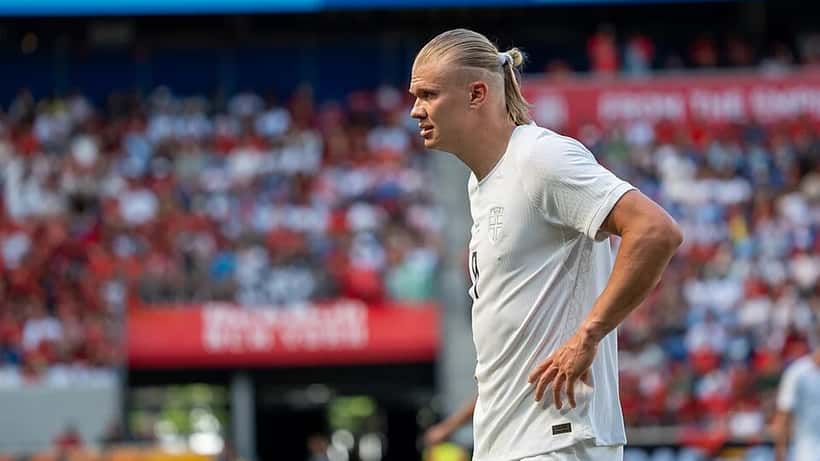
Erling Haaland scored twice for Norway against Senegal on June 23, 2026, bringing his FIFA World Cup 2026 total to four goals in just two appearances. At 25, the Manchester City striker is rewriting tournament records — and the physical machine behind those goals holds lessons every Canadian athlete should know.
Norway's Striking Weapon Turns the World Cup Into a Personal Record
Norway defeated Senegal 2-1 in their Group I fixture on June 23, with Haaland providing the decisive edge. It was the second successive multi-goal performance for the striker, who had scored twice in Norway's 4-1 demolition of Iraq on June 17. Four World Cup goals in two matches equals the scoring pace of tournament legends — and at 25, Haaland is still in his prime.
Behind every goal, however, is a body maintained with obsessive precision. Haaland runs at speeds exceeding 35 km/h, maintains explosive power across 90-minute matches, and recovers fast enough to perform again days later. That is not genetics alone — it is a deliberate, science-backed approach to athletic health that coaches and sports physicians spend careers trying to replicate.
The Recovery Science Behind World-Class Performance
What separates elite athletes from recreational ones is rarely training intensity. It is recovery quality. Haaland's documented protocols offer a useful blueprint for Canadian athletes at any level:
Cold water immersion: Post-match ice baths are a cornerstone of his recovery routine. Cold therapy constricts blood vessels, flushes metabolic waste from fatigued muscles, and dramatically reduces delayed-onset muscle soreness. Sports science research consistently supports short cold-water immersion for reducing muscle damage markers after intense exercise.
Strategic nutrition: Haaland follows carefully timed meal plans — lean proteins for muscle repair, complex carbohydrates to restore glycogen, healthy fats for hormonal balance. The Government of Canada's physical activity and nutrition guidelines note that active adults need significantly more protein and micronutrients than sedentary individuals — levels most recreational athletes never track or reach.
Sleep as a training tool: Eight to nine hours of sleep per night is mandatory, not optional, in Haaland's schedule. Human growth hormone peaks during deep sleep; muscle repair, nervous system recovery, and immune function all depend on consistent sleep volume. Cutting this short in the name of extra training time is one of the most common mistakes recreational athletes make.
Hypoxic altitude training: Norway's national team program incorporates altitude simulation chambers that train the cardiovascular system to transport oxygen more efficiently. The result is better endurance deep into the second half — when Haaland's goals often arrive.
Why This Matters for Canadian Athletes
Most Canadians will never score at a World Cup. But the recovery principles keeping Haaland at his peak apply to anyone skating in a recreational hockey league, training for a trail running race, or cycling through the Laurentians on weekends.
The most common pattern Canadian sports medicine specialists see is not an athlete who trained too hard in one session — it is an athlete who accumulated fatigue over weeks without structured recovery, ignored early warning signals, and arrived at the clinic with a six-week-old problem that has become a six-month injury.
The body sends signals long before serious damage occurs. Haaland's support team — physiotherapists, nutritionists, sports physicians — are paid specifically to catch those signals early. Canadian recreational athletes rarely have that team, which means they have to be smarter about recognizing the signs themselves.
For a closer look at how World Cup injury management compares to what elite teams do, see how the Netherlands-Japan match revealed the hidden injury crisis in modern football.
5 Signs You Should Consult a Sports Medicine Specialist
If any of the following apply, a professional assessment could prevent a minor problem from becoming a season-ending setback:
1. Pain that does not resolve within 48 hours of rest. Soreness after effort is expected. Pain that persists in joints, tendons, or bones — particularly if it returns with activity — warrants imaging and evaluation. Stress fractures and early tendinopathy are routinely dismissed by recreational athletes as "just training hard," often until the injury becomes acute.
2. You have changed how you move to protect a sore area. Compensatory movement patterns — favouring one leg, protecting a shoulder, running with a subtle lean — reflect the body trying to offload pain onto other structures. These patterns create secondary injuries that are often more serious than the original problem and harder to rehabilitate.
3. The same area keeps getting hurt. Repeated sprains or strains in the same location suggest underlying ligament instability or a biomechanical issue. One ankle sprain is bad luck. Three in the same ankle is a structural problem that a sports medicine physician can assess with targeted stability testing and a corrective exercise program.
4. Your performance has plateaued despite consistent training. If effort is steady but results are stagnating — or regressing — the issue may not be motivation. It may be load management failure, nutritional deficiency, or accumulated sleep debt. Sports medicine specialists assess the full picture rather than the isolated complaint.
5. You are a masters-level athlete training at high intensity. After 40, collagen synthesis slows, hormonal recovery changes, and inflammatory resolution takes longer. Recovery protocols adequate at 28 are insufficient at 46. Canadian sports medicine physicians who specialize in masters athletes understand these physiological shifts and can calibrate training accordingly — helping you stay active for decades, not just seasons.
The Long Game
Haaland's four World Cup goals in two matches are spectacular. What is genuinely remarkable is that he has sustained elite performance across compressed seasons, multiple competitions, and injury adversity — because his team treats his body as a long-term investment rather than a short-term resource.
That philosophy is available to every Canadian athlete. The first step is knowing when to get professional input.
This article is for informational purposes only and does not constitute medical advice. If you are experiencing pain, injury symptoms, or unexplained performance decline, consult a qualified health professional before continuing athletic activity.
At ExpertZoom, certified health professionals and sports medicine specialists are available for consultations across Canada. Find the right expert for your athletic goals and train smarter — not just harder.
