 Olivia Dubois
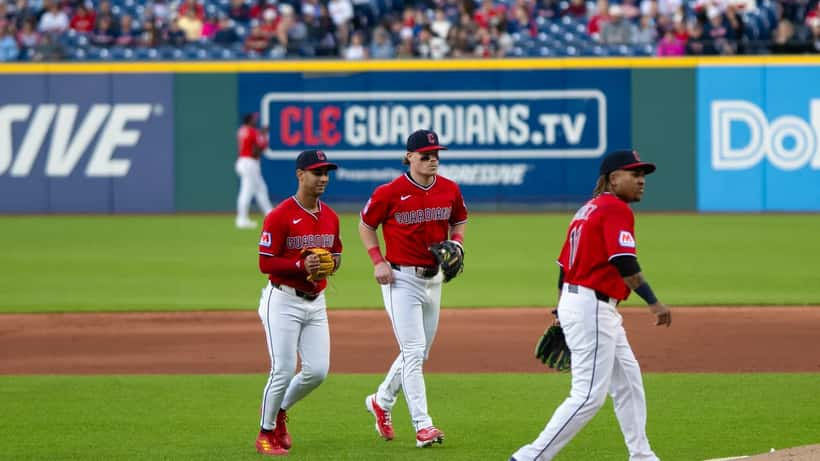
The Cleveland Guardians and Tampa Bay Rays head into the 2026 American League Championship Series with rosters that tell as much story through their injury reports as through their statistics. Tampa Bay swept the New York Yankees in the Division Series while managing a pitching staff battered by hip and elbow surgeries, and Cleveland survived a five-game divisional grind against the Chicago White Sox with its own collection of bullpen complications. As Canadian fans follow the ALCS closely, the injury decisions playing out in both dugouts are raising a question that recreational athletes face every October: when is it safe to push through pain, and when does pushing through cost you everything?
The Injury-Heavy Rosters Behind the ALCS
Tampa Bay enters the series with notable gaps in its pitching depth. Ryan Pepiot, one of the Rays' key starters, underwent hip surgery in May 2026 and missed the second half of the season entirely. Jonathan Heasley was placed on the 15-day injured list in late July with a right elbow stress reaction — a common overuse injury among pitchers stretched across a 162-game season.
Cleveland navigated similar challenges. Multiple pitchers, including Manuel Rodriguez (elbow) and Edwin Uceta (shoulder), spent stretches of the year on the injured list. The Guardians, who have built a reputation for disciplined load management, applied a careful approach to deciding which arms would be ready for October. The medical decision-making that gets these athletes onto the field for the most important games of the year is the same thinking that should guide every recreational athlete facing a championship weekend.
Why October Is the Hardest Time to Make the Right Call
The ALCS does not just test athletic ability — it tests judgment. In a best-of-seven series where every game is potentially an elimination game, the pressure to play through pain reaches its peak. This phenomenon is not unique to professional baseball.
Every October, recreational leagues across Canada produce their own version of the same dilemma. Softball leagues in Ontario, baseball diamonds in Alberta, touch football fields in British Columbia — they all deliver the same scenario: a player who felt something during warm-ups, who is running a 4 out of 10 pain level, and who has to decide whether to suit up for the title game. The adrenaline of a championship game actively distorts pain perception. Athletes in high-stakes competitions consistently underestimate the severity of their discomfort and overestimate how well their body is actually functioning — a pattern well-documented in sports medicine literature and one that explains a substantial share of the re-injury cases that physicians see each November.
According to the Canadian Institute for Health Information, musculoskeletal injuries — sprains, strains, and fractures — represent the single largest category of sports-related emergency department visits across Canada. The 30 to 55 age bracket generates a disproportionate share of these presentations, which is exactly the demographic filling fall recreational leagues. The problem is not that competitive adults are reckless. It is that they make injury decisions in conditions specifically designed to undermine rational assessment.
What MLB Teams Know That Recreational Athletes Don't Have Access To
When a Guardians or Rays player reports discomfort before a playoff start, the club physician conducts a structured evaluation before any return-to-play decision is made: range of motion testing, point tenderness mapping, functional movement screening, and same-day imaging when the clinical picture is unclear. The decision to play is made on clinical evidence, not gut feeling or competitive urgency.
This systematic approach is also why professional athletes' outcomes differ so significantly from recreational ones. Shane McClanahan's 972-day comeback from repeated arm surgeries is a striking example of what disciplined, medically supervised return-to-play management looks like — and what the stakes are when that process is skipped.
Recreational athletes in Canada rarely have a team physician on the sideline. But sports medicine specialists offer the exact same evaluation process in a clinical setting. A 30-minute appointment can establish the grade of an injury — distinguishing a Grade 1 sprain (minor, a few days of rest) from a Grade 2 partial tear (3 to 6 weeks of rehabilitation) — and deliver a clearance recommendation based on clinical evidence rather than competitive pressure.
This is the gap that turns manageable injuries into season-ending ones: not the initial injury itself, but the uninformed decision made in the 48 to 72 hours that follow.
When the Playoff Calculus Becomes Personal: A Canadian Scenario
Consider the situation that plays out across recreational leagues every fall in Canada.
Marc is a 41-year-old accountant from Oakville who plays in a Wednesday-night recreational baseball league. His team has made the fall championship, scheduled for Saturday, October 18. During fielding practice on Thursday, Marc dives for a grounder and feels a sharp pull in his right hamstring. The pain peaks at 7 out of 10 immediately, then settles to a 4 out of 10 within 30 minutes. By Friday morning, it is a steady 4 out of 10 — noticeable, but he can walk without a visible limp.
Should he play Saturday?
The risk calculus is concrete. A Grade 1 hamstring strain — minor microtearing of muscle fibres without significant structural damage — carries a re-injury risk of approximately 12 to 15% if the athlete returns to competitive activity within 72 hours. Playing through a Grade 1 under game conditions, which means full sprint to first base, planting to change direction, and explosive cutting in the outfield, frequently escalates the injury to Grade 2. A Grade 2 hamstring injury involves a more extensive partial tear requiring 4 to 8 weeks of physiotherapy and rest. A Grade 3 rupture can require surgical evaluation and 4 to 6 months of recovery.
The if/then logic: if Marc's injury is confirmed as Grade 1 through clinical examination and he rests until pain-free functional movement is fully restored, his re-injury risk drops below 3%. If he plays at 72 hours with a 4 out of 10 pain level on an unassessed hamstring, that risk rises to 12 to 15% — and re-injury during game activity typically doubles or triples the total recovery timeline. A $150 to $200 sports medicine consultation on Friday can confirm the injury grade and give Marc a data-driven decision rather than a competitive gut call. That assessment costs far less than 6 to 8 weeks of physiotherapy plus a lost spring season.
The Decision Framework: Green, Yellow, Red
Sports medicine specialists use a tiered return-to-play framework that recreational athletes can apply as a self-assessment starting point.
Green — safe to play: Pain is below 3 out of 10 at rest and does not increase with sport-specific movements such as running, throwing, swinging, or cutting. No swelling, no point tenderness, and full range of motion is maintained. Training through mild soreness at this level does not significantly elevate re-injury risk.
Yellow — consult before competing: Pain is 4 to 6 out of 10 at rest, increases with specific movements, or is associated with localized swelling or bruising that appeared within 24 hours of the incident. This is the zone where a 30-minute clinical assessment can confirm injury grade, rule out structural damage, and provide a specific clearance timeline. Do not make this decision alone.
Red — do not play: Pain is above 7 out of 10, significant swelling or visible bruising is present, movement is mechanically restricted or produces sharp pain, or a pop or snap was felt at the moment of injury. These signals indicate Grade 2 or Grade 3 injury requiring immediate evaluation and imaging before any return to activity.
According to the Canadian Orthopaedic Association, one of the most common injury escalation patterns in sport is a Grade 1 strain treated as "nothing" that progresses to Grade 2 because the athlete returned before tissue healing was complete. The window between initial injury and full tissue recovery is precisely when competitive adrenaline is at its highest — which is precisely why it is the most dangerous time to make that call without clinical input.
What to Do Before Your Championship Game
If your pre-game pain assessment puts you in the yellow zone — present discomfort, post-incident swelling, a movement that simply does not feel right — the most effective next step is a clinical evaluation, not a decision made alone in the locker room.
Sports medicine physicians and sports physiotherapists are accessible across Canada through dedicated sports clinics, family physician referral, and direct booking in most major cities. Many clinics offer same-day or next-day appointments for acute sports injuries, particularly during the busy fall season. ExpertZoom connects Canadians directly with sports medicine specialists who provide the kind of rapid, evidence-based evaluation that professional teams take for granted.
The Guardians and Rays will take the field with physicians watching every pitch. Your league championship deserves the same standard of care — even if it means sitting out the game to be ready for everything that comes next.
This article provides general health information for educational purposes only and does not constitute medical advice. If you are experiencing acute pain or a suspected injury, consult a qualified healthcare professional before returning to physical activity.
