 Eliza Perron
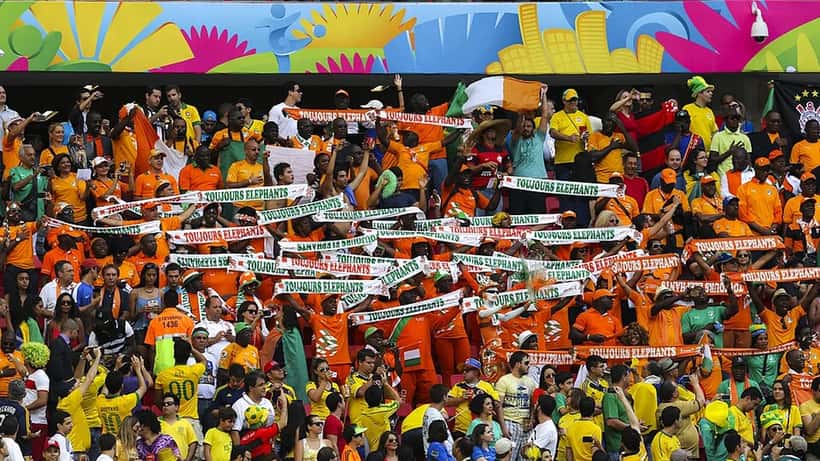
When Germany and Ivory Coast kicked off at a packed BMO Field in Toronto on June 20, 2026, both teams carried something more than a scoreline into the stadium: they carried the stories of dozens of players who exercised their legal right to choose which flag to represent. For the over one million dual-national Canadians watching that Group E clash unfold in their own city, the match raised a question that cuts closer to home than most realize — can my child play internationally, and if so, for which country?
Both squads were built on the principle of choice. Ivory Coast's Amad Diallo — born in Guinea-Bissau, raised in Italy, and capped at youth level — formally declared his intent to represent the Éléphants before making his senior debut. Germany's roster featured players of Turkish, North African, and Eastern European descent who had similarly chosen Germany over other eligible associations. Their stories are compelling. But behind each of those decisions lies a web of FIFA statutes, deadline-driven rules, and paperwork that most families are not aware of until it is too late.
Group E and the Migration Story Behind It
Ivory Coast entered the June 20 match riding the momentum of a dramatic 1-0 win over Ecuador, sealed by Amad Diallo's composed 90th-minute strike. Germany brought the weight of a 7-1 demolition of Curaçao, a match in which the German squad — itself a testament to the country's multicultural football evolution — looked every inch a tournament favourite.
The June 20 showdown between two of the group's strongest teams became a flashpoint for a broader conversation: in an era of global migration and dual nationality, how exactly does FIFA decide who plays for whom?
How FIFA's Eligibility Rules Actually Work
According to FIFA's Statutes, a player may represent any national association for which they hold valid citizenship — subject to one major condition. Once a player has appeared in a senior competitive match for an association, they are "cap-tied" to that country and cannot switch to another, with limited exceptions.
The key factors FIFA evaluates include:
- Whether the player holds a valid passport or citizenship document for the target country
- Whether they have been cap-tied through a senior competitive appearance for another association
- Whether any residency conditions imposed by the target association have been met
The critical insight for Canadian families: a youth-level appearance for Canada Soccer, or even a friendly appearance for another country's senior team, does not automatically cap-tie a player. Only a senior competitive match — at the World Cup, an Olympic qualifier, or a continental championship — triggers permanent cap-tying under the current framework.
The 2021 Reform That Created New Opportunities
FIFA's 2021 update to its change-of-association rules significantly expanded the options for dual-national athletes. Under the reform, a player who accumulated no more than three senior caps before turning 21 can apply to FIFA to switch associations. This pathway did not exist under the previous framework, when any competitive senior cap was permanent.
This means a Canadian-Ivorian youth who played three friendlies for the Ivory Coast under-23s before turning 21 is not necessarily locked into that choice forever. If the threshold and age conditions are met, a formal application to FIFA's Players' Status department can reopen the door.
The same reform also clarified what happens once a player participates in a World Cup finals or continental championship: at that point, the change-of-association window closes permanently. Players who took to the field in Toronto on June 20 have, in most cases, made their final declarations.
5 Questions a Sports Lawyer Can Help You Answer
For Canadian families navigating FIFA eligibility, the rules are often difficult to interpret without professional legal guidance. Here are five questions where a sports lawyer or immigration law specialist can provide essential clarity:
Does my child qualify to represent another national team? Eligibility depends on citizenship documents, residency history, and prior sporting participation. A legal professional can verify which associations your child qualifies for under FIFA's current rules.
What is the deadline for making a formal declaration? The age-21 threshold created by the 2021 reform is not automatic — it requires a properly submitted application through the correct national association. Missing the window forecloses options permanently.
Do Canadian Soccer Association youth appearances count? Youth tournament appearances for Canada Soccer at certain levels may or may not affect FIFA eligibility, depending on whether the competition is classified as competitive or friendly. Legal advice can clarify what has already been played.
Can my child switch associations if they have a few early senior caps? Under the 2021 framework, a limited switch may still be possible. A lawyer can assess the specific match record and determine whether a change-of-association application is viable.
What residency obligations apply? Some national associations require a period of residency or continuous ties to the country. Understanding this before your child turns 21 is critical to keeping all doors open.
Why This Matters for Canadian Families Right Now
According to Immigration, Refugees and Citizenship Canada, holding Canadian citizenship does not require renouncing a foreign citizenship in most cases. This means a significant number of Canadian children — particularly in Toronto, Ottawa, and Montréal — legally hold dual nationality and are, in principle, eligible to compete internationally for multiple associations.
The WC2026 being played on Canadian soil has made international football more tangible than ever for these communities. But the legal window for dual-national athletes is narrow, deadline-sensitive, and easy to miss. The deliberate choices that placed Amad Diallo on the Toronto pitch representing Ivory Coast are available to Canadian families — but only with legal guidance taken early enough.
For more on how WC2026's dual-national squads are reshaping international football, see our analysis of Germany's multicultural WC2026 squad covering the Group E dynamics in depth.
This article addresses general legal principles based on publicly available FIFA rules. It does not constitute individual legal advice. FIFA eligibility determinations depend on each player's specific circumstances — consulting a qualified legal expert is recommended.
