 Eliza Perron
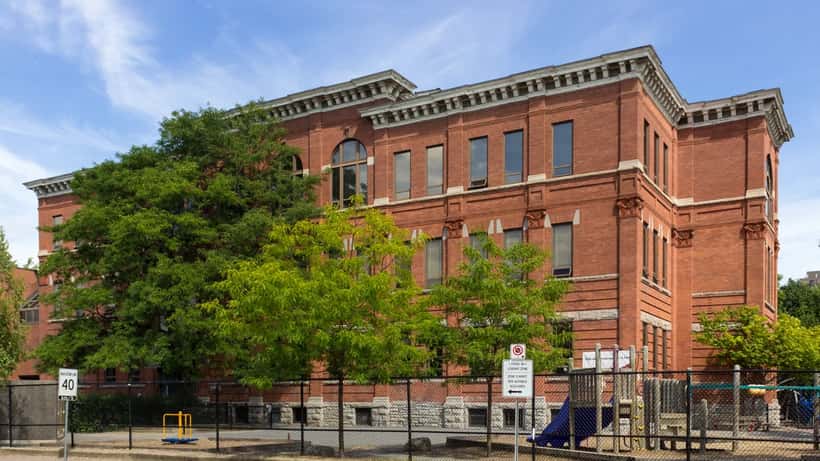
On the afternoon of April 30, 2026, a citizen called police to report young people inside École secondaire Gérard-Filion in Longueuil, Quebec with an object resembling a firearm. The Service de police de l'agglomération de Longueuil (SPAL) deployed specialized units. The school was locked down and by approximately 2:00 PM, students were progressively sent home. All evening classes were cancelled. No weapon was found.
The incident was resolved without injury. But for thousands of parents across Canada who live through events like this each year — a police lockdown, a threat report, a sudden evacuation — the question of what they are legally entitled to know and demand from their school board is rarely answered clearly. An employment and family lawyer can help, but so can knowing your baseline rights under Canadian education law.
What Actually Happened at Gérard-Filion
The operation at Gérard-Filion was conducted in close coordination with the Centre de services scolaire Marie-Victorin (CSS Marie-Victorin), the regional school board. Police conducted thorough searches of the premises. After finding no weapon, students were allowed to leave in a controlled, gradual process.
According to Noovo Info, at least one earlier incident at the same school had previously resulted in the arrest of a minor. Today's call, while producing no criminal finding, was enough to trigger a full emergency protocol — and that protocol is exactly what parents need to understand.
The School's Duty of Care and What It Means for You
In Canada, schools hold a legal duty of care toward every student on their premises. This obligation — rooted in both common law and provincial education acts — requires school administrations to take reasonable steps to protect students from foreseeable harm. When a threat is reported, the school's obligation is not just to react, but to communicate.
Under the Criminal Code of Canada, making a threat or conveying a false alarm in a way that causes public fear is a criminal offence. But the school's legal obligations run parallel: they must document the incident, notify families in a timely manner, and provide access to support resources if students are emotionally affected.
If a school fails to communicate with parents during or after a lockdown, delays notifying families, or withholds information about ongoing risks, parents have recourse. In Quebec, that means filing a complaint with the school board (CSS). In other provinces, the path runs through provincial education ministries. In serious cases — where a school's negligence contributed to harm — legal action under civil liability may be possible.
Can You Demand More Information?
Many parents are surprised to learn that the answer is yes. School boards in Canada are required under provincial access-to-information frameworks to disclose general information about safety incidents upon request. You are entitled to know what protocols were followed, whether they were consistent with the school's written emergency plan, and what follow-up support is being offered to students.
You are also entitled to know whether your child's school has an up-to-date crisis management plan on file — and in most provinces, those plans must be reviewed annually. If your child's school board cannot produce one, or if the plan is significantly outdated, a formal complaint to the provincial ministry of education is a legitimate step.
What you are generally not entitled to is personal information about other students or details of an active criminal investigation. Those matters are protected under the Young Offenders Act provisions of the Youth Criminal Justice Act, as well as provincial privacy legislation.
After the Lockdown: Supporting Your Child
School security incidents — even those that end without harm, as today's Gérard-Filion situation did — can leave lasting marks on children. Research consistently shows that unexpected school evacuations and police responses trigger acute stress responses, even when students do not fully understand what occurred.
Educators and child psychologists recommend that parents:
- Acknowledge the event directly and calmly at home, rather than avoiding the topic
- Allow children to ask questions and give honest, age-appropriate answers
- Watch for changes in sleep, appetite, or reluctance to return to school in the days that follow
- Contact the school guidance counsellor proactively — most Quebec secondary schools have at least one on staff, and following an incident like today's, those services should be available
If your child's distress persists beyond a week or two, seeking a consultation with a child psychologist or family therapist is advisable. A trained professional can assess whether the child needs short-term support to process the event, or whether existing anxiety was amplified by the incident.
When to Call a Lawyer
Most lockdown incidents do not lead to legal action. But a lawyer's involvement may be appropriate if:
- Your child was harmed, physically or psychologically, due to a failure in the school's security procedures
- The school failed to notify you in a timely manner, causing you distress or forcing you to take leave without cause
- Your child witnessed violence or was caught in a use-of-force situation
- The school board refuses to answer reasonable questions about the incident or the school's safety plan
An employment or civil liability lawyer can review your situation, identify whether the school board's actions met the standard of care required, and advise on whether you have grounds for a complaint or claim.
Your Next Step
If today's events at Gérard-Filion have raised questions about your own child's school and the protections that are supposed to be in place, you do not have to navigate those questions alone. On ExpertZoom, you can connect with experienced legal professionals across Canada — including family lawyers, civil liability specialists, and advocates familiar with the provincial education system — who can answer your questions directly, clearly, and without obligation.
A single consultation may be all you need to understand where your rights begin and where the school board's accountability ends.
This article is for informational purposes only and does not constitute legal advice. Education and civil liability laws vary by province. For guidance specific to your situation, consult a qualified lawyer.
