 Adèle Chartrand
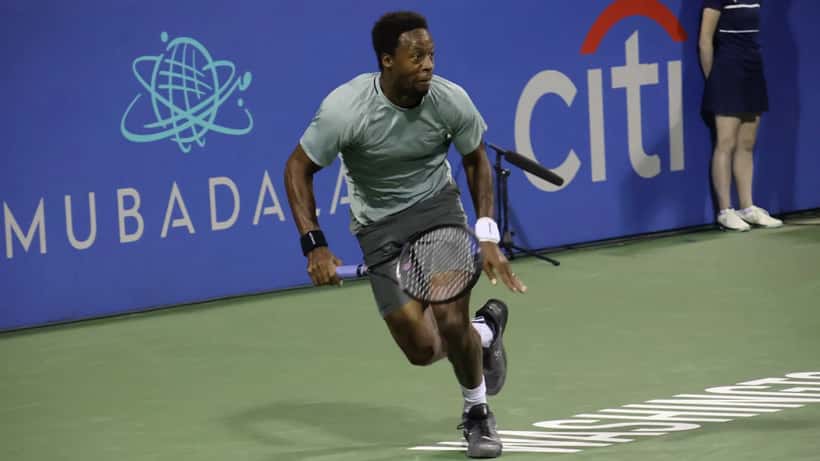
Gaël Monfils, the acrobatic French tennis star who turned professional in 2004, has announced that 2026 will be his final season on the ATP Tour — and his body helped make the decision. After being forced to retire mid-match at the Chengdu Open with a recurring ankle injury, the 39-year-old said simply, "Life is too short." Behind the headline, though, lies a story that millions of Canadian recreational tennis players will recognize: when does a nagging joint injury cross the line from something you play through to something you must address with a health specialist, immediately?
Twenty Years of Spectacular Falls and Silent Damage
Monfils is famous for two things: full-extension diving shots that defy physics, and then missing weeks of competition because of what those shots cost him. Over his 21-year professional career, he has dealt with ankle sprains, heel problems, wrist issues, and more Achilles scares than any sports journalist cares to count. He won 13 ATP titles, reached a career-high ranking of world No. 6 in November 2016, and in early 2025 became the oldest player to win an ATP tournament in decades with his title in Auckland, New Zealand.
Yet the ankle that forced him off the court at Chengdu — "my ankle failed me," he told reporters — is the same joint that has interrupted his career at least half a dozen times over the past decade. This is not bad luck. It is the predictable consequence of repetitive lateral stress applied to an undertreated joint injury, compounded by years of high-impact play on hard courts.
For professional athletes, there is a real economic pressure to return to competition before injuries are fully rehabilitated. For the rest of us, there is no such excuse — and yet Canadians consistently delay musculoskeletal consultations until the damage is far more extensive than it needed to be. According to the Public Health Agency of Canada, musculoskeletal conditions are among the most prevalent chronic health issues in the country, affecting more than 17 percent of the Canadian population and representing a leading cause of disability in adults under 65.
What Elite Sport Teaches Us About Everyday Joint Injuries
Sports medicine specialists draw a firm distinction between acute and chronic ankle injury. In the acute phase — the first 48 to 72 hours after a sprain — rest, ice, compression, and elevation (the classic RICE protocol) are appropriate. The real divergence happens in the weeks that follow.
A properly managed ankle sprain includes supervised proprioceptive retraining: exercises that re-teach the joint's nerve endings how to detect instability and trigger corrective muscle response before the foot rolls again. This is not something most recreational players do. Instead, they rest until the pain subsides, then return to sport — and the joint, now mechanically lax and neurologically under-calibrated, rolls again with progressively less provocation.
Monfils' career illustrates this cycle in slow motion. Each injury compounds the previous one. Ligaments that are repeatedly stretched lose elasticity. Cartilage on joint surfaces exposed to abnormal loading patterns begins to degrade. What starts as a moderate Grade II sprain in a player's twenties can develop into chronic ankle instability and early-onset osteoarthritis in their forties — even if they never suffered a single dramatic fracture along the way.
The six-to-eight-week window after a significant ankle sprain is when intervention delivers the highest return. Miss it, and the structural consequences tend to be permanent.
The Rehabilitation Gap: What Professional Tennis Gets Right That Most Recreational Players Skip
One reason elite players eventually develop chronic problems — and one reason recreational players develop them faster — is a gap in what happens between injury and return to sport.
Professional tennis players, even those who rush back too quickly, still receive daily physiotherapy treatment, regular ultrasound imaging to monitor soft-tissue healing, and functional testing before full return-to-sport clearance. When Monfils returned from one of his ankle injuries, there was a sports medicine physician, a physiotherapist, a kinesiologist, and a fitness trainer monitoring his progress. The system failed him in some ways — the economic incentive to play compressed his rehabilitation timelines — but the infrastructure existed.
For a Canadian recreational player, the typical pathway is: sprain → ice and rest → return to play when pain is tolerable. There is no imaging to confirm ligament healing. There is no proprioceptive assessment to verify the joint's stability before full lateral movement resumes. There is no one checking that the ankle can handle a 90-degree cut before the next match.
A single consultation with a physiotherapist or sports medicine physician after a moderate ankle sprain typically involves: a structured ligament stress test to grade severity; ultrasound or clinical assessment to rule out fracture (relevant if pain is severe or point-tenderness is present over bone); a 4- to 6-week exercise protocol targeting ankle stabilizers (peroneus longus, tibialis posterior) and proprioception; and return-to-sport criteria based on single-leg balance and lateral agility benchmarks rather than pain tolerance alone.
This is not complex. It is also not something most Canadians do. And it is precisely the gap that turns Monfils' career-long ankle saga from a professional sports story into a cautionary tale for the rest of us.
A Canadian Recreational Player's Ankle: A Scenario That Plays Out Across the Country
Consider this composite case, representative of what health specialists see throughout Canada every season.
Thomas, 44, plays competitive recreational tennis three times a week at a club in the Greater Toronto Area. In June 2026, he rolls his right ankle chasing a wide backhand. It swells noticeably. He ices it, takes ibuprofen for four days, and returns to the court 10 days later — sore, but mobile. He does not consult anyone.
Over the following five months, Thomas rolls the same ankle three more times, each incident requiring less force than the last. By October, he plays every match with a rigid brace and has quietly stopped covering the right side of the court with the same urgency he once did.
His physiotherapist, seen for the first time only after the third re-injury, identifies Grade III lateral ligament laxity and early peroneal tendon irritation. The diagnosis: chronic ankle instability, almost certainly preventable.
Here is the financial and physical cost of delayed consultation:
- If Thomas had consulted after the first sprain: 6 to 8 sessions of supervised proprioceptive physiotherapy, at a cost of roughly $90 to $130 per session in Ontario, totalling approximately $540 to $1,040. A 4- to 6-week graduated return-to-sport protocol. Research on early intervention suggests a 65 to 75 percent reduction in re-injury risk over the following 12 months.
- Given delayed consultation: Thomas now faces a minimum of 12 to 16 physiotherapy sessions for the chronic instability alone, plus potential referral to a sports medicine physician for injection therapy or surgical assessment. Conservative management over the next year will cost between $1,500 and $2,800. If reconstructive ankle ligament surgery becomes necessary, private clinic costs in Canada range from $4,000 to $7,000, with a recovery period of 4 to 6 months off the court entirely.
If the June consultation had happened: roughly $800 spent, six weeks of modified play, and a structurally sound ankle for years of tennis ahead. The cost of waiting: a chronic condition managed indefinitely, a sport played defensively, and a surgical bill that may still arrive.
Health disclaimer: This article is for informational purposes only and does not constitute medical advice. Always consult a qualified health professional for assessment and treatment of any injury.
Five Signs You Should Not Wait for Next Season
Monfils knew something was wrong with his ankle long before Chengdu. Most recreational players know something is wrong too — and keep playing anyway. Consult a health specialist when you notice any of the following:
- You have sprained the same joint twice or more within 12 months, regardless of how minor each episode seemed.
- The joint feels unstable or "gives way" during lateral movement, even without significant pain.
- Swelling or stiffness persists beyond two weeks after any individual incident.
- You have modified your game to protect the joint — avoiding certain shots, relying on a brace for every session, or favouring your other foot.
- Pain is present during rest or wakes you at night, not only during activity.
Any one of these signs warrants evaluation. Two or more together mean the consultation should happen within days, not months. The gap between "I'll get it looked at after the season" and "I need surgery" is shorter than most players expect, and it is a gap filled almost entirely by time that was available but not used.
Gaël's Exit, Your Reminder
Monfils will end his career at the close of the 2026 season, at peace with a decision that his ankle essentially made for him. His 21 years on tour produced some of the most memorable moments in the sport's recent history — and, by rough estimate, cost him close to two full competitive years in rehabilitation. For a professional earning prize money at that level, that is a calculated trade-off. For a Canadian club player, there is no trade-off to make. The match you are protecting your ankle for is not prize money. It is ten more years of playing the sport you love.
The difference between Monfils' trajectory and a healthier one — for him and for recreational players — is almost always the same: the consultation that did not happen in the first eight weeks. ExpertZoom connects Canadians directly with licensed health specialists, including physiotherapists and sports medicine professionals, for the kind of expert assessment that turns a one-time sprain into a manageable event rather than a career-long complication.
Book a consultation before the ankle makes the decision for you.
