 Ethan Wright
As France and Sweden clash in the Round of 32 at MetLife Stadium in East Rutherford, New Jersey on June 30, 2026 — kick-off at 5:00 PM ET — Canada's 1.7 million French language learners have an unexpected and entirely free immersion lesson broadcasting live on TVA Sports and Radio-Canada.
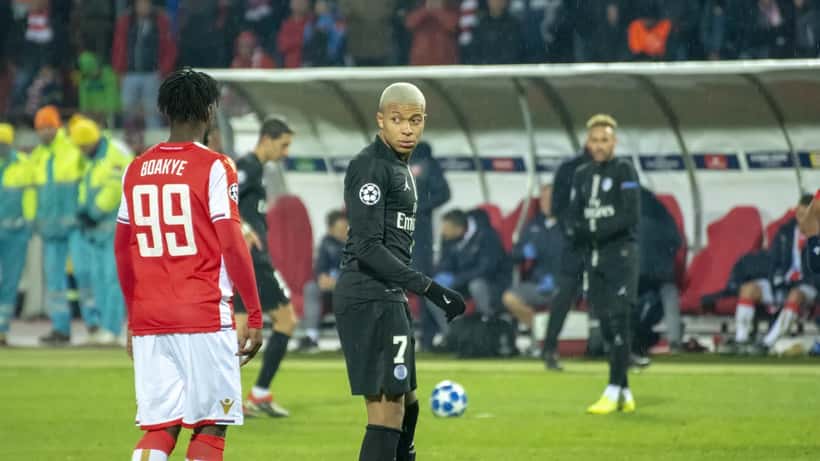
The match is the most linguistically loaded of the tournament for Canadians: every outfield player on France's roster speaks French as a first language, the commentary is available in both official languages, and the tactical chatter between Kylian Mbappé, Ousmane Dembélé, and Michael Olise is conducted in the very dialect taught in school curricula from Victoria to Halifax.
What Is Happening on June 30
France arrives at the Round of 32 having posted a perfect group stage — three wins, nine goals conceded only twice — their best group phase performance since the 1998 World Cup that ended with the trophy. Coach Didier Deschamps fields a 4-2-3-1 built around Mbappé as the lone striker, supported by Dembélé and the 22-year-old Michael Olise, who has emerged as a breakout star of the tournament from his spot on the right flank.
Sweden, missing key centre-back Isak Hien due to a hamstring injury, still possesses one of the most feared attacking duos in world football: Alexander Isak (Newcastle United) and Viktor Gyökeres (Sporting CP), who combined for 67 club goals this season. Winger Anthony Elanga stretches the pitch on the left. Sweden's defensive shape will be tested severely, but their counter-attacking threat is real.
Kick-off is at 17:00 ET / 14:00 PT. French-language broadcast is on TVA Sports in Quebec and Radio-Canada nationally. English coverage runs on TSN.
Why 1.7 Million Canadians Have a Stake in This Match Beyond Football
According to Statistics Canada, approximately 1.7 million young Canadians are currently enrolled in French-language studies outside Quebec, of whom 477,480 attend French immersion programs. Enrolment in French immersion has grown 41.3% since the 2010-11 school year — a remarkable uptick that reflects both parental demand and federal investment in Canada's official bilingualism commitments.
Yet the challenge every French immersion teacher knows intimately is the gap between classroom French and living French. Textbooks drill the passé composé. Real French — the contracted speech, the slang, the fast-fire reaction when Mbappé dribbles past a defender — is different. Broadcasting from a sporting event compresses vocabulary into highly repetitive, contextualised moments. You hear "le corner," "le hors-jeu," "le carton jaune" dozens of times in 90 minutes, each time paired with a visual cue on screen. Cognitive science calls this contextual embedding; language tutors call it what it is: the fastest way to make vocabulary stick.
Outside of Quebec, only 9.5% of Canadians can hold a conversation in both official languages, according to Statistics Canada's 2021 census. That figure has barely moved in two decades. The productivity cost is measurable: bilingual professionals in Canada earn approximately 10 to 15% more than their unilingual counterparts across federal, private, and crown-corporation employment sectors.
How a French Tutor Turns Kick-Off Into Classroom
Watching a match in French is immersion by exposure. Working through it with a tutor is immersion by design. The difference matters.
A qualified French language tutor — particularly one familiar with sport as a pedagogical context — can prepare a learner in advance with match-specific vocabulary (les tirs, la défense, le milieu de terrain), pause on key broadcasts moments after the final whistle, and build a targeted vocabulary session around what the learner actually heard. For children in French immersion who find grammar exercises demotivating, sport provides an emotional hook that textbooks cannot replicate. Competitive engagement — who won? who scored? — keeps the learner's attention sharp in a way that conjugation tables rarely do.
For adult learners working toward bilingualism for professional purposes, France vs Sweden offers something even more specific: exposure to the regional French of metropolitan France, which remains the benchmark for DELF and DALF certifications and for federal public-service language evaluations in Canada.
Platforms such as Expert Zoom connect Canadian learners with certified French tutors who offer sessions timed precisely around events like this — a 30-minute pre-match vocabulary primer, or a 45-minute post-match debrief analysing what the learner actually understood during broadcast.
What to Do Before and After Today's Match
Before kick-off (17:00 ET): Switch your broadcast language to French on TVA Sports or Radio-Canada. Write down five vocabulary words you do not recognise in the first ten minutes. These become your session material.
During the match: Pay attention to transitions — the moments just after a goal, a foul, or a substitution. Commentators describe action at their most animated precisely then, and the vocabulary density is highest.
After the match: Schedule a tutoring session within 48 hours while the audio is still fresh in your memory. Research consistently shows language retention drops steeply after 72 hours without reinforcement, a principle documented by the Canadian Language Benchmarks framework referenced in federal language-training guidelines.
According to the Government of Canada's official languages portal, approximately 94,000 federal public servants took language training in a recent measured year. For Canadians pursuing those positions — or any role that requires a BBB or CBC federal evaluation — every hour of authentic French exposure, including a 90-minute World Cup match, counts toward that goal.
France against Sweden is, on paper, a football match. For 1.7 million Canadian French learners, it is 90 minutes of structured audio content delivered by the most fluent native speakers on the planet. The lesson is free. A tutor makes sure it actually lands.
Note: This article covers a live sporting event and reflects pre-match information as of June 30, 2026. For match results and official language learning resources, visit canada.ca/en/canadian-heritage/services/official-languages-bilingualism.
