 Nathalie Dubois
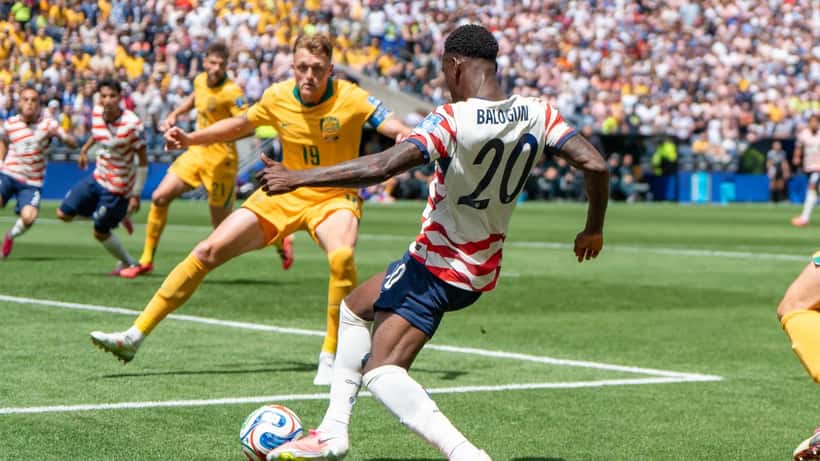
Folarin Balogun will watch from the stands when the United States faces Belgium in the FIFA World Cup 2026 Round of 16 tomorrow in Seattle — suspended at the worst possible moment of his international career. The high-profile exclusion raises a question that matters well beyond elite sport: when a governing body hands down a suspension, what rights do athletes actually have to challenge it?
USA vs Belgium Tomorrow in Seattle — A Match Defined by Absence
The Round of 16 clash at Lumen Field (8:00 PM ET, July 6) pits host-nation USA against a resilient Belgium side that recovered from a deficit to eliminate Senegal in the previous round. For the Americans, this crucial match arrives without their most dangerous attacking threat. Balogun, whose group-stage performances electrified American fans and cemented his role as the team's primary forward, is ineligible following automatic yellow card accumulation — a mandatory one-game ban triggered under FIFA's tournament disciplinary framework.
Head coach Gregg Berhalter must now reshuffle his attacking options against a Belgian defensive unit anchored by Thibaut Courtois in goal. Belgium arrives with serious firepower of their own: Kevin De Bruyne orchestrating from midfield and Romelu Lukaku leading the line — the same duo that dismantled the USA in the 2014 R16 in extra time. That history adds extra weight to a match already charged with pressure. Balogun's absence makes the American task substantially harder, and it puts a spotlight on how disciplinary rules can reshape tournaments.
How FIFA's Disciplinary System Works — and Where It Can Be Challenged
Under FIFA's Disciplinary Code, automatic suspensions triggered by yellow card accumulation are among the most difficult to reverse. Article 51 of the Code specifies that a player who reaches the defined caution threshold during a tournament phase is automatically suspended for the immediately following match. Unlike red card decisions — which are subject to review by the FIFA Disciplinary Committee within 24 hours — yellow card accumulation bans are generally not overturnable unless there is proven mistaken identity or a documented administrative error in the records.
The Court of Arbitration for Sport (CAS) operates a dedicated Ad Hoc Division at every FIFA World Cup, accepting urgent appeals that must be resolved within 24 hours of filing. National federations or athletes can apply directly. However, past CAS precedent makes clear that the panel rarely interferes with automatic accumulation bans — they are built into the tournament structure precisely to deter cynical fouling, and reversing them would undermine that deterrent.
The situation differs significantly for red cards and misconduct charges. Bans arising from violent conduct, abusive language, or anti-doping violations carry a full appeal right through the FIFA Appeal Committee, with subsequent recourse to CAS. Interim stays — effectively pausing a suspension while appeal proceeds — can be granted in exceptional circumstances, though the bar is high when sporting integrity considerations are in play.
Canadian Athletes Face the Same Disciplinary Structures
While the FIFA framework governs international competition, Canadian athletes competing across organized sport encounter comparable disciplinary mechanisms at the domestic level. Under the Sport Dispute Resolution Centre of Canada (SDRCC), independent arbitration and mediation is available for disputes involving national team selection, eligibility decisions, and disciplinary sanctions — covering sports from alpine skiing to lacrosse to soccer.
The SDRCC can grant urgent interim relief, effectively pausing a suspension while a dispute is heard. But applications must be filed promptly and backed by clear legal arguments. An athlete who waits two weeks to seek advice may find the competition window has already closed, making any eventual ruling meaningless in practical terms.
Under the Physical Activity and Sport Act, athletes also have a statutory right to arbitration where a sport organization's internal process fails to resolve a dispute within a defined period. This right is frequently overlooked by athletes and their families. A sports lawyer familiar with Canadian sport governance can identify whether a faster route to relief exists outside the federation's own tribunal — a path that many athletes do not know is available to them.
For Canadian youth athletes, who may face suspension decisions in provincial leagues or national team selection processes, understanding these mechanisms before a crisis arises is invaluable. As recent World Cup disputes have shown, sports governance can move quickly and the legal landscape is more navigable than it appears — with the right guidance.
What a Suspended Athlete Should Do in the First 48 Hours
The 24 to 48 hours following a suspension are the most consequential. The steps that protect an athlete's position are straightforward, but time-sensitive.
Document everything immediately. Collect match footage, official notifications, referee reports, and any prior disciplinary correspondence. Once appeal deadlines pass, retroactive challenges become nearly impossible regardless of the merits.
Assess the legal basis of the decision. Determine whether the suspension arises from a mandatory automatic rule — such as yellow card accumulation — or a discretionary decision made by a panel or official. Discretionary decisions are considerably more vulnerable to challenge because they require the decision-maker to have exercised judgment properly. They can be challenged on grounds of procedural unfairness, disproportionality, or failure to consider relevant evidence.
File urgently. In tournament settings, appeal bodies operate on compressed timelines. The CAS Ad Hoc Division accepts applications around the clock during major events. At the national level, the SDRCC offers expedited procedures designed for exactly these situations. A lawyer experienced in sports arbitration can prepare an emergency application within hours when needed.
Get a realistic assessment before filing. Not every suspension can be reversed, and pursuing a challenge that has no realistic prospect of success wastes limited resources and can strain an athlete's relationship with their federation. Candid initial advice — before committing to an appeal — is often the most valuable thing a sports lawyer can offer.
The Broader Lesson From the Seattle Matchup
Balogun's suspension is a reminder that disciplinary rules can override talent, preparation, and months of effort in a matter of seconds. For professional athletes playing under international federation codes, the rules governing challenges are technical, time-limited, and require specialist knowledge to navigate.
The same applies at the grassroots level in Canada. Whether the issue is a suspension handed down by a provincial association, a national team selection decision that seems arbitrary, or a doping charge that an athlete believes is procedurally flawed, the principles are the same: rights exist, but they expire quickly.
Canadian athletes and their families who face disciplinary decisions — at any level of competition — are better positioned to protect those rights when they seek qualified legal advice early. Sports lawyers in Canada work across national and international frameworks and can advise on the fastest available route to challenge an unfair outcome.
This article is provided for informational purposes only and does not constitute legal advice. For guidance specific to your situation, consult a qualified legal professional.
