 Ella Singh
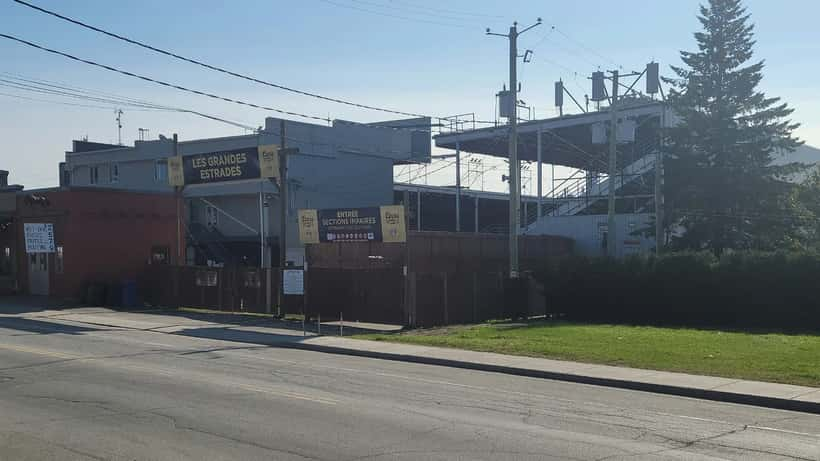
Every September, the small town of Saint-Tite, Quebec transforms into the western capital of North America. The Festival Western de Saint-Tite runs September 11–20, 2026, drawing over 700,000 visitors across ten days for its rodeo competitions, barrel racing, and western culture celebrations. But beneath the cowboy hats and arena dust, a quieter conversation is gaining volume: what does Canada's most-watched outdoor rodeo actually do to protect the animals at its centre — and what does that mean for owners, riders, and the veterinarians who care for competition horses?
North America's Biggest Outdoor Rodeo Returns — With Animal Welfare Under the Microscope
The festival has held the title of best outdoor rodeo in North America for two consecutive decades, as recognized by the International Professional Rodeo Association (IPRA). The 2026 edition arrives amid a broader national debate on livestock welfare following public statements by a Université de Montréal professor questioning whether certain rodeo practices are compatible with Quebec's Animal Welfare and Safety Act — the provincial law that sets binding standards for animals across the province.
The IPRA, which officially sanctions the Saint-Tite rodeo, enforces more than 40 specific rules governing animal treatment during competition. Among them: horses may perform a maximum of two times across the full ten-day festival; bulls are limited to three performances; and any animal transport exceeding twelve hours must include mandatory rest, feeding, and watering stops along the route. These rules represent a floor, not a ceiling — and whether they are sufficient is exactly what veterinary professionals and legal advocates are being asked more frequently.
Understanding what those protections cover — and more importantly, what they don't — is increasingly important for the thousands of Canadian animal owners and competitors who attend, or send their animals to, Saint-Tite each fall.
What Veterinarians Are Watching at Saint-Tite
Equine veterinarians identify distinct physical risk categories in each rodeo discipline. Barrel racing places significant stress on a horse's forelimb tendons and hock joints through tight, high-speed turns. Calf roping involves rapid deceleration that can affect the horse's neck and shoulder musculature. Bull riding, while primarily a human risk sport, exposes bulls to back and flank stress from the equipment and from occasional fall impact.
Since 1996, the festival has operated a Vet Check program that makes it the only rodeo in North America to drug test every animal participating in the event. Each competing horse receives a mandatory pre-competition health screening. Any animal showing signs of lameness, distress, or prohibited substances is withheld from the arena. According to the festival's published animal welfare protocols, on-site veterinary staff are present throughout the competition period.
Veterinary specialists emphasize, however, that structured event-day oversight does not eliminate post-competition risk. Delayed-onset injuries — soft-tissue inflammation, tendon micro-tears, stress-related lameness — frequently appear 24 to 72 hours after competition ends, when the animal is back in its home environment and the event's veterinary team is no longer accessible. This gap is where owner preparedness matters most, and where consulting a veterinarian in advance of the season can make a measurable difference.
For context on how veterinary standards apply to high-performance horses in Canada, the principles are similar to those documented in 2026 Canadian racehorse welfare care standards — early detection and structured post-event protocols are the consistent recommendation across disciplines.
The Vet Check Program: What Three Decades of On-Site Oversight Tell Us
The Vet Check program's longevity — now in its 30th year — reflects the festival's recognition that proactive veterinary monitoring is more effective than reactive response. Drug testing all animals, rather than sampling, eliminates the ambiguity that can arise in welfare disputes: either a substance is present or it is not.
Yet even the most comprehensive event-day protocol has boundaries. The IPRA's 40-plus rules govern what happens inside the arena and during transport to the event. They do not govern what happens in the days after the last performance, when animals are back in their home provinces. Provincial veterinary coverage, private insurance, and owner vigilance fill that gap — or fail to.
Animal owners who rely solely on the festival's own veterinary oversight as their animal welfare strategy are, in effect, relying on a system designed to protect animals during the event from conditions that often manifest after it. A proactive consultation with a licensed veterinarian — before the season, not after an injury appears — is the standard recommendation from equine health professionals across Canada.
A Real Scenario: What It Costs When a Competition Horse Shows Lameness After Saint-Tite
Consider the situation of a barrel racer from rural Alberta who trailered her quarter horse to Saint-Tite for the 2026 competition. The journey covered approximately 3,400 kilometres — well over the 12-hour transport threshold that triggers mandatory rest-stop requirements. Her horse competed in its full two-performance allotment, placing in the top ten in the first round.
Forty-eight hours after returning home, the horse showed mild left-forelimb lameness. A Grade 2 assessment on the American Association of Equine Practitioners (AAEP) scale — detectable at trot, absent at walk — was confirmed by her local veterinarian.
If she holds a private equine insurance policy that explicitly covers competition-related injuries, she can claim for initial diagnostics: a full lameness exam and flexion tests run $120–180 CAD; ultrasound imaging for soft-tissue evaluation adds $250–400 CAD; a nerve block series, if required, costs $400–600 CAD. Total initial diagnostic range: approximately $800–1,200 CAD — covered under policy.
If she is uninsured, those same diagnostic costs come directly out of pocket. And that is before treatment. Rest protocols for soft-tissue injuries in competition horses run 4 to 12 weeks, with follow-up imaging commonly required at the 4-week mark. A full lameness workup with specialist imaging at an equine clinic in Alberta or Ontario can reach $2,500 CAD or more.
The critical if/then: If she consults a veterinarian within 48 hours of noticing the lameness, the probability of resolution through rest and anti-inflammatory treatment alone is high, and the expected recovery window is 4–6 weeks. If she waits more than 7 days before seeking assessment, the likelihood of the condition progressing to a chronic injury increases substantially — along with the cost of care, which can more than double once secondary complications set in.
This scenario plays out across Canada every September. It is not a festival-specific problem — it is a competition horse ownership problem. A veterinarian who understands equine sports medicine, and ideally one familiar with the regulatory context of rodeo events, can help owners build a post-competition health protocol before the first performance, not after a problem appears. For guidance on building a comprehensive care plan for horses in competition, the complete horse care guide for Canadian owners covers pre- and post-season protocols in detail.
What Animal Owners and Competitors Should Do Before and After Saint-Tite
For owners attending or competing at the 2026 Festival Western de Saint-Tite, veterinary and legal professionals recommend several concrete steps.
Verify your insurance wording before you travel. Competition horses require equine mortality or major medical policies that explicitly include rodeo and western event participation. Many standard agricultural insurance policies exclude livestock competition injuries — a clause that catches owners off guard only when a claim is needed.
Request documentation of the IPRA welfare compliance protocol. Knowing which of the 40-plus rules applied to your animal during the event establishes a baseline for any post-event welfare or liability discussion. This documentation can be requested from the festival organizers or through the IPRA.
Book a post-competition veterinary appointment before you leave for the festival. Veterinary schedules in late September fill quickly. A 24-to-48-hour post-event wellness exam is the standard recommended by equine health professionals for any animal coming off a multi-day competition program.
Understand your rights under Quebec law. Quebec's Act respecting animal welfare and safety establishes binding standards for animal treatment across the province. If you believe your animal was mishandled during a festival event, a veterinarian's written clinical assessment serves as the primary evidence for a complaint filed with the Ministère de l'Agriculture, des Pêcheries et de l'Alimentation du Québec (MAPAQ). An animal welfare specialist who understands both the clinical and legal dimensions of competition animals can help owners navigate this process efficiently.
The Festival Western de Saint-Tite is, by most measures, one of the most organized and veterinary-forward rodeo events in North America. Its Vet Check program, performance limits, and IPRA oversight represent genuine investment in animal welfare. But that infrastructure is designed for the event. What happens before and after — how owners prepare their animals, how they cover post-competition care, and how they understand their legal standing — is where a qualified veterinarian or legal expert makes the difference between a successful season and an expensive one.
The information in this article is intended for general awareness and does not constitute veterinary or legal advice. Consult a licensed veterinarian or qualified legal professional for guidance specific to your situation.
format_used: Expert reaction
