 Olivia Tremblay
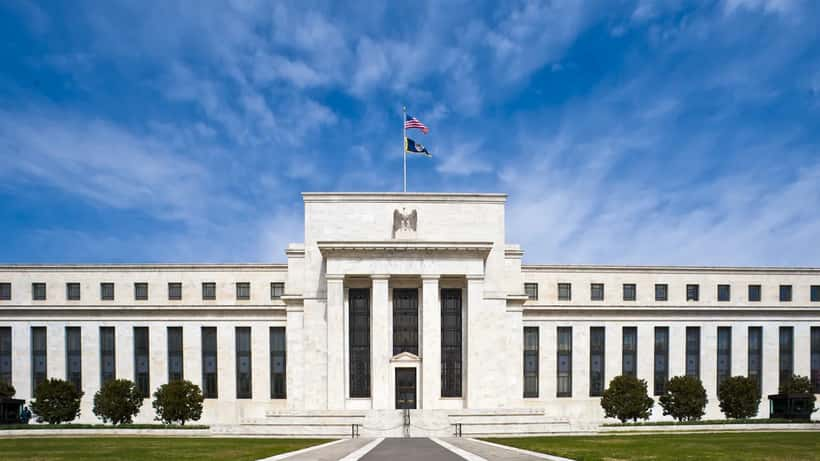
The US Federal Reserve raised its benchmark interest rate to a target range of 3.75%–4.00% on September 16, 2026 — the first rate hike since 2023 — while the Bank of Canada held its overnight rate steady at 2.25%. That 175-basis-point gap between Washington and Ottawa is not just an economic footnote. It is already reshaping Canadian GIC yields, RRSP valuations, and the cost of carrying a variable-rate mortgage this fall.
The September 16 Numbers: Fed at 4%, BoC at 2.25%
The Federal Reserve's decision came after months of persistent inflation driven largely by an energy shock tied to ongoing geopolitical disruptions in global oil markets. US consumer prices have remained above the Fed's 2% target throughout 2026, and the central bank's September statement made clear that further tightening remains on the table — markets are currently pricing the Fed funds rate reaching 4.25%–4.50% before year end, according to FedRateCalc.
The Bank of Canada took the opposite path at its own September meeting, holding the overnight rate at 2.25% — a rate it has maintained since earlier this year. However, the BoC did not close the door on future increases. Its September statement flagged "upside risks to inflation," a phrase that Canadian economists read as a signal that one more hike before spring 2027 is possible, not hypothetical.
Here is where the two central banks stand as of September 16, 2026:
| Central Bank | Current Rate | Direction | Gap vs. Other |
|---|---|---|---|
| US Federal Reserve | 4.00% | ↑ Hiking | +175 bps |
| Bank of Canada | 2.25% | → Holding | — |
The Bank of Canada's official overnight rate page confirms the current target remains 2.25%. The 175-basis-point spread is now the widest it has been since 2022, and it affects Canadian households through three distinct transmission channels: the exchange rate, fixed-income yields, and — indirectly — the future trajectory of the prime rate.
Why 175 Basis Points Is a Bigger Deal Than a Domestic Rate Move
When the two central banks move in the same direction — as they did during the 2022–2023 hiking cycle — the effects on Canadians are relatively straightforward. Borrowing costs rise across the board; savers benefit. But when the Fed hikes while the Bank of Canada holds, three simultaneous pressures activate that most Canadians have never been explicitly briefed on.
Currency pressure on the Canadian dollar. Higher US rates attract capital into USD-denominated assets, pulling the Canadian dollar lower. The USD/CAD exchange rate is already holding near 1.39 in September 2026, according to MTFX Group's monthly currency forecast, compared to approximately 1.34 earlier in the year. Every additional Fed hike without a BoC response adds incremental downward pressure on the CAD.
Bond yield spillover without a domestic trigger. Canadian long-term bond yields do not exist in isolation. They track US Treasuries more closely than most retail investors realize. As US 10-year yields rise in response to the Fed's hiking cycle, Canadian government bond yields face upward pressure too — compressing prices for anyone holding bond ETFs or fixed-income funds in their TFSA or RRSP.
A lagged prime rate risk for variable-rate mortgage holders. The Bank of Canada's hold today means Canada's prime rate stays unchanged at roughly 4.45%. But the BoC's own language about upside inflation risks suggests that a catch-up hike is a live possibility. Variable-rate mortgage holders in Canada have a brief window — perhaps two to three months — to assess their exposure before the BoC's next decision.
What USD/CAD at 1.39 Is Already Doing to Canadian RRSPs
Approximately 4.5 million Canadian households hold RRSP or RRIF accounts with meaningful US equity exposure, typically through S&P 500 or total US market ETFs. For those investors, the exchange rate move since January 2026 has created an invisible return — and an invisible risk.
If a Canadian RRSP held C$100,000 in US equity at the start of 2026 — when USD/CAD was near 1.34 — and those underlying US stocks remained flat in USD terms, the same position now reads as approximately C$103,700 at the current rate of 1.39. That is a 3.7% currency-driven gain that shows up in the account balance without any investment appreciation.
That sounds unambiguously positive. The hidden risk is timing. If the Canadian dollar recovers — which it would if the BoC hikes while the Fed pauses — that 3.7% gain disappears just as quietly as it appeared. And if an investor rebalances or withdraws cash in the interim, they may crystallize a currency position rather than an investment thesis. This is precisely the kind of situation where a conversation with a Canadian wealth management specialist — rather than an auto-rebalancing rule — can save thousands of dollars. For a guide to how prior Bank of Canada rate decisions have affected Canadian investment returns, see the analysis on Expert Zoom.
The GIC Renewal Scenario Every Canadian Saver Should Model
Consider a 54-year-old Ontario resident — call her Marie — who has C$120,000 in a 2-year GIC maturing on October 10, 2026. Her bank sent a renewal notice offering a standard 2-year term at the posted rate. She is considering letting it auto-renew.
Here is what the Fed-BoC divergence means for her specific decision:
If she locks in October 10 at her bank's posted 2-year rate — currently in the 3.8%–4.0% range for most major Canadian institutions — she captures today's yield. That generates approximately C$4,680 in annual interest on C$120,000 at 3.9%.
If the Bank of Canada raises rates by 25 basis points before Q1 2027 (which futures markets currently price at roughly 45% probability), new 2-year GIC rates could move to 4.1%–4.2%. The same C$120,000 at 4.15% generates C$4,980 per year — a difference of approximately C$300 annually, or C$600 over the 2-year term, compared to locking in today.
If instead Marie splits her C$120,000 into a 90-day cashable GIC (C$40,000) and an 18-month locked-in GIC (C$80,000), she preserves partial flexibility. The C$40,000 cashable portion can be reinvested at a higher rate if the BoC hikes by December. The C$80,000 locked-in portion captures today's rate. This ladder structure is standard wealth management practice — but most bank renewal letters present only a single term option.
The if/then logic: if the Bank of Canada raises rates once before April 2027, then Marie's failure to ladder costs her at minimum C$300 in annual interest income — a loss she never sees because the alternative was never offered to her. If the BoC stays at 2.25% through 2027, the laddered approach costs her nothing; she simply rolls the cashable portion into a longer term when it matures.
Three Actions Worth Taking Before October 2026
The September 16 rate divergence creates three concrete decisions for Canadian households right now:
1. Review your RRSP's currency weight. If US equity now exceeds 40% of your RRSP by market value — which is plausible given the CAD weakening from 1.34 to 1.39 — you may be inadvertently overweight in USD. A wealth manager can model a rebalancing scenario that captures some currency gain without triggering unnecessary tax consequences or trading fees inside the registered account.
2. Do not auto-renew your GIC without a ladder review. Any GIC maturing before December 31, 2026 deserves a fresh look at the ladder structure described above. A 90-day cashable position costs almost nothing in yield (typically 10–15 basis points less than a locked-in term), but it buys you a full quarter of optionality at a critical moment in the rate cycle.
3. Model your variable-rate mortgage under two BoC scenarios. If your mortgage is floating or coming up for renewal before spring 2027, run two calculations: one assuming the BoC holds at 2.25% through March 2027, and one assuming a 25-basis-point hike in January. For most Canadian mortgage holders, a single 25-bps hike on a C$400,000 variable-rate mortgage adds approximately C$83 per month to payments. That is manageable — but it is worth knowing in advance.
The 175-basis-point gap between the Fed and the Bank of Canada will not remain static. It either widens as the Fed continues hiking and the BoC holds, putting further pressure on the Canadian dollar and Canadian bond yields — or it narrows as the Bank of Canada follows with its own increase, affecting the prime rate and everything tied to it. Either scenario has direct dollar consequences for Canadian savers and homeowners.
A qualified Canadian wealth management advisor can translate the September 16 FOMC decision into your specific numbers: your mortgage balance, your GIC maturity dates, your RRSP allocation. The Fed moved. The question is whether your portfolio moves with the same intentionality.
This article is for informational purposes only and does not constitute financial, investment, or mortgage advice. Always consult a licensed Canadian financial advisor before making decisions based on interest rate forecasts or central bank policy changes.
