 Clara Dubois
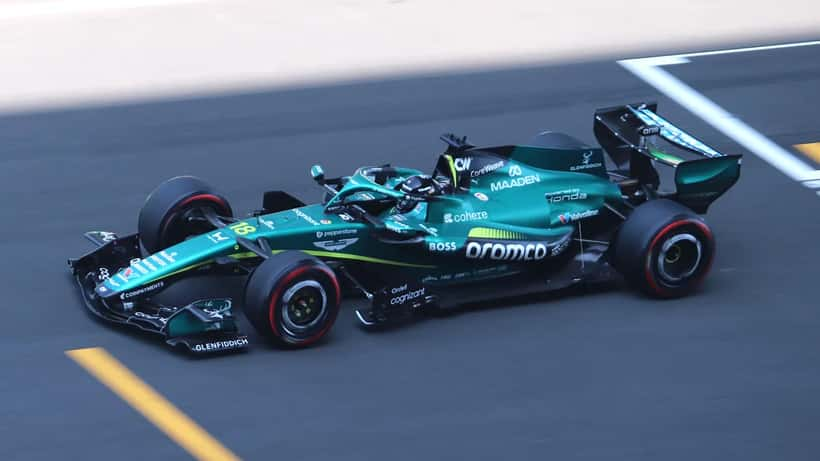
It started with a vibration. By the time Lance Stroll and Aston Martin reached round 14 of the 2026 Formula 1 season, that persistent Honda power unit instability had produced the most dismal reliability record in the modern grid: 10 retirements, zero championship points, and a best finish of 13th place in Hungary. For Canadian fans watching their hometown hero fall further behind each weekend, it is a painful season to follow. For Canadian IT professionals and business owners who manage complex systems under operational pressure, it is also a case study worth reading closely — because the data to prevent most of those failures was already there.
The Numbers That Define Aston Martin's 2026 Season
No driver in the 2026 field comes close to Stroll's DNF tally. While Kimi Antonelli has built a Mercedes championship challenge on near-flawless reliability — four wins including a dominant performance at the Circuit Gilles Villeneuve in Montreal in May — Aston Martin has burned through power units, gearboxes, and the team's credibility in successive rounds. The numbers paint an unambiguous picture:
| Metric | Stroll / Aston Martin | Antonelli / Mercedes |
|---|---|---|
| DNFs in 14 races | 10 | 1 |
| Championship points | 0 | Leading |
| Identified power unit failures | 7+ | 0 |
| Pre-season performance gap | 4 to 4.5 seconds off pole | On pole 6 times |
The 2026 regulations make data management more demanding than any previous generation of F1 rules. Active aerodynamics — replacing the old DRS system with adjustable front and rear wing elements — require real-time sensor compliance monitoring across every corner of the circuit. The new hybrid power units now push 350 kW of electric motor output, nearly three times the 120 kW limit of the previous generation, meaning energy deployment decisions must be made with millisecond accuracy. Every car on the 2026 grid generates 1.5 terabytes of data across a race weekend, with 300 onboard sensors producing 1.1 million telemetry data points per second.
In theory, that data volume should make catastrophic failures harder to miss. The fact that Aston Martin suffered 10 anyway is not evidence that the data was absent. It is evidence that having data and acting on data are two different problems.
How F1's Top Teams Turn Raw Signals Into Race Results
Mercedes and McLaren did not build their 2026 reliability edge by fitting better parts. They built it by building better processes around their data. When an engineer in the pitlane reviews a car's real-time status, the telemetry arrives with a 2-millisecond delay from sensor to screen — synchronised across all 300 data channels into a unified view of every component. Factory teams connected by encrypted satellite links review the same feed simultaneously. Predictive algorithms watch for micro-vibration signatures, temperature drift patterns, and pressure anomalies that precede component failures by anywhere from a few seconds to several laps.
The practical result: a potential gearbox failure does not wait until the car stops on the circuit. The system flags the precursor pattern, the pit wall adjusts strategy, and a controlled retirement or precautionary stop replaces an uncontrolled breakdown. The same principle applies to Honda's new power unit architecture, where vibration at specific frequency bands correlates with bearing wear. Catch it early and the failure is a data point. Catch it late and it is a DNF.
This is the gap between Aston Martin and the championship contenders in 2026 — not the hardware, but the analytical infrastructure around it.
The Same Gap Exists Across Canadian Industry
Canadian businesses face a version of the same challenge at a different scale. Fewer than 30 percent of Canadian small and medium-sized enterprises currently use real-time monitoring or predictive analytics tools, according to the digital economy surveys published by Statistics Canada — even in capital-intensive sectors where a single equipment failure can cost $10,000 to $50,000 in lost production time and emergency repair fees.
The parallels to Aston Martin's situation are not metaphorical. A refrigeration failure at a food processing plant, a conveyor breakdown at an automotive parts supplier, a server outage at a financial services firm: each represents a situation where the relevant data existed before the failure, but no automated system existed to act on it in time. Canada's digital transformation agenda, outlined by Innovation, Science and Economic Development Canada's digital transformation guide, specifically identifies real-time data infrastructure as a priority investment area for SMEs seeking competitive operational resilience.
Canadian IT specialists are increasingly being asked to close this gap — specifying IoT sensor architectures, configuring alert thresholds, and building monitoring dashboards that flag anomalies before they cascade into costly failures. Sports technology has begun offering reference models for how this can work at scale. As covered in the ExpertZoom article on how IoT connected systems are transforming sports operations in Canada, real-time data infrastructure originally developed for performance analytics is now transferring directly into industrial and commercial applications.
If Your Business Had Aston Martin's Reliability Record: A Concrete Scenario
Consider a mid-sized manufacturing operation in Ontario — 60 machines running two production shifts per day, serving a mix of automotive and consumer goods clients. In the first half of 2026, the business recorded 4 unplanned equipment shutdowns. Each shutdown averaged 3 hours of lost production time plus emergency technician callouts, at a combined cost of approximately $17,500 per incident. Total cost: $70,000 in avoidable losses across six months.
An IT specialist auditing the facility's current infrastructure would find the following: sensors already exist on every major machine (temperature probes, vibration monitors, pressure transducers), but the data is logged to local drives without automated alerting, and reviewed — if at all — during scheduled weekly checks.
If a real-time IoT monitoring stack were deployed with automated alerting:
- Temperature drift and micro-vibration signatures would flag anomalies 4 to 6 hours before the failure threshold is reached
- An automated SMS or dashboard alert routes to the on-call technician, who schedules a 90-minute preventive maintenance window during a lower-demand period
- The $17,500 emergency shutdown becomes a $1,400 planned part replacement and 90 minutes of scheduled downtime
The financial calculation: preventing 3 of the 4 annual shutdowns saves approximately $48,000 per year. A properly scoped IoT monitoring deployment for a 60-machine facility — including sensor integration, dashboard configuration, and alert protocol setup — typically runs between $25,000 and $45,000 for initial deployment. The investment pays for itself within the first year in prevented failure costs alone, before accounting for extended equipment lifespan and reduced emergency contractor fees.
This is the kind of cost-benefit model an experienced IT specialist can build before a single sensor is touched. The technology has become commoditised; the expertise to design the right architecture, integrate it with existing equipment protocols, and configure meaningful alert thresholds is what determines whether a monitoring system delivers value or generates noise.
What to Ask Before Your Next Unplanned Shutdown
Lance Stroll's 2026 season will not be the last time a technically sophisticated operation underperforms because its data infrastructure failed to keep pace with its hardware. The same pattern repeats across Canadian industries every quarter.
The right starting conversation with an IT specialist covers four questions:
What data am I already generating that I am not analysing in real time? Most businesses discover that their existing equipment produces far more actionable telemetry than anyone currently reviews.
What is my actual per-hour cost of unplanned downtime? This figure — production loss plus emergency labour plus contract penalties — is the correct denominator for every IT investment decision that follows.
What industry standards or regulatory requirements apply to my monitoring setup? Cold-chain compliance in food manufacturing, uptime obligations in financial services, and safety monitoring in construction all carry specific thresholds that a monitoring architecture must satisfy.
What does a realistic implementation timeline look like for my size of operation? For a 50 to 80 machine facility, a full IoT monitoring deployment from specification to live dashboard typically runs 3 to 5 months with a competent IT specialist leading the project.
Aston Martin arrived in 2026 with the right components and the right designer. What the team appears to have lacked was the operational data infrastructure to turn 300 sensors' worth of warning signals into timely decisions. Canadian businesses that face the same question — and most do — have access to IT specialists who can build that infrastructure without requiring an F1 budget.
The consultation begins with understanding what you already have. The answer, more often than not, is more than you think.
format_used: Data deep-dive
