 Clara Thompson
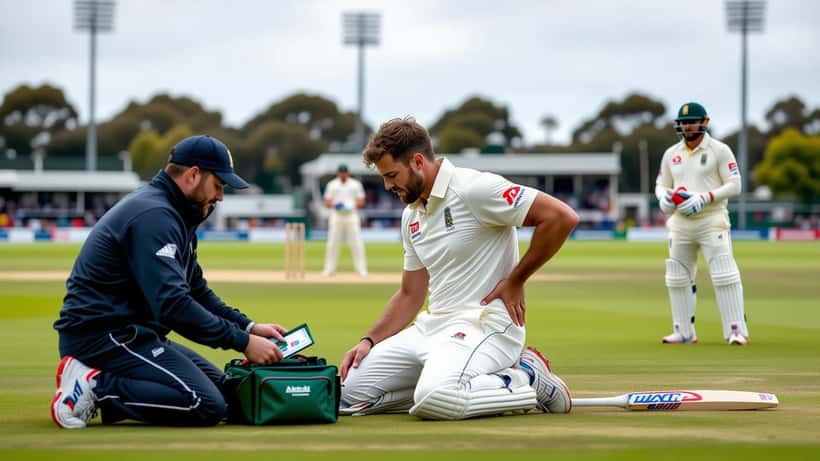
As India and England meet at Sophia Gardens in Cardiff on 16 July 2026 for the second one-day international, the scorecard is not the only place where the damage is showing. India arrived for this white-ball tour without pace bowler Akash Deep, who was ruled out earlier in the year with a lower-back stress injury, and the squad has since absorbed a Grade 1 hamstring strain to Harshit Rana and a Grade 2 hamstring problem for Varun Chakaravarthy, according to reporting from ESPNcricinfo and Sky Sports. The three-match series runs from Edgbaston on 14 July to Cardiff today and finishes at Lord's on 19 July.
For the millions of Canadians watching, the injury list is a reminder that the fastest, most explosive athletes break down in predictable ways. Fast bowlers, sprinters and weekend cricketers in Toronto, Brampton and Surrey share the same anatomy and, often, the same avoidable mistakes. Here is what these professional breakdowns can teach anyone who trains hard, and when a nagging ache is actually a reason to see a specialist.
Why fast bowlers keep fracturing their backs
A lower-back bone stress injury is not a bruise or a pulled muscle. It is a small crack that forms in the vertebrae when repetitive load is applied faster than the bone can repair itself. Fast bowling is one of the most punishing actions in sport: the spine hyperextends, rotates and side-bends within a fraction of a second, thousands of times a season. When rest is inadequate, the bone gives way.
The pattern is well understood in sports medicine. Bone stress injuries occur, as the Public Health Agency of Canada notes in its guidance on bone health and osteoporosis, when increased and repetitive stress weakens the bone faster than it can rest and rebuild. The same page stresses that general fitness, muscle strength and adequate calcium and vitamin D are protective — a point that matters in Canada, where limited winter sunlight makes vitamin D deficiency common.
The same repetitive-load mechanism explains why fast bowlers keep breaking down across the IPL and international calendar. You do not have to bowl at 145 km/h to be at risk. Recreational runners increasing mileage too quickly, teenagers in growth spurts and adults returning to sport after a sedentary winter all report the same low-grade, activity-related back or shin pain that professionals initially try to ignore.
The hamstring problem hiding in plain sight
The Rana and Chakaravarthy hamstring strains point to a second lesson. A "grade" is not marketing jargon — it is a clinical scale. A Grade 1 strain is a minor tear of a few muscle fibres, typically two to three weeks of recovery. A Grade 2 strain, like Chakaravarthy's, involves a larger partial tear and usually keeps an athlete out for several weeks. A Grade 3 is a complete rupture that can require surgery.
That grading is why professional teams scan injuries rather than guess. Most amateur athletes, by contrast, treat every "tight hamstring" the same way — a day of rest, then straight back to full effort. Returning before a partial tear has healed is the single most common cause of re-injury, and each re-tear extends the timeline and raises the risk of chronic weakness.
When an ache is a warning, not a niggle
Sore muscles after exercise are normal and usually ease within 48 hours. The signs that separate ordinary stiffness from an injury that needs assessment are more specific:
- Pain that is sharp and localised to one point on a bone, rather than spread across a muscle
- Discomfort that worsens the longer you exercise, instead of loosening up
- Pain that lingers at rest or wakes you at night
- Swelling, bruising, or a sudden "pop" felt during activity
- A limp, or an inability to bear weight or complete a normal movement
Any of these, especially back pain in a young athlete or bone-specific pain that recurs, warrants a professional opinion. Stress fractures rarely show on an ordinary X-ray in the first weeks, which is exactly why self-diagnosis fails — the injury is invisible precisely when early rest would help most.
What a Canadian consultation actually offers
This is where expert advice changes outcomes. A family physician or sports-medicine doctor can distinguish a muscle strain from a bone stress injury, order the right imaging (an MRI, not just an X-ray, for suspected stress fractures) and set a graded return-to-activity plan instead of a guess. A physiotherapist can then rebuild the strength and movement pattern that caused the breakdown, so the injury does not simply return the next season.
For active Canadians without a family doctor — a reality for millions — booking a virtual or in-person consultation with a qualified health professional through a platform such as Expert Zoom is a practical first step to get a symptom assessed rather than waiting for it to worsen. The goal is the same one professional medical teams pursue: catch the injury early, grade it accurately and protect the bone or muscle while it heals.
The takeaway from Cardiff
India will manage its bowling attack today with the caution that comes from an expensive injury list. Amateur athletes rarely have a physiotherapist on the boundary, but they can borrow the professionals' discipline: respect the difference between soreness and injury, build load gradually, protect bone health with proper nutrition, and get specific pain assessed rather than "running it off." Bone and muscle both reward patience — and both punish the athlete who mistakes a warning sign for a niggle.
This article is for general information only and is not medical advice. If you are experiencing persistent or severe pain, consult a qualified health professional for a diagnosis tailored to your situation.
