 Olivia Dubois
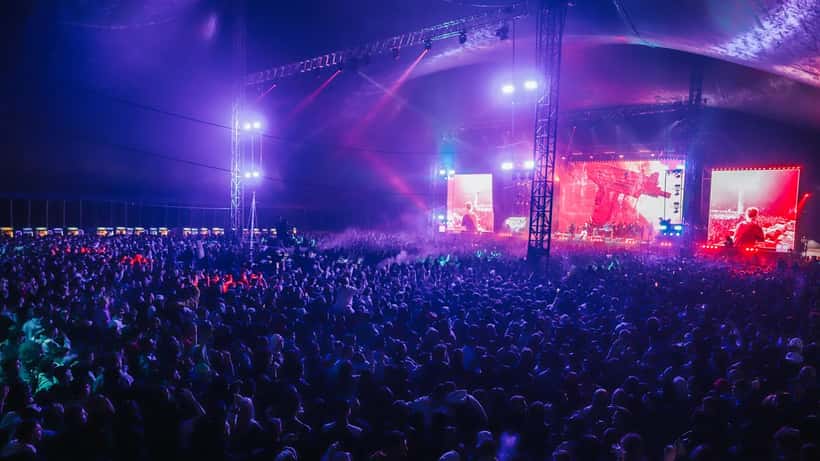
Electric Daisy Carnival returned to the Las Vegas Motor Speedway for its 30th anniversary on May 15-17, 2026, drawing an estimated 500,000 attendees — including thousands of Canadians who made the trip south for the world's largest electronic dance music festival. The crowds were record-setting. So was the noise. And while the lights faded by Sunday morning, the hearing damage for some festivalgoers may have only just begun.
The Sound Reality of EDC Las Vegas
EDC is not a quiet experience. Main stage sound systems at large festivals routinely push 115 to 120 decibels — the equivalent of standing next to an active sandblaster or a military jet preparing for takeoff. Sustained exposure at those levels doesn't just feel loud: it permanently destroys the microscopic hair cells in the inner ear that convert sound waves into signals your brain can process.
Those hair cells do not grow back.
The 2026 festival spanned three nights, with many attendees spending six to ten hours per day on the speedway grounds. For those near the front of stages like Circuit Grounds or Kinetic Field, peak exposure likely exceeded 110 dB for substantial stretches of time.
How Fast Damage Happens — The OSHA Threshold
The numbers are more alarming than most festivalgoers realize. According to the Occupational Safety and Health Administration (OSHA), exposure to environments above 110 decibels becomes damaging in just four minutes and 43 seconds. Every 3-decibel increase above 85 dB cuts the safe exposure window in half:
- 85 dB: safe for 8 hours
- 91 dB: safe for 2 hours
- 100 dB: safe for 15 minutes
- 110 dB: safe for less than 5 minutes
A three-day festival at EDC, even with protective gear, means cumulative exposure that most audiologists consider a genuine clinical risk — particularly for younger attendees, who may not notice gradual hearing threshold shifts until years later.
The Symptoms That Follow a Loud Weekend
Many EDC attendees return home with what they assume is temporary: muffled hearing, a sense of "fullness" in the ears, or a persistent ringing known as tinnitus. These are warning signs, not quirks.
Temporary threshold shift — a short-term reduction in hearing sensitivity — usually resolves within 24 to 48 hours. But if the hair cells have been genuinely damaged, the loss becomes permanent. Noise-induced hearing loss (NIHL) is insidious because it tends to accumulate across years of concert attendance before it is diagnosed.
Tinnitus — a ringing, buzzing, or hissing sound with no external source — affects roughly 360 million people globally, according to the World Health Organization. It has no cure, can disrupt sleep and concentration, and is strongly associated with repeated noise exposure. For young Canadians who attended EDC as part of a multi-festival summer, this year's experience may contribute to a cumulative risk that compounds over time.
What Doctors Recommend Before, During, and After
Audiologists are clear that noise-induced hearing loss is entirely preventable. The tools are simple; the challenge is consistent use.
Before the festival: Custom-moulded earplugs, available from audiologists for $150-$400, provide 15-25 dB of uniform noise reduction without distorting music quality the way foam plugs do. High-fidelity foam earplugs (also called musician's earplugs) are a more affordable alternative at $10-$30 and reduce volume while preserving sound fidelity.
During the festival: Take regular breaks in quieter areas. EDC's chill zones and art installations away from main stages can offer 30-60 minutes of lower-exposure recovery. Avoid proximity to speakers — even moving back 10 metres from a speaker cluster significantly reduces decibel exposure. Staying hydrated helps the body manage overall stress on the auditory system.
After the festival: If you experience ringing or muffled hearing that persists beyond 48 hours, schedule an assessment with an audiologist. Early intervention — even when no permanent loss has occurred yet — helps establish a hearing baseline and catches threshold shifts before they compound.
When to See a Specialist
Most cases of temporary post-festival hearing effects resolve independently. But several signs warrant a professional evaluation rather than waiting it out:
- Tinnitus lasting more than 48 hours after noise exposure ends
- A sense of muffled or "underwater" hearing that does not clear
- Difficulty following conversations in quiet environments
- A sudden drop in hearing in one ear more than the other
- Ringing accompanied by dizziness or a sensation of pressure
An audiologist can conduct a full audiogram to establish whether hair cell damage has occurred and recommend management strategies. For Canadians, provincial health plans cover some hearing assessments; supplemental insurance or direct referral options vary by province.
If you attend festivals regularly — whether EDC, Coachella, Osheaga, or summer concerts at venues like Vancouver's PNE — managing cumulative noise exposure is a long-term health issue, not just a post-weekend inconvenience. See PNE 2026 Summer Concerts and Hearing Safety for practical guidance specific to Canadian events.
The 30th anniversary of EDC Las Vegas was, by all accounts, a spectacular event. Hundreds of thousands of Canadians enjoyed it. But a weekend of music at 115 dB is also a medical exposure — one that deserves the same attention we give sunscreen before a day on the water. An expert consultation doesn't have to wait for a problem to become permanent.
This article is for informational purposes only. If you are experiencing persistent hearing symptoms after attending a loud event, consult a qualified audiologist or physician.
