 Chloé Dubois
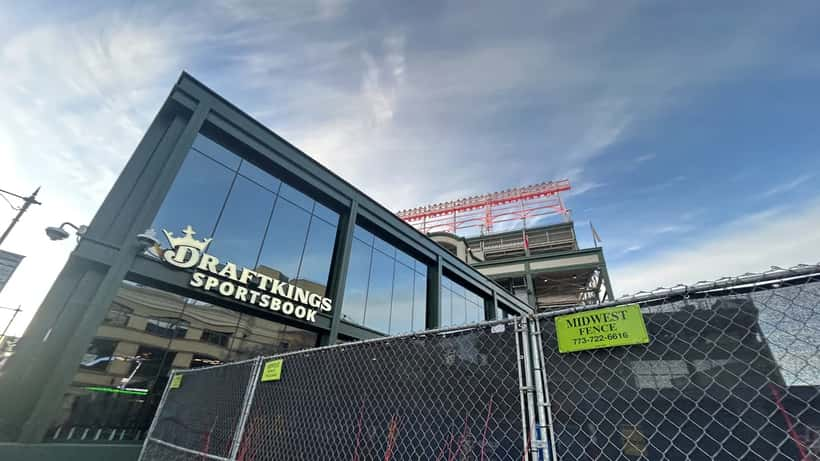
DraftKings officially launched in Alberta on July 13, 2026, making the province the second in Canada — after Ontario — to welcome the American sports betting giant as a fully licensed operator. Thousands of Canadians rushed to open accounts. But amid the fanfare, a quieter story is emerging: a growing number of players report frozen accounts and withheld payouts, and most have no idea they hold formal legal remedies under Canadian regulatory law.
Alberta Joins Ontario in Regulated Online Gambling
Alberta's regulated iGaming market opened to private operators on July 13, 2026, transforming a landscape that had long been dominated by government-run casinos and unaccountable offshore sites. DraftKings, operating in Alberta as Crown DK CAN Ltd., secured a licence through the Alberta Gaming, Liquor and Cannabis regulator (AGLC) via the Alberta iGaming Corporation (AiGC). In Ontario, DraftKings has held an Alcohol and Gaming Commission of Ontario (AGCO) licence since 2022, giving it regulated-market standing in both provinces.
The dual-licence position makes DraftKings one of the most significant private sports betting operators in the country. Industry estimates place Canada's 2026 sports wagering market above CAD $7 billion in total wagers — a number that is only growing as more provinces open to licensed competitors. For players, the shift from grey-market to licensed platforms should mean better protection. In practice, the transition has exposed a new category of dispute: the account freeze.
The Account Freeze Problem — What's Actually Happening
Under both the Ontario and Alberta frameworks, DraftKings is legally permitted to suspend account activity and temporarily hold funds while conducting identity verification, anti-money laundering checks, or eligibility reviews. The platform's Terms of Use state explicitly that "failure to comply with DraftKings agreements will result in disqualification and, if applicable, prize forfeiture."
What many players don't read in the fine print: these reviews can last days or even weeks, and the platform is not always transparent about what triggered a freeze. Consumer complaints logged with iGaming Ontario show recurring patterns:
- Accounts frozen after a first large withdrawal request, particularly amounts above CAD $2,000
- Duplicate document requests — players asked to resubmit identity proof they provided at sign-up
- Automated fraud flags triggered by unusual betting patterns, even on verified legitimate wins
- Accounts suspended with no explanation given beyond a generic "security review in progress" email
The frustration is compounded by the fact that DraftKings' phone and chat support channels have no authority to override a compliance hold. The decision sits with an internal security team, and timelines are opaque.
What Canadian Law Actually Protects
Here is what most Canadian bettors don't know: winnings held in your DraftKings account are legally yours. For casual gamblers — the overwhelming majority of recreational bettors — sports betting winnings are not taxable income under Canada Revenue Agency guidelines. The money is not in a grey legal zone; it simply belongs to you.
But ownership and possession are two different things. Under the AGCO framework in Ontario, licensed operators are bound by the Registrar's Standards for Internet Gaming — a set of enforceable rules that include specific obligations on fund security and withdrawal processing. Operators must keep player funds in segregated accounts, separate from operating funds, and must process withdrawal requests within a reasonable and disclosed timeframe. Indefinite holds without documented cause violate those standards.
The AGCO has enforcement powers that include issuing compliance orders, imposing monetary penalties, and suspending or revoking operating licences. In Alberta, the AiGC has equivalent authority under the Gaming, Liquor and Cannabis Act. These are not toothless bodies — and DraftKings, with a multi-million-dollar investment in the Canadian market, has strong financial incentive to comply.
A Concrete Scenario: The CAD $4,500 Freeze
Consider a specific situation that mirrors dozens of real complaints filed with iGaming Ontario in 2026.
You deposited CAD $500 into your DraftKings Ontario account in July 2026. Over three months of NHL preseason and early regular-season betting, your balance grew to CAD $4,500. You submit a withdrawal request on September 10. DraftKings triggers a verification hold and emails you requesting a government-issued ID and proof of address — documents you provided when you registered eight months earlier.
If DraftKings holds your funds beyond 10 business days without a written explanation of the specific cause, here is what the law allows you to do:
- File a formal complaint with iGaming Ontario via the player dispute portal at igamingontario.ca. iGaming Ontario is contractually required to investigate operator disputes and respond within 30 business days.
- If iGaming Ontario's investigation finds DraftKings in breach of its operator agreement, the AGCO can impose a compliance order requiring fund release within a set deadline.
- If the unreasonable hold caused you measurable financial harm — NSF fees, a missed payment, a documented opportunity cost — you may have a claim for consequential damages in Ontario Small Claims Court (claims up to CAD $35,000).
- In Alberta, disputes can be escalated to the AiGC's player protection office. The AiGC holds DraftKings' licence and has the power to compel action as a licence condition.
According to iGaming Ontario's published statistics for 2024-2025, approximately 74% of escalated player disputes involving withheld funds were resolved in the player's favour when supporting documentation was provided. That resolution rate is the lever you hold — but only if you use it.
The Advertising and Bonus Rules DraftKings Must Follow
Beyond account disputes, the AGCO has significantly tightened the rules governing how DraftKings can market its platform. As of 2026, Ontario operators are prohibited from featuring active professional athletes in sportsbook advertising — a rule designed to protect younger audiences. Celebrity endorsements face similar restrictions. Public promotion of inducements and bonuses is also strictly regulated, limiting "first deposit bonus" advertising that previously targeted vulnerable players.
These rules matter for bettors because they signal the regulator's broader posture: operators who step out of line face real consequences. The same framework that governs advertising governs fund handling. Both fall under the same licence conditions.
What a Lawyer Would Tell You to Do First
A consumer rights or gaming law specialist reviewing a Canadian sportsbook dispute would give you a clear, sequential roadmap.
Step 1: Document every interaction in writing. Phone and chat conversations are often unrecorded on the player side. Send all follow-up communications by email, request written confirmation of hold reasons, and keep a timestamped log. This documentation becomes your evidence file.
Step 2: Exhaust the internal dispute process. DraftKings' Terms require you to engage their formal complaints process before escalating externally. This is typically a 72-hour written response window. Submit your complaint in writing and retain the reference number.
Step 3: Escalate to your provincial regulator. In Ontario: iGaming Ontario's player dispute process. In Alberta: the AiGC at aigc.ca. Both operate independently from licensed operators and can compel account reviews and fund releases.
Step 4: Know your limitation period. Ontario's general limitation period for civil claims is two years from the date you became aware of the loss — or the date you reasonably should have. For a frozen account, the clock starts when DraftKings first fails to meet its disclosed processing timeline. Do not wait until the deadline is approaching to act.
Step 5: Assess whether a lawyer is worth it. For amounts above CAD $5,000, a one-hour consultation with a gaming or consumer law lawyer — available through platforms like ExpertZoom — can clarify whether your situation warrants formal legal action, and what that action would cost relative to the amount in dispute.
Why This Moment Matters for Canadian Bettors
Alberta's arrival as a regulated market is the most significant development for Canadian sports bettors since Ontario's 2022 launch. For the first time, residents of two major provinces have a regulated, accountable alternative to grey-market operators. When a licensed platform like DraftKings freezes your account, you are not dealing with a fly-by-night offshore site that will disappear. You are dealing with a federally registered company holding a provincial licence — and that licence is the lever.
The practical shift: if you were betting on an unregulated platform three years ago and your account was frozen, your only recourse was a credit card chargeback or a complaint to a foreign dispute body with no enforcement power. Today, in Ontario and Alberta, you have access to provincial regulators that can compel fund releases and impose financial penalties on operators. That is a fundamentally different consumer environment.
The biggest mistake Canadian bettors make is accepting a freeze passively, assuming — from years of grey-market experience — that there is nothing to be done. That assumption is now legally wrong. Use the system that was built for you.
For those currently navigating an unresolved DraftKings dispute, or wanting to understand their legal options before one arises, sports betting law in Canada by province is a useful starting point. For the Alberta-specific regulatory framework that took effect in July 2026, the iGaming Alberta Act explained covers the key licensing and player protection provisions in detail.
Disclaimer: This article is for informational purposes only and does not constitute legal advice. Every situation is different. If you are dealing with a specific sportsbook dispute, consult a qualified lawyer licensed in your province.
