 Maya MacDonald
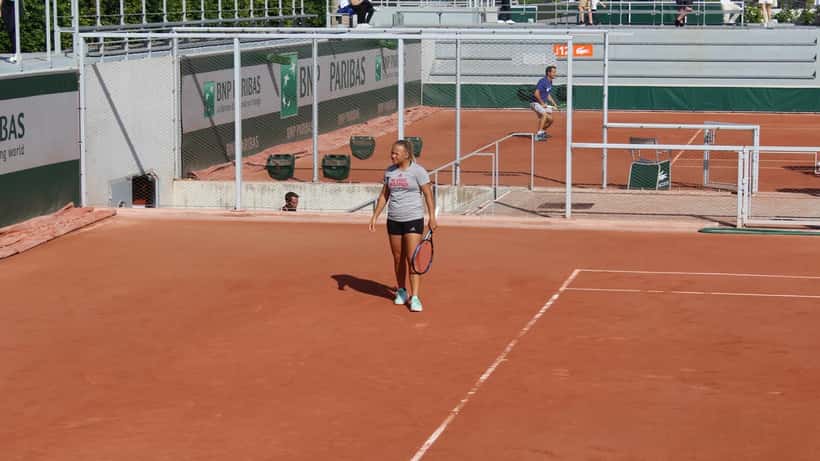
Diana Shnaider arrived at Roland Garros 2026 as the 25th seed, and has not dropped a single set through three rounds — reaching the Round of 16 at a clay Major for the first time in her career. On June 1, 2026, the 22-year-old Russian left-hander took on defending champion Madison Keys on Court Suzanne-Lenglen, continuing a clay-court run that has showcased both her tennis brilliance and the extraordinary physical demands the sport places on the human body.
For recreational players and tennis enthusiasts watching from Canada, Shnaider's performance offers more than entertainment: it's a window into what sustained clay-court play actually does to muscles, joints, and cardiovascular systems — and when to seek expert medical advice.
Why Clay Courts Are the Most Physically Demanding Surface
Of the three main tennis surfaces — hard, grass, and clay — clay is consistently rated the most physically taxing by sports medicine researchers and physiotherapists. The reasons are biomechanical.
On clay, the ball bounces higher and slower, forcing players to hit with greater topspin and to sustain longer rallies. A point that might last five shots on grass can extend to twenty or more on clay. According to analysis from the 2026 tournament, Shnaider's break-point conversion rate of 61% — among the best on tour — reflects her ability to stay physically and mentally sharp over extended rallies that would exhaust most recreational players.
The slide-and-recover pattern unique to clay tennis — where players push off mid-sprint, slide through the shot, and explosively recover — places intense strain on the hip flexors, adductor muscles, Achilles tendons, and knee ligaments. Unlike on hard courts, the deceleration is not abrupt but extended, which reduces acute impact injuries while significantly increasing cumulative muscle fatigue.
The Injuries That Clay Court Players Face
Sports medicine clinicians working with tennis players frequently see three injury clusters associated with prolonged clay-court seasons:
Patellar tendinopathy (jumper's knee): The repeated explosive push-off required to generate topspin and cover the court stresses the patellar tendon. Many touring professionals manage this condition throughout the clay season with targeted physiotherapy, eccentric loading exercises, and controlled play volume.
Adductor and hip flexor strains: The wide lateral movements required to reach high-bouncing balls stretch the inner thigh muscles beyond what most people train for. In earlier rounds of Roland Garros 2026, several players withdrew with hip-related injuries — a common story on Parisian clay. For recreational players, this is often the first complaint after a day on clay courts.
Ankle and lower-leg overload: The sliding movement looks graceful at the professional level, but it requires ankle stability and calf strength to execute safely. Shnaider's left-handed game generates extreme angles that force opponents — and herself — into wide sprints followed by controlled slides. Without adequate strength conditioning, these movements increase the risk of ankle sprains and peroneal tendon injuries.
Public Health Canada's physical activity guidelines note that adult Canadians should balance vigorous sport activity with adequate recovery time to prevent musculoskeletal injury (see canada.ca/en/public-health). For tennis players of any level, this applies directly.
When Should You See a Sports Physiotherapist?
Recreational tennis players often push through early-warning signs that professional players, surrounded by medical teams, take seriously from day one. Here are the thresholds sports medicine practitioners recommend you do not cross:
Pain that persists for more than 48 hours after play — particularly sharp or localized pain in a joint — should prompt a clinical assessment rather than rest-and-retry.
Any swelling around a knee, ankle, or elbow joint after tennis warrants evaluation. Swelling indicates an inflammatory or structural response that strengthens with professional diagnosis and targeted treatment.
A recurring sensation of instability in the ankle during lateral movements is a sign of inadequate ankle stabilizer strength or a prior ligament injury that has not fully healed. A physiotherapist can prescribe a rehabilitation programme tailored to clay-court movement patterns.
The Roland Garros 2026 season has already seen several high-profile player retirements mid-match due to physical overload — a reminder that even elite-conditioned athletes hit physiological limits. For the recreational player who picks up a racket on weekends, understanding those limits is equally important.
Our earlier coverage of sports medicine challenges at Roland Garros this season explored how heat exhaustion and cramping can affect even tournament-level players. The pattern of clay-specific injuries this year reinforces that preparation and recovery are not optional.
Shnaider's Physical Profile: What Professionals Notice
Shnaider's left-handed serve creates unique biomechanical advantages — the ball's spin direction challenges opponents' muscle memory — but it also loads the left shoulder, forearm, and rotator cuff differently than a right-handed player. Sports physiotherapists working with left-handed athletes emphasize the importance of bilateral strength training to prevent the kind of shoulder imbalance that accelerates rotator cuff wear over a long season.
Her 61.4% win rate on clay in 2026, combined with a remarkably composed physical presence through three rounds at Roland Garros, reflects years of conditioning work that goes far beyond rallying on court. That foundation — off-court strength training, recovery protocols, and expert physiotherapy — is what allows elite players to compete at a Shnaider level during the clay marathon.
Take Your Game Seriously — Start with the Right Expert
Whether you play weekly at a local club or are returning to tennis after an injury, understanding the physical demands of the sport you love is the first step to playing it longer and better. ExpertZoom connects Canadians with certified sports physiotherapists and health professionals who specialize in athletic recovery, injury prevention, and tennis-specific conditioning.
This article is for informational purposes only and does not replace personalized medical advice. Consult a qualified healthcare professional for any persistent pain or injury concerns.
