 Clara Thompson
Denmark and Ukraine face each other in an international friendly at Nature Energy Park in Odense on June 7, 2026, with both nations attempting to rebuild after failing to qualify for the FIFA World Cup. While supporters focus on tactics and lineups, the match exposes a growing concern in professional football: the physical and mental toll that relentless international scheduling places on elite athletes.
Denmark's campaign ended in March with a 3-2 defeat to Scotland and a penalty shootout loss to Czechia in the UEFA playoff final. Ukraine suffered a similar fate, falling to Sweden in their playoff encounter. Both federations responded by appointing new managers — Brian Riemer for Denmark and Andrea Maldera, the first foreign coach in Ukrainian men's national team history. Maldera oversaw a 2-0 victory away to Poland on June 3, while Riemer watched his side labour to a goalless draw against DR Congo the same evening.
The Hidden Cost of International Duty
Modern footballers now compete in more matches per season than at any point in history. A player who reaches the latter stages of domestic league competition, cup tournaments and European club fixtures can face upwards of 60 competitive matches in a single campaign. Adding international friendlies, Nations League fixtures and qualification playoffs pushes that figure even higher.
The physical demands are substantial. According to FIFA's Global Report on the incidence of injuries in football, professional players cover between 10 and 13 kilometres per match, with high-intensity sprints accounting for roughly 10 percent of total distance. Repeated explosive accelerations and decelerations generate shear forces on knee ligaments and ankle joints that accumulate across a career.
Mental fatigue compounds the physical burden. Players must maintain concentration for 90 minutes while processing tactical instructions, crowd noise and the emotional weight of national representation. The transition from club to international football disrupts training routines, sleep patterns and nutritional preparation. For players like Denmark's Christian Eriksen, who turns 34 in February, and Ukraine's veteran core, these challenges intensify with age.
Load Management in the Modern Game
Sports science has introduced load management protocols designed to protect players from overuse injuries. GPS tracking vests measure total distance, sprint count and collision frequency during matches and training. Heart-rate variability monitoring assesses autonomic nervous system recovery. Blood biomarker analysis tracks inflammation and muscle damage markers.
Yet international fixtures often override these safeguards. National team coaches have limited time with their squads — typically three to five days per international window — and face pressure to win matches rather than manage workloads. A player carrying a minor muscle strain for their club may be declared fit by national team medical staff and risked in a friendly that offers no competitive reward.
Denmark's squad for the Ukraine friendly includes Rasmus Hojlund, the 23-year-old Manchester United forward who has battled muscular issues during the 2025-26 season. Ukraine's Viktor Tsyhankov, recently recovered from a hamstring problem, started and created two assists against Poland. Both players illustrate the tension between competitive ambition and long-term health preservation.
What This Means for Amateur Athletes
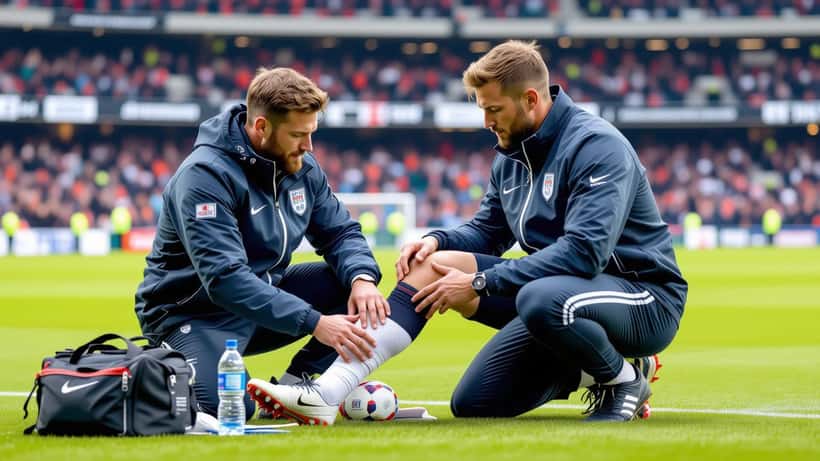
The scheduling pressures faced by international footballers offer lessons for recreational and amateur players across Canada. Weekend warriors who compete in multiple leagues, tournament series and pickup games often replicate the overuse patterns seen at the elite level without access to professional medical support.
Anterior cruciate ligament injuries, hamstring strains and Achilles tendon problems peak during periods of rapid load increase — typically when a player returns from holiday or adds a second weekly fixture to their schedule. The Canadian Academy of Sport and Exercise Medicine recommends increasing training volume by no more than 10 percent per week to allow musculoskeletal adaptation.
Early warning signs of overtraining include persistent muscle soreness lasting more than 48 hours, disrupted sleep, elevated resting heart rate and declining performance. Ignoring these signals risks stress fractures, chronic tendinopathy and central fatigue syndrome.
When to Consult a Sports Health Expert
Recreational footballers, hockey players and runners experiencing recurring injuries or unexplained performance drops should consult a sports medicine physician or physiotherapist. Proper assessment identifies biomechanical weaknesses — such as hip instability or poor ankle dorsiflexion — that predispose athletes to specific injury patterns.
A sports medicine expert can design periodised training programmes that balance high-intensity competition with active recovery phases. They can also advise on nutrition, hydration and sleep hygiene protocols that support tissue repair. For older athletes, targeted strength training for the posterior chain and eccentric loading exercises for the hamstrings significantly reduce injury incidence.
The Denmark versus Ukraine friendly offers entertainment for supporters, but for the 22 players on the pitch, it represents another physical demand in an already crowded calendar. Both federations will hope the match builds cohesion for future campaigns. The players will hope it does not cost them their health.
Consult a sports medicine physician or physiotherapist through Expert Zoom to develop a personalised injury prevention programme or manage a recurring sports injury before it sidelines you for the season.
