 Emilie Wang
Quebec's five party leaders faced off on national television on the evening of September 16, 2026, in "Le Grand Débat des Chefs" broadcast live on Noovo and Crave. The 90-minute confrontation covered cost of living, youth and the economy, and — in the exchange that drew the most reaction online — immigration thresholds and the future of French in Quebec. For the thousands of newcomers currently holding open PEQ applications with a first intake window closing October 31, 2026, the timing could not be more consequential.
What Happened at the Noovo and Crave Leaders' Debate
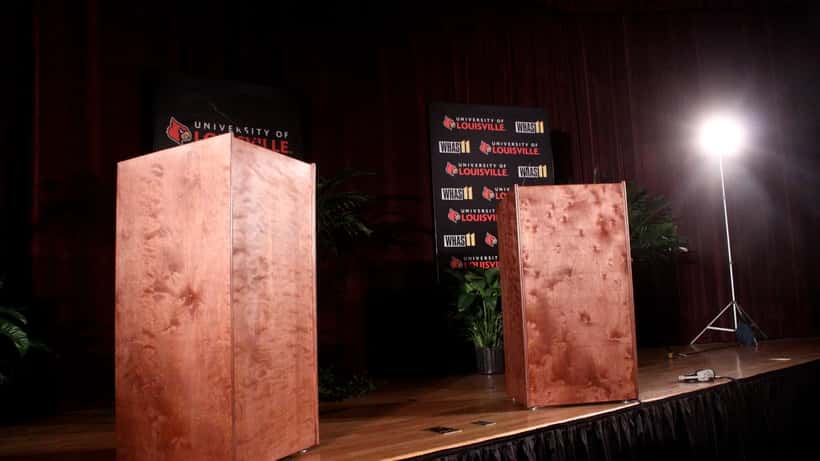
Christine Fréchette of the Coalition Avenir Québec (CAQ), Charles Milliard of the Quebec Liberal Party (PLQ), Ruba Ghazal of Québec Solidaire (QS), Paul St-Pierre Plamondon of the Parti Québécois (PQ), and Éric Duhaime of the Conservative Party of Quebec (PCQ) took the stage for the second of three planned televised debates. Moderated by journalist Michel Bherer, the September 16 confrontation followed TVA's Face-à-face and precedes Radio-Canada's Québec 2026 debate on September 23.
Immigration proved to be the sharpest exchange of the evening. The current provincial government under the CAQ has already made significant moves on immigration files over the past 18 months — closing the Quebec Experience Program (PEQ) in November 2025, then reopening it in July 2026 for a two-year window. The parties on stage hold meaningfully different positions on how much further those restrictions should go, or whether they should be reversed entirely. Several leaders called for modifying French-language thresholds; others pushed for accelerating family reunification. With an election on October 5, those positions are no longer just political rhetoric.
Why Quebec's Immigration Rules Are Different From the Rest of Canada
Most Canadian immigration — federal skilled workers, Express Entry, family sponsorship — is administered by IRCC, the federal immigration department. Quebec is different. Under the Canada–Québec Accord of 1991, the province selects its own economic immigrants through programs like the PEQ and the Quebec Skilled Worker Program (PSWP). A change of provincial government can directly alter eligibility criteria, French-language requirements, and the number of applications accepted.
According to the Quebec government's official 2026–2029 immigration orientation plan, the province is targeting a net international intake of 60,000 to 65,000 new permanent residents per year. The PEQ reopened on July 2, 2026, with a first intake window running until October 31, 2026. After that date, the conditions for the next intake — thresholds, volumes, language requirements — depend entirely on which party forms government.
What Debate Promises Mean for PEQ and PR Applicants
PEQ processing timelines are long. Applicants who submitted a CSQ (Certificat de sélection du Québec) request in 2026 are facing 6 to 20 months of provincial processing, followed by another 12 to 18 months at the federal IRCC level before receiving a permanent residence visa. That combined timeline of up to three years means the regulatory landscape at the time of your decision can look very different from the landscape when you applied.
Quebec has a track record of mid-stream rule changes. The province closed the PEQ entirely in November 2025 without a formal transition period. Before that, tighter French-language requirements introduced in 2023 left many applicants — who had submitted under the prior criteria — facing reconsideration. Legal challenges followed in the Cour supérieure du Québec, with applicants arguing they had a legitimate expectation that rules in place at submission would govern their files.
Whether that argument succeeds depends on the program, the regulatory language used, and whether new legislation includes explicit transitional provisions. It is not a settled point — it must be assessed file by file, which is precisely why legal consultation matters before election day rather than after.
The Concrete Case: A Caregiver Whose File Straddles the Election
Consider the situation of a 38-year-old personal support worker who arrived in Quebec City in 2024 under the Temporary Foreign Worker Program and submitted a PEQ application on August 14, 2026, during the current intake window. She earns $22.50/hour, has passed the TEF Canada with a CLB 7 French score, and has 24 months of qualifying Quebec work experience. Under current rules, she meets all criteria.
Now consider two policy scenarios that were raised or implied during the Noovo debate and could be implemented by a new government after October 5:
If French-language requirements are raised from CLB 7 to CLB 8: She must retake the TEF or TCF Canada exam. Available testing dates in Quebec City are typically 8 to 12 weeks out, and the exam costs $285 to $450 depending on format. If the new threshold applies to applications at the decision stage rather than the submission date, her file could be placed in an incomplete status. Net effect: a delay of 3 to 6 months, roughly $500 in additional costs, and uncertainty around her work permit renewal.
If annual CSQ issuances are capped at 18,000 (down from approximately 22,000 issued in 2025): Her application is not returned, but the processing queue lengthens. Instead of an expected 6-to-8 month wait for a CSQ, she could be looking at 14 to 20 months. Her permanent residency arrival — including IRCC processing — pushes past 2028. Her employer would need to renew her work permit at least twice.
The if/then logic is clear: if the incoming government applies higher French thresholds retroactively to files already in processing, she faces direct delays and costs. If that retroactive application is successfully challenged — as similar changes were challenged in 2023 — she may be protected, but only after months of administrative proceedings and, potentially, legal action. Getting professional advice before October 5 gives her options. Waiting until a government is sworn in removes several of them.
Your Legal Rights as a Voter, Resident, or Permit Holder During the Election
If you are a Canadian citizen living in Quebec, you have the right to vote in the provincial election under the Act respecting elections and referendums in municipalities. Your employer must give you at least four consecutive hours free during polling hours on election day. Refusing to comply is a provincial offence under the Quebec Election Act, with fines of up to $5,000 for employers who violate this rule.
If you are a permanent resident, you cannot vote in provincial elections but you can participate in the democratic process — including donating to political parties up to the $100 annual limit per party set under Quebec's strict campaign financing legislation. You may also publicly advocate, canvass, and attend campaign events.
If you are on a temporary work or study permit, none of the electoral participation rules apply to you. But every immigration policy promise made on that Noovo debate stage applies to you directly. Your permit renewal, your pathway to permanent residency, and the processing times on any applications you have in the system are all shaped by who forms the government on October 6.
What Comes Next: Three Weeks That Define the Next Three Years
The Noovo debate is the second of three. Radio-Canada hosts the final debate on September 23, and polls close October 5, 2026. Between now and election day, the one actionable window for anyone with an open immigration file in Quebec is to get their affairs in order before regulatory uncertainty kicks in.
For PEQ applicants, temporary foreign workers, and permanent residents navigating Quebec's programs, the concrete steps are: request a file status update from MIFI, confirm your French-language documents are current and at the right level, and consult a Quebec immigration lawyer to understand exactly where your application stands and whether any procedural steps are available to accelerate or protect your file before October 5.
The leaders' debate is not the final word on immigration policy. What the elected government puts into force — published in the Gazette officielle du Québec — is the text that governs your case. But with the PEQ's first intake window closing October 31 and an election on October 5, there have been few three-week windows in recent Quebec history that carry more weight for newcomers.
For Quebec election context and what the current political landscape means for your financial and legal planning, see also: Paul St-Pierre Plamondon and the October election — what it means for Quebec finances.
If you have an open Quebec immigration file or a work permit tied to provincial programs, ExpertZoom connects you with immigration lawyers and legal specialists who practice in Quebec and can assess your specific situation before election day.
This article is for general information only and does not constitute legal advice. Quebec immigration law is complex and outcomes depend on individual file circumstances. Consult a licensed immigration lawyer for guidance specific to your situation.
