 Maya MacDonald
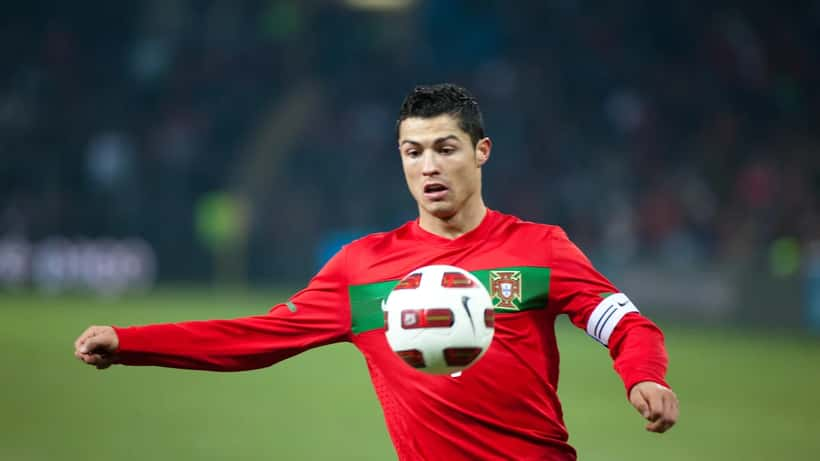
At 41 years old, Cristiano Ronaldo made football history at the 2026 FIFA World Cup across North America. He became the first player ever to score in six consecutive World Cup tournaments — and the oldest in history to find the net in a knockout stage. Portugal's run ended in a 1-0 defeat to Spain in the round of 16, and Ronaldo confirmed afterward that this was his final World Cup. But the physical story beneath those retirement headlines captured the attention of physicians and sports scientists around the world: how does a 41-year-old body perform at the highest level of global competition, across five matches and 441 minutes of play, without a single muscular injury?
A Career That Defied Every Age Curve
When Ronaldo stepped onto the pitch in the summer of 2026, he was 41 years and 138 days old. He started every match for Portugal. He scored three goals. According to ESPN's official 2026 FIFA World Cup player statistics, he became the oldest player in history to score a multi-goal game at a World Cup — and the first player ever to play World Cup knockout-stage football past the age of 41.
These are not the statistics of a player managing graceful decline. They are the statistics of a player who has spent more than two decades engineering his body's relationship with time.
Data from health tracking platforms reviewed before and during the tournament showed Ronaldo's biological age — assessed through cardiovascular markers, metabolic efficiency, and cellular health proxies — as substantially younger than his chronological age. His resting heart rate, VO2 max estimates, and post-match recovery speed were reported as consistent with those of an elite athlete in his late twenties.
For Canadian men in their forties who exercise regularly but find themselves recovering slower, sleeping less deeply, and accumulating stiffness that wasn't there at 35, Ronaldo's 2026 World Cup is not a distant spectacle. It is a data point about what becomes possible when physiological aging is actively managed — with professional guidance.
The Three Pillars Behind His Physical Longevity
Sports medicine practitioners and longevity researchers who have analysed Ronaldo's documented routines consistently identify three interconnected factors behind his sustained performance.
Polyphasic sleep architecture. Rather than sleeping in a conventional single nightly block, Ronaldo sleeps in five 90-minute cycles distributed across 24 hours. Each cycle captures a complete sequence of light, deep, and REM sleep. The critical phase is slow-wave sleep — the stage during which growth hormone is secreted and muscle protein synthesis peaks. By cycling through this phase five times per day, Ronaldo accumulates significantly more total slow-wave sleep than most adults achieve in a standard night. For a body absorbing daily training loads and match impacts, this translates to faster tissue repair and a lower chronic inflammatory baseline across the entire season.
Systematic cold exposure. Cryotherapy, contrast showers, and ice baths feature consistently throughout Ronaldo's documented recovery practice. Cold exposure after high-intensity exertion accelerates the clearance of inflammatory metabolites from fatigued muscle tissue, reducing delayed-onset soreness and shortening the effective recovery window. Athletes who apply cold recovery protocols systematically over a career accumulate meaningfully less cumulative soft tissue damage than those who rely on passive rest — a difference that compounds significantly over two decades of professional play.
Metabolic precision. Ronaldo eats six small meals per day, structured around lean protein, complex carbohydrates, and minimal ultra-processed food. This approach sustains stable blood glucose across the day, reduces insulin-driven fat storage, and suppresses the chronic low-grade inflammatory state — known in research literature as inflammaging — that is now understood to be one of the primary drivers of accelerated biological aging at the cellular level.
None of these three practices require elite infrastructure or specialist equipment. All of them require understanding your own physiological baseline — and that is precisely where a health consultation becomes the critical first step for any man over 40 who wants to do something actionable with the inspiration.
What This Means for David in Edmonton
Consider David, a 46-year-old civil engineer in Edmonton who runs twice a week, plays recreational hockey in winter, and considers himself in reasonable shape for his age. Over the past three years, he has noticed that after a hockey game, his body needs two full days to recover instead of one. His sleep has become lighter and less restorative. A minor hamstring strain last winter took six weeks to fully resolve — twice as long as a comparable injury at 38.
David does not have a recovery clinic, a personal physician specialising in performance medicine, or a cryotherapy pod. What he does have is access to a health expert through a consultation platform.
If David books an initial health consultation and requests a basic physiological baseline — resting heart rate, VO2 max estimation, and a blood panel including C-reactive protein — he would likely receive actionable findings within 48 hours. According to peer-reviewed sports physiology literature, VO2 max declines at approximately 1% per year from age 25 without structured aerobic training. The average sedentary man in his mid-forties typically registers a VO2 max of 35–38 ml/kg/min; a physically active man of the same age should be targeting 45–50 ml/kg/min. Targeted aerobic training — specifically zone-2 cardio at an easy conversational pace, 45 minutes, four times per week — can recover 3–5 ml/kg/min within six months of consistent effort. That recovery is the cardiovascular equivalent of rolling back three to five years of biological aging.
If David's C-reactive protein levels are elevated — a finding common in men who train hard but sleep poorly — a health expert can recommend specific dietary modifications or a structured cold-exposure protocol that addresses the inflammation at its source, rather than allowing it to compound silently across years.
The logic is direct: if David's VO2 max sits below 40 ml/kg/min at 46, he carries a statistically elevated cardiovascular risk that structured exercise and professional guidance can meaningfully reduce within twelve months. If it is already at 47, a health expert can help him build the habits that will sustain it through his late forties and into his fifties — the decade when unmanaged physiological decline accelerates fastest in most men.
Why Ronaldo's Exit Announcement Matters to Men Over 40
When Ronaldo confirmed after Portugal's exit from the 2026 World Cup that this was his last tournament, the world responded predictably: tributes, career retrospectives, record tallies, and comparisons to Messi's own extended twilight. The health story beneath the farewell deserves equal space.
He competed until 41 not because of exceptional genetics alone — plenty of genetically gifted footballers retire at 32 or 33 — but because of a consistent, expert-supported investment in physiological recovery maintained over more than twenty years. According to the Public Health Agency of Canada, preventive health engagement among Canadian men remains substantially lower than among women, particularly in the 40–60 age bracket — the precise window when early intervention in metabolic and cardiovascular health produces the largest compounding benefits over time.
The comparison that speaks most directly to the Canadian context is not Messi's or Beckham's retirement story — it is Zlatan Ibrahimović's, another athlete who maintained elite physical form into his mid-forties using a comparable long-term approach to body management. The full breakdown of Zlatan's physiological routines and what they reveal about men's health offers additional context for Canadians thinking about what expert-supported aging looks like in practice.
Three Questions to Raise With a Health Expert After 40
Ronaldo's 2026 World Cup performance should prompt something more than admiration. For Canadian men over 40, it offers a concrete starting point for a health conversation that is too frequently postponed.
What does my VO2 max say about my cardiovascular age? This single measurement is a stronger predictor of all-cause mortality risk than BMI or cholesterol in most healthy middle-aged adults. It can be estimated with simple equipment during an initial health consultation, and it tells you far more about your actual physiological condition than a bathroom scale.
Are my inflammatory markers within a healthy range? C-reactive protein and homocysteine are inexpensive to include in standard bloodwork. Chronically elevated CRP before any symptoms appear is one of the earliest measurable signs of accelerated biological aging — and it responds to targeted dietary and lifestyle changes that a health expert can personalise to your specific situation and fitness level.
Is my sleep structure actually restorative? Not just the number of hours, but whether you are cycling adequately through deep and REM phases. Consistently poor slow-wave sleep accumulation — the phase Ronaldo maximises through his polyphasic schedule — is directly linked to reduced muscle recovery, elevated cortisol, and impaired immune function. A health professional can assess this through a structured consultation and refer for further evaluation where needed.
Ronaldo's remarkable 2026 performance at 41 was not the product of a single exceptional decision. It was the accumulation of thousands of small, expert-informed choices made consistently over two decades. The first of those choices was simply asking the right questions of the right professionals, early enough for the answers to matter. For Canadian men in their forties, that window is open right now.
This article is for informational purposes only and does not constitute medical advice. Always consult a qualified health professional before making changes to your exercise, sleep, or nutrition regime.
