 Victoria Stewart
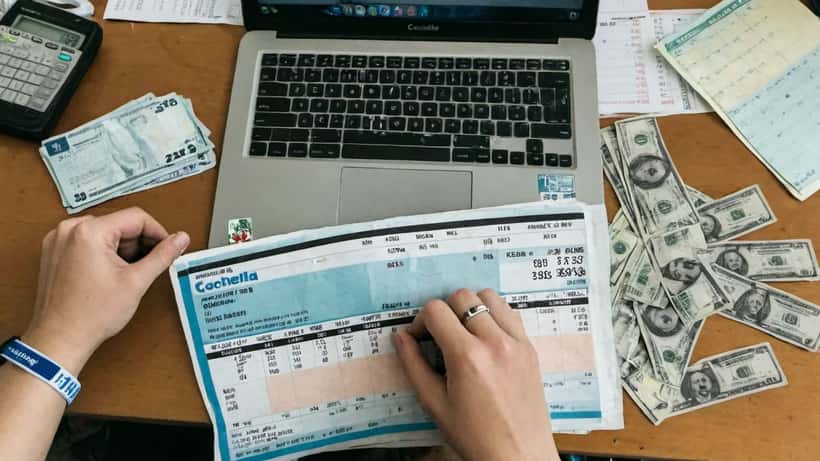
Coachella 2026 resale tickets are selling for $2,905 USD per person for Weekend 1 general admission — and Canadians are paying far more once you convert the currency. With weekend two already underway on April 17, the festival has become a case study in festival financial planning gone wrong for unprepared attendees.
The Numbers Are Staggering
When Coachella 2026 originally went on sale, a three-day general admission pass for one weekend cost between $549 and $649 USD. Those tickets sold out within days.
By April 2026, Weekend 1 GA tickets on StubHub had climbed to approximately $2,905 USD each. VIP passes were listed at $5,061 USD. For Weekend 2 — which starts April 17 — GA tickets were running around $1,266 USD on the resale market.
For a Canadian attending from Toronto or Vancouver, apply the current exchange rate of approximately 1.39 CAD per USD, and that Weekend 1 GA ticket translates to roughly $4,038 CAD. Add flights, accommodation in the Coachella Valley desert during peak festival season, shuttle passes ($130–$180 USD), camping ($150–$400 USD), and food ($30–$60 USD per day), and a Canadian attendee could easily spend $7,000 to $12,000 CAD total for a single Coachella weekend.
That is not a weekend trip. That is a financial event.
Why Festival Spending Catches People Off Guard
The core problem financial advisors identify with major festivals is what behavioural economists call "account segregation" — the mental tendency to treat leisure spending as separate from regular budgeting. When someone is excited about seeing Sabrina Carpenter headline, they are not running the full cost analysis.
Specific patterns that lead to Coachella-scale budget disasters:
The sunk cost spiral: Once you have paid $2,905 for a resale ticket, the psychological pressure to spend freely on upgrades, food, and merchandise is intense. You are already "in" — what is another $200 for a better camp spot? This is the sunk cost fallacy in action.
Ignoring the exchange rate impact: Many Canadians mentally price major US purchases in US dollars, which understates the true cost by nearly 40 per cent. A $600 festival ticket sounds manageable. $834 CAD for the same ticket, before travel, hits differently.
Missing the complete cost picture: Studies of festival budgeting behaviour show that most attendees underestimate total costs by 40 to 60 per cent when they focus on the headline ticket price and exclude transportation, accommodation, meals, merchandise, and unexpected expenses like emergency medical care or item replacement.
No contingency planning: What happens if your car breaks down in Indio? If you get ill and need to see a US physician? If your flight home is cancelled and you need to extend your hotel at peak demand? Each of these scenarios adds hundreds to thousands of dollars to a trip most Canadians planned on the assumption of zero disruptions.
How a Financial Advisor Would Approach Festival Spending
Certified financial planners approach major discretionary spending the same way they approach any significant purchase: with a full cost model, a savings plan built before the event, and explicit tradeoffs.
The framework:
1. Full cost audit before committing. Total every anticipated expense: ticket resale price, all fees, flights (book six to eight weeks out for best prices), accommodation (prices in the Coachella Valley during festival week are 5–10x normal rates), ground transport, daily food and drinks, merchandise budget, travel insurance, and a 20 per cent contingency buffer.
2. Pre-fund the entire amount before you buy the ticket. The ticket should be the last thing you purchase, not the first. Buying a ticket on a credit card and figuring out the rest later is how people end up carrying festival debt into the summer.
3. Set a hard merchandise and incidentals budget. Decide the exact dollar amount you will spend on food, drinks, and merchandise each day, in Canadian dollars. Write it down. Withdraw that amount in USD cash before you go — research consistently shows cash spending leads to more mindful choices than contactless payments.
4. Check your credit card's US dollar spending terms. Most Canadian credit cards charge a foreign exchange fee of 2.5 to 3 per cent on US dollar purchases, according to the Financial Consumer Agency of Canada. On a $10,000 CAD trip, that adds $250–$300 in invisible costs. A few Canadian cards offer no foreign exchange fees.
5. Get travel insurance that covers festival cancellations. Standard travel insurance does not always cover event cancellations due to weather, security issues, or performer illness. Read the policy carefully. Coachella-specific cancellation insurance has emerged as a product in recent years precisely because the event's complex logistics generate claims every season.
What the Coachella Lesson Teaches Us About Lifestyle Inflation
Financial advisors working with Canadians in their 20s and 30s note that major events like Coachella are often where larger patterns of lifestyle inflation become visible. The spending behaviour at a festival — the willingness to pay whatever it takes for an experience, the difficulty tracking incremental costs, the short-term focus on the experience itself — mirrors the same patterns that make it hard to save for a house down payment, build an emergency fund, or invest consistently.
It is not that attending Coachella is inherently financially irresponsible. It is that attending without a plan, at current resale prices, with the Canadian dollar at its current position, makes it a genuinely high-cost decision. It deserves the same deliberate financial analysis you would apply to any purchase of equivalent scale.
Whether or not you are heading to Indio this April, the principles of festival budgeting apply to any major discretionary event: total all costs before committing, pre-fund entirely before purchasing, and build in a contingency buffer for the things you cannot predict.
This article provides general financial education information only. It does not constitute financial advice. For guidance specific to your financial situation, consult a qualified financial advisor.
