 Emilie Wang
The United Kingdom has indefinitely paused its plan to hand sovereignty of the Chagos Archipelago to Mauritius, announcing on April 10-11, 2026 that the deal — formally signed just months earlier in May 2025 — is on hold due to opposition from the Trump administration. The saga raises fundamental questions about how international legal rulings interact with political power. For Canadians, the Chagos story is more than a geopolitical curiosity: it is a case study in what happens when legal rights and political interests collide — and what individuals can do to protect their own.
A Brief History of a Contested Territory
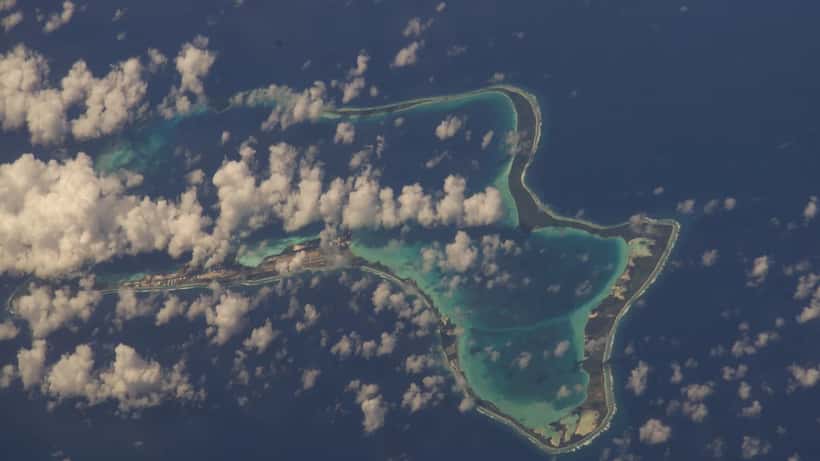
The Chagos Archipelago is a chain of islands in the Indian Ocean, home to Diego Garcia — the site of a critical joint UK-US military base. The islands were detached from the colony of Mauritius in 1965, three years before Mauritius gained independence. Between 1967 and 1973, approximately 2,000 to 3,000 Chagossians — the islands' Indigenous inhabitants — were forcibly removed to make way for the military facility.
In 2019, the International Court of Justice (ICJ) issued an advisory opinion finding that the UK's detachment of the Chagos Islands was unlawful, and that the United Kingdom had not obtained the "free and genuine expression" of the Mauritian people before taking the islands. The ICJ called on the UK to withdraw its administration "as rapidly as possible." The UN General Assembly subsequently voted 116 to 6 in favour of the same conclusion.
Despite this international legal clarity, the UK maintained administrative control. Negotiations finally produced a formal agreement in May 2025: the UK would cede full sovereignty to Mauritius, in exchange for a 99-year lease on Diego Garcia for continued UK-US military operations. The payment to Mauritius was structured at approximately $4.5 billion over 99 years.
Why the Deal Fell Apart in April 2026
U.S. President Donald Trump had publicly criticized the Chagos deal as early as January 2026, calling it "an act of GREAT STUPIDITY" on Truth Social and accusing the UK of weakness. On April 10-11, 2026, the UK formally announced it was pausing the deal, with a government spokesperson confirming: "We have always said we would only proceed with the deal if it has US support."
Mauritius's Foreign Minister Dhananjay Ramful responded on April 11, 2026, at the Indian Ocean Conference, vowing that Mauritius "would spare no effort to seize any diplomatic or legal avenue to complete the decolonisation process."
The reversal has drawn sharp criticism from international law scholars. Chatham House confirmed in January 2026 that UK ratification of the treaty would not violate international law — making the pause a political choice, not a legal necessity. The concern from legal experts is the precedent being set: that a non-binding ICJ advisory opinion can be effectively nullified by geopolitical pressure from a stronger state.
What This Means for International Law — and Why Canadians Should Pay Attention
Canada is a signatory to the United Nations Charter and a member of the International Court of Justice system. The Chagos case tests a question that affects the entire international rules-based order: can courts compel state behaviour when powerful actors choose to disregard their rulings?
For Canada, the relevance is more than academic. Canada has its own history of Indigenous land rights cases where court decisions — including Supreme Court of Canada rulings — have faced implementation challenges at the political level. The tension between legal adjudication and political will is not unique to the Chagos story.
More practically, the Chagos case illustrates a principle that lawyers and property rights experts emphasize to private clients every day: having a legal right recognized in a ruling is only the first step. Enforcing that right — and protecting it against competing interests — requires ongoing legal strategy.
Property Rights, Leases, and What the 99-Year Question Means
The structure of the proposed Chagos deal raises a question that directly parallels issues Canadian property owners face: what is the difference between sovereignty (ownership) and a long-term lease?
In the Chagos context, Mauritius would gain sovereignty in name, but Diego Garcia would remain under UK-US control for 99 years under a lease arrangement. Critics argued this did not constitute genuine decolonization — that a century-long lease is functionally equivalent to continued colonial control.
In Canadian property law, the same principle applies at a smaller scale. Canadians who hold long-term leasehold interests — in ground leases, strata properties, or commercial real estate — often discover that the gap between what a lease says and what they can actually do with a property is significant. Lease conditions, subletting restrictions, renovation approvals, and renewal rights all shape whether a leaseholder has genuine control over their property.
The Government of Canada's real property law resources address some of these dimensions in the context of federally regulated lands, but provincial property law varies significantly across Canada. In Ontario, British Columbia, and Quebec, the protections available to leasehold versus freehold owners differ in meaningful ways.
When Should Canadians Consult a Lawyer About Property Rights?
Whether you're involved in a lease negotiation, concerned about a long-term ground lease on your commercial property, facing a strata dispute, or dealing with a property dispute that has both legal and political dimensions, the lesson from the Chagos case is the same: legal rights need active management.
A lawyer specializing in property law or real estate can:
- Review lease terms to identify provisions that limit your effective control, including assignment clauses, demolition rights, and renewal terms
- Advise on dispute resolution when a landlord, strata corporation, or counterparty acts contrary to the contract
- Assess exposure in situations where your property interest depends on a third party's continued goodwill or a regulatory framework that could change
- Draft protective provisions when entering new agreements — ensuring that what you agree to on paper translates to genuine rights in practice
The Chagos dispute also illustrates why formal agreements — even those endorsed by international courts and signed by governments — need clear enforcement mechanisms built in. The same principle applies to private contracts: vague language, missing dispute resolution clauses, and absent penalty provisions are how legal rights erode in practice.
ExpertZoom connects Canadians with experienced real estate and property lawyers who can review, negotiate, and protect your interests — whether in a commercial lease, a strata property dispute, or a complex ownership structure.
Disclaimer: This article is for informational purposes only and does not constitute legal advice. For guidance on your specific situation, consult a qualified lawyer licensed in your province.
