 Victoria Stewart
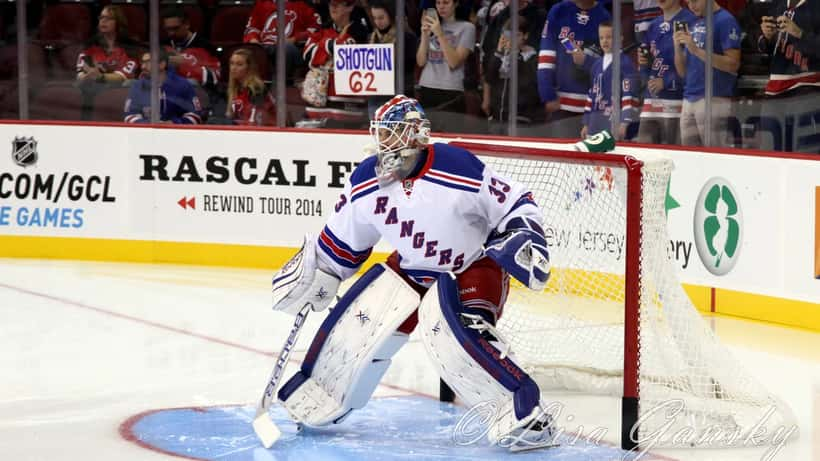
Cam Talbot made a decision that surprised many hockey observers when he signed a one-year deal with the Columbus Blue Jackets on September 14, 2026. At 39, with a career that had already spanned Edmonton, New York, Calgary, Minnesota, Ottawa, and Detroit, the veteran goaltender was widely expected to retire after his contract with the Red Wings expired. Instead, Talbot accepted a $950,000 base salary — with up to $700,000 in performance bonuses tied to games played — to serve as a backup to 23-year-old Jet Greaves in Columbus.
The move drew commentary about the competitive drive of aging elite athletes. But from a wealth management perspective, what Talbot's signing actually reveals is something more instructive: how professional athletes at the tail end of their careers often face a structural financial vulnerability that most Canadians would never anticipate — and that a single conversation with a financial expert can cost far less than the tax exposure it prevents.
What Happened: A Veteran Takes a Backup Spot
The Columbus Blue Jackets lost their starting goaltender Elvis Merzlikins to shoulder surgery before the 2026-27 season even began. With no clear timeline for Merzlikins's return, the team needed an experienced backup. Talbot — who posted a 3.10 goals-against average over 33 appearances with Detroit in the 2025-26 season — was available and willing.
The deal, reported by The Hockey News on September 14, 2026, places Talbot near the NHL minimum. The additional $700,000 in potential bonuses represents a significant portion of total compensation — but bonuses, by definition, are uncertain. They require Talbot to appear in at least 40 games; at 39, as a backup to a healthy starter, that threshold is far from guaranteed.
What makes this contract financially instructive is not the dollar amounts but what they represent: a player whose salary once reached $4.5 million per year (with Edmonton in 2015-16) and $3.75 million annually (with Calgary and Minnesota) now operating on a fundamentally different income base, with high uncertainty on top.
Why This Matters for Every Canadian Professional Athlete
Most professional athletes' earning curves look nothing like those of typical Canadians. They spike early — sometimes enormously — then compress or disappear entirely, often before age 40. According to the Financial Consumer Agency of Canada, most Canadians reach their peak earning years between 45 and 55. For NHL players, that window often closes a decade earlier.
This compression creates a specific financial problem: high income in your 20s and 30s, followed by no income or dramatically reduced income in your 40s — before traditional retirement products like the Canada Pension Plan even begin to pay out in full. CPP starts as early as age 60 at a reduced rate, with full benefits not available until age 65. For a professional athlete whose active career ends at 38 or 39, that gap spans over two decades.
A player like Talbot, who has earned over $30 million across his NHL career, may have financial security regardless of this year's outcome. But the dynamics of his 2026 contract illustrate a pattern that plays out for dozens of athletes annually — including those who earned $250,000 at the AHL level, $80,000 in professional leagues abroad, or $120,000 as a professional in sports with smaller wage scales than hockey.
The contract structure itself compounds the challenge. A 50% bonus-dependent deal means tax planning, RRSP contributions, and cash flow management all need to account for two very different income scenarios simultaneously.
The Wealth Management Lens: What a Financial Advisor Would Flag Immediately
When an athlete signs a short-term contract with significant performance-based bonuses — particularly in their late 30s — a wealth management expert would identify at least four immediate areas of concern before the first puck drops.
Income unpredictability. A contract ranging from $950,000 to $1,650,000 depending on games played requires planning for a specific probability-weighted number, not an optimistic ceiling. Athletes who plan around the bonus scenario and fail to trigger it can face unexpected CRA tax installment shortfalls in the following year.
Retirement savings urgency. The 2026 RRSP contribution limit is $31,560, based on 18% of earned income up to the annual ceiling. For an athlete who earned $4 million a year earlier in their career, annual RRSP contributions frequently failed to cover the gap between earned income and the contribution ceiling — leaving unused RRSP room that compounds year over year but may never be fully utilized as income shrinks toward career end.
Transition risk. If Talbot's contract is not renewed after 2026-27 — statistically likely for a 40-year-old goaltender unless performance significantly outpaces expectations — he faces a career transition requiring both financial and tax restructuring. Many athletes underestimate the implications of winding down endorsement income streams, coaching contracts, and investment account structures built during their playing years.
Insurance gaps. A performance bonus structure means that a significant injury mid-season eliminates not just a year's income but specifically the bonus-triggered portion — often the larger share of total compensation. Professional income replacement insurance, particularly for the bonus component, is often overlooked in favour of team disability coverage, which may not cover voluntary departure or performance shortfalls caused by minor injury.
The Last Contract: What Happens When There Are No More
Take the following composite scenario, drawn from real patterns in Canadian professional sport.
Lucas is 38, a professional hockey player from Mississauga who has spent 11 seasons between the NHL and AHL. His peak earnings reached $1.8 million in three full NHL seasons; his current final-year deal is worth $1.1 million, structured similarly to Talbot's — base salary plus game-triggered bonuses.
If Lucas signs without financial advice: His RRSP balance stands at $160,000. He has an estimated $88,000 in unused contribution room accumulated from years when his income exceeded the RRSP ceiling. He doesn't use a wealth advisor and plans to address retirement savings "when it makes sense." When his contract expires at age 39, his 2026 federal and Ontario provincial tax bill on the $1.1 million salary comes to approximately $470,000 combined — leaving him $630,000 net. Without structured savings in place, that capital is absorbed into lifestyle costs within four years. His projected CPP entitlement at age 65, based on his career earnings history, is approximately $1,180 per month.
If Lucas invests $1,200 in a wealth management consultation: The advisor identifies the $88,000 in unused RRSP contribution room immediately. Contributing the full amount before March 1, 2027 reduces Lucas's 2026 taxable income to approximately $1,012,000 — generating a tax refund of approximately $40,000 in that year alone. Separately, the advisor structures a TFSA catch-up contribution of $7,000 for 2026 and helps Lucas establish a corporation for post-career broadcasting and coaching income, deferring tax on those future earnings until they are actually needed. Projecting at a conservative 5.5% annual return over 20 years, the combination of the maximized RRSP, ongoing TFSA contributions, and corporate income deferral is estimated to be worth approximately $2.1 million more at age 60 compared with Scenario A.
The $1,200 consultation generates a $40,000 refund in year one alone — a 3,233% return on investment before the long-term projections are even factored in.
The difference between these two outcomes is not income. Lucas earns the same $1.1 million in both scenarios. The difference is strategy, executed at the right moment.
What Athletes Should Do Before Signing a Late-Career Deal
The window between receiving a contract offer and signing it is the optimal moment to engage a wealth management expert. At that point, the athlete knows their income for the coming year, can model bonus scenarios, and has time to adjust savings and tax strategies before the tax year begins in earnest.
Key questions worth asking include: Am I maximizing registered account contributions given my remaining career span? Is my compensation structured to minimize tax exposure as income transitions post-career? Do I have income replacement insurance if a performance bonus fails to trigger due to injury? What does my income projection look like at 45, 50, and 65, and am I building toward those years today?
The Canada Revenue Agency's guidance on RRSPs and related plans outlines contribution limits, unused room calculations, and spousal RRSP strategies available to every Canadian. But using these tools effectively — particularly with the compressed timelines that characterize athletic careers — almost always benefits from structured professional guidance rather than self-directed research under deadline pressure.
Cam Talbot's Columbus contract may yet prove to be a final, competitive chapter in a decorated NHL career. What it undeniably represents is a prompt: for every Canadian professional athlete operating near the end of a high-income window, the question is not whether to plan, but whether that planning happens before or after the opportunity to act effectively has closed.
A wealth management expert can help you answer that question with a lot more precision — and a lot more money — than trying to answer it alone. As explored in a related case involving another NHL veteran's contractual decisions, the choices made during active years have direct consequences once the final contract expires — see Brad Marchand's Offseason Surgery: What NHL Veterans Should Know About Contract Rights.
This article is for informational purposes only and does not constitute financial advice. Tax rules and RRSP limits change annually. Consult a licensed wealth management professional or tax advisor for guidance tailored to your personal situation.
format_used: News brief
