 Clara Thompson
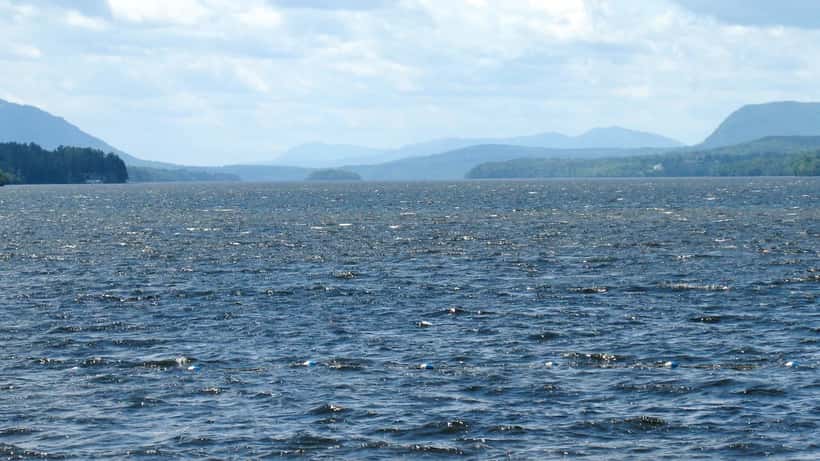
A scientific paper published in Nature on July 22, 2026 confirmed what Quebec researchers had long suspected: the raised black lesions on brown bullhead catfish in Lake Memphremagog are not caused by pollution or ordinary disease. They are a transmissible cancer, spreading from fish to fish like a parasite. This is the first known contagious cancer ever discovered in a fish species — and it is happening in a lake straddling the Quebec-Vermont border, used for fishing, swimming, and recreation by tens of thousands of Canadians every year.
For most people who heard the headline — "contagious cancer in Quebec lake" — the immediate question was simple: should I be worried?
What the Nature Study Actually Found
University of Vermont researchers documented that between 23% and 37% of brown bullhead catfish surveyed in Lake Memphremagog between 2014 and 2017 carried visible melanoma tumours. When they analyzed the DNA inside those cancer cells, they found something extraordinary: the genetic material in tumours from different fish was more closely related to each other than to the fish themselves.
That means the cancer cells are not arising independently in each fish. They are physically crossing from one individual to another — spreading through contact, likely through feeding, mating, or simply sharing close quarters on the lake bottom. Brown bullheads are bottom-dwellers that live in dense local groups, which may explain why infection rates are so high.
This makes the Lake Memphremagog melanoma only the fourth documented naturally occurring transmissible cancer in any animal species worldwide. The other three: canine transmissible venereal tumour in dogs, devil facial tumour disease in Tasmanian devils, and two types found in bivalve molluscs. Publishing in Nature signals that the scientific community considers the evidence robust and the discovery genuinely significant.
The distribution of tumours across the lake is roughly uniform — not clustered near the southern end where the Coventry Landfill sits. Researchers found no evidence that industrial contamination is driving the outbreak, though they note that environmental pollutants or naturally occurring arsenic in the lake sediments could suppress the immune systems of fish, making them more susceptible to infection once cancer cells are circulating.
What "Contagious Cancer" Does and Does Not Mean
The phrase "contagious cancer" is alarming, and the anxiety it produces is understandable. But it is important to understand what the biology actually shows — because the distinction matters for how you respond.
Transmissible cancers require cancer cells to move from one host to another and survive in the new host's body. The critical constraint is that cancer cells are adapted to the biology of their original host. They carry species-specific surface proteins that a different species' immune system will recognize and destroy. This is why, according to the researchers who authored the Nature study, the brown bullhead melanoma cells pose no known threat to humans. The cells cannot cross the species barrier, cannot infect human tissue, and cannot survive in a mammalian immune environment.
The fish are described as safe to handle. What researchers do advise against is eating fish that show visible tumours — not because the cancer itself is dangerous to consume, but because a visibly diseased fish may have compromised flesh quality and should not be part of your diet regardless. Tumour-free brown bullheads from the lake are not subject to any active consumption advisory as of July 2026.
Still, this discovery raises legitimate questions for people with a long history of lake exposure — whether as anglers, swimmers, or residents who rely on shoreline well water. Those questions deserve straightforward answers, which is where consulting a specialist adds real value.
The Questions That Warrant a Professional Conversation
Environmental health is a field that intersects medicine, toxicology, and ecology — and it is one where a general internet search often produces more fear than clarity. According to Health Canada's guidance on freshwater recreational health, exposure risks from lake activities depend on specific factors: how long you are in the water, what activities you undertake, whether you ingest water, and what your personal health baseline looks like.
For someone who fishes Lake Memphremagog regularly and has done so for years, an environmental health physician or a family doctor familiar with occupational and environmental medicine can help assess:
- Cumulative fish consumption — Has your diet included brown bullhead from the lake over many years? A clinician can cross-reference your consumption patterns against federal fish advisories and suggest whether any monitoring bloodwork makes sense for you.
- Skin and dermatological concerns — If you have spent significant time in the lake and have noticed any unexplained skin changes, a dermatologist can evaluate whether those are related to UV exposure, contact dermatitis, or something worth tracking.
- Anxiety from environmental news — Environmental health scares can generate real psychological stress. A physician can help you separate evidence-based concern from disproportionate fear, and refer you to mental health support if the anxiety is affecting your quality of life.
None of this is to say the lake is dangerous. It is to say that uncertainty is uncomfortable, and a 20-minute consultation can replace months of worry with actual information.
A Scenario Worth Walking Through: What Happens If You Fish There Regularly
Take the case of a 52-year-old retiree who has fished Lake Memphremagog every summer for 15 years, primarily targeting brown bullhead from the southern Quebec shore. Over that period, he has consumed roughly 80 to 100 meals of catfish per year — well above the 150-gram-per-week threshold that Health Canada flags as the point at which freshwater fish consumption advisories begin to apply in some bodies of water.
He has no current fish consumption advisory in place from Quebec's Ministère de l'Environnement, de la Lutte contre les changements climatiques, de la Faune et des Parcs (MELCCFP). But the new Nature paper notes that arsenic levels in the lake sediment may be elevated, and arsenic is a known human carcinogen that bioaccumulates in bottom-dwelling fish that ingest sediment while feeding — exactly the feeding behaviour of brown bullhead.
If he were to consult an environmental health physician now, the doctor might:
- Order a urine arsenic panel (under $150 through most provincial health systems) to establish his current arsenic burden.
- Review whether his consumption falls under any provincial freshwater fish advisory — Quebec publishes consumption guides by species and waterbody that most people have never read.
- Schedule a baseline dermatological exam, since arsenic exposure is associated with skin lesions and increased risk of certain skin cancers.
- Advise him to switch to eating only fish without visible skin lesions and limit consumption to 2 meals per week from this particular waterbody until the province issues a formal updated advisory.
The cost of that consultation — covered under most provincial health plans with a referral — is zero. The cost of not having it, if an exposure concern goes undetected for another decade, is considerably higher.
What Quebec Health and Environmental Authorities Are Monitoring
As of this publication, neither the MELCCFP nor Santé Publique Québec has issued a formal consumption advisory specifically tied to the brown bullhead transmissible cancer discovery. Provincial officials are expected to review the Nature study and its environmental implications before determining whether updated guidance for recreational users of Lake Memphremagog is warranted.
This is normal. Regulatory responses to new science take time — particularly when the risk to humans is not directly established. What that means in practice is that, for now, the burden of proactive response falls on individual anglers and lake users rather than on official channels.
The broader context is important here. Lake Memphremagog is not unique in having elevated fish disease rates connected to bottom-sediment contamination. Several Quebec lakes with legacy industrial activity nearby have had fish consumption advisories in place for decades. The difference here is that the biological mechanism — transmissible cancer rather than chemical toxicity in the fish tissue — is new to science. The pathway of human health concern, if one exists, runs through the lake environment and what it may concentrate, not through the cancer cells themselves.
What to Do Right Now
If you or someone in your family fishes, swims, or lives near Lake Memphremagog, there is no reason to panic — but there is a reasonable case for taking three concrete steps:
1. Look up the Quebec freshwater fish consumption guide for Lake Memphremagog. The MELCCFP updates these by species and location; if a brown bullhead advisory exists or is added, it will appear there first.
2. Do not eat fish with visible black lesions. Even setting aside the science of transmissible cancer, a visibly diseased fish is not food. This applies to any freshwater catch.
3. If you are a long-term high-consumption angler from this lake, ask your family doctor for a referral to an environmental health specialist. You do not need to have symptoms. The point is to establish a baseline and know what you would be watching for.
The discovery of a contagious cancer in brown bullhead catfish is a genuine scientific milestone — one that tells us something new about how cancer can work in nature. Whether it tells us anything consequential about your personal health depends on your individual exposure profile. That question is exactly what an expert is for.
This article is for informational purposes only and does not constitute medical advice. Consult a qualified healthcare professional before making any decisions about your health based on environmental news.
