 Olivia Tremblay
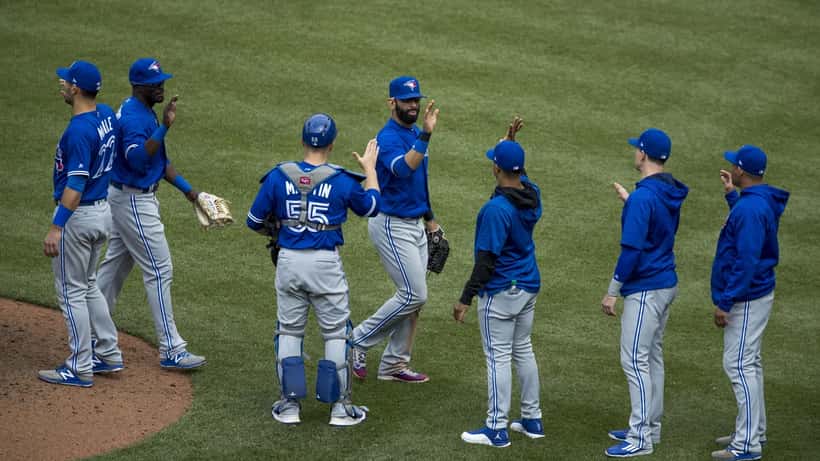
On the morning of August 1, 2026, Brett Bateman's career trajectory shifted without warning. The 24-year-old Chicago Cubs outfield prospect—ranked No. 21 in their system and described by scouts as "closer to the major league level than most people realize"—had just been traded to the Toronto Blue Jays as part of the blockbuster deal that sent veteran pitcher Kevin Gausman to Chicago. Within hours the transaction was official, and Bateman became the latest in a long line of young American athletes abruptly confronted with a financial reality almost no minor leaguer prepares for: earning a professional salary in Canada.
While sports analysts spent August 1 dissecting what Gausman's 5-10 record and 4.38 ERA means for the Cubs' rotation, almost no one asked what the trade means for the player heading in the other direction. For a 24-year-old on a minor league salary with ambitions of reaching Rogers Centre, the cross-border tax landscape is more complicated—and more expensive—than it looks from the outside. The difference between navigating it correctly and ignoring it can cost tens of thousands of dollars before a single major league pitch is thrown.
The Numbers Behind Minor League Pay in Canada
The 2023 MLB Collective Bargaining Agreement delivered the most significant increase to minor league salaries in the sport's history. In 2026, a player at Triple-A earns a minimum of $17,500 per month over a six-month season—approximately $105,000 USD per year. For a prospect in Bateman's position, earning in this range while playing for a Canadian franchise means the following headline figures immediately apply:
- Canadian federal income tax on income between CAD $111,733–$154,906: 26%
- Ontario provincial income tax (the province where Toronto plays): 11.16% on income over CAD $110,653
- Combined effective rate for a player earning ~CAD $140,000: approximately 38–40%
- Equivalent US federal rate on $105,000 USD (single filer): 22–24%
- USD/CAD exchange rate as of August 2026: approximately 1.36
That exchange rate converts $105,000 USD into roughly CAD $142,800. Canadian taxes on that figure—federal plus Ontario provincial—claim approximately CAD $54,000–$57,000, leaving the player with around CAD $86,000 net before any US filing obligations are addressed.
Why the Canada-US Tax Treaty Is Not a Complete Shield
The Canada–United States Convention with Respect to Taxes on Income and Capital—commonly called the Canada-US Tax Treaty—is designed to prevent double taxation on the same income. According to the Canada Revenue Agency, US citizens earning employment income in Canada must file a Canadian T1 return and may apply treaty provisions to reduce withholding on certain income types.
For professional athletes, however, a specific complication applies. Under both Canadian domestic law and the widely adopted "jock tax" principle, Canada has the right to tax income generated from performances on Canadian soil—regardless of where the athlete is officially resident. Bateman will owe Canadian taxes on all games played in Toronto and, depending on the total number of days he spends in Canada during the season, on a proportional share of his full-season compensation.
The US will then apply a Foreign Tax Credit (FTC): whatever Canadian taxes were paid can be credited against his US federal tax liability. If the FTC fully offsets his US obligation on the Canadian-source income, there is no true double taxation. But because Canada's combined rate is higher than the US federal rate on the same income, his net take-home remains lower than it would be playing for a US-based organization. The treaty helps; it does not equalize.
There is also an administrative dimension that catches minor leaguers off guard. Cross-border athletes are required to file income tax returns in both the US and Canada in the same calendar year. Any Canadian bank account holding more than USD $10,000 at any point triggers a US Foreign Bank Account Report (FBAR) requirement. Missing that filing carries civil penalties starting at $10,000 per violation—a trap that has cost more than a few professional athletes significant sums entirely by surprise.
When $105,000 Becomes $63,000: The Concrete Scenario
Here is the exact scenario that applies to a player in Bateman's situation: a 24-year-old American outfielder, traded to a Canadian franchise in August 2026, completing his season at Triple-A on the standard $105,000 USD annual salary.
| Item | Amount |
|---|---|
| USD salary | $105,000 |
| Converted to CAD at 1.36 | $142,800 |
| Canadian income tax (federal + Ontario) | −CAD $54,000 (~USD $39,700) |
| After-Canadian-tax income | ~$65,000–$67,000 USD |
| US federal tax on $105,000 worldwide income | ~$19,800 |
| Foreign Tax Credit (taxes paid to Canada) | −$39,700 |
| Additional US tax owed | $0 (FTC exceeds US liability) |
| Net take-home | ~$65,000–$67,000 USD |
A Triple-A player on the identical salary with a US-based organization would net approximately $81,000–$84,000 USD after federal taxes—before state income taxes, which vary by city. The gap: $14,000–$17,000 less per year, solely by crossing the border.
If Bateman stays in the Blue Jays' system for three years at the minor league level, that differential compounds to $42,000–$51,000 in additional taxes compared to a comparable US assignment—enough to fund a down payment, establish a retirement account, or build a six-month emergency reserve. It is not a catastrophic number, but it is real money that disappears entirely for players who assume their agent or the team's payroll department handles everything.
As a point of comparison, when Tyler Fitzgerald was acquired by the Blue Jays earlier this year, the contract and service-time implications attracted significant attention—but the tax angle received almost none.
The Call-Up Scenario: When the Gap Becomes Dramatic
The stakes escalate sharply at the major league level. MLB's 2026 minimum salary is $740,000. A Blue Jays player earning that figure faces a combined effective tax rate of 46–48% on Canadian-source income. A player on the same salary with a US-based team—even in a high-tax state like California or New York—faces a combined effective rate closer to 42–45%.
On $740,000, that 3–5 percentage point gap translates to approximately $22,000–$37,000 in additional annual tax compared to an equivalent US roster spot. Over a two-year rookie contract—the minimum service commitment before salary arbitration eligibility—that is $44,000–$74,000.
According to data published by the MLB Players Association, the average major league career lasts approximately 5.6 years. A player who spends that entire career in Canada could face a cumulative cross-border tax differential of $123,000–$207,000 compared to a similarly compensated US-based player—a figure large enough to materially affect retirement planning, real estate decisions, and investment strategy. Vladimir Guerrero Jr.'s situation highlighted how Canadian wealth management for major league athletes operates at an entirely different level of complexity than what most young players are prepared for when they first sign a professional contract.
Bateman's path to the major leagues through the Blue Jays organization is plausible. Their outfield situation, combined with his proximity to big league readiness, means this is not a hypothetical. It is a planning horizon measured in months, not years.
Three Immediate Steps for Any Border-Crossing Prospect
The Brett Bateman trade is a reminder that financial planning in professional baseball cannot wait for the first major league paycheque. For any athlete in a similar situation—traded to a Canadian franchise while still in the minor leagues—the immediate priorities are clear.
1. Engage a cross-border tax specialist before the first Canadian paycheque arrives. General accountants without international experience routinely miss treaty optimization opportunities, fail to correctly sequence the FTC offset against both US and Canadian obligations, and miss FBAR deadlines. A specialist in Canada-US athlete taxation—ideally one with experience in the MLB payroll context—can identify savings in year one that far exceed the cost of advice.
2. Build a currency conversion strategy. Living expenses in Toronto or Buffalo (the Blue Jays' Triple-A affiliate) will be in local currency; US financial obligations—loan repayments, stateside rent, family support—will be in USD. A wealth management advisor can help structure accounts to minimize conversion losses, which at retail exchange rates add 1–2% to every converted dollar. On $105,000 USD converted monthly at retail rates, that friction costs roughly $1,000–$2,100 per year compared to institutional conversion rates.
3. Model the call-up scenario now, not after it happens. Any prospect with a realistic path to the major leagues within the next 12 months should stress-test the salary jump in advance. Understanding the financial difference between a $105,000 minor league year and a $740,000 first major league year—in a Canadian tax environment, against a split-contract structure—means entering those negotiations with full information. Discovering the tax cost after signing a service-time agreement is far more expensive than understanding it beforehand.
Brett Bateman now plays for a franchise with one of baseball's most devoted fan bases and a clear path to the major leagues. His career is in better hands than it was on July 31. His financial plan, however, is not something a blue jersey provides automatically. That conversation belongs with a wealth management expert who understands what it means to earn—and file—on both sides of the border.
This article is for informational purposes only and does not constitute tax or financial advice. Consult a qualified cross-border wealth advisor for guidance specific to your situation.
