 Emilie Wang
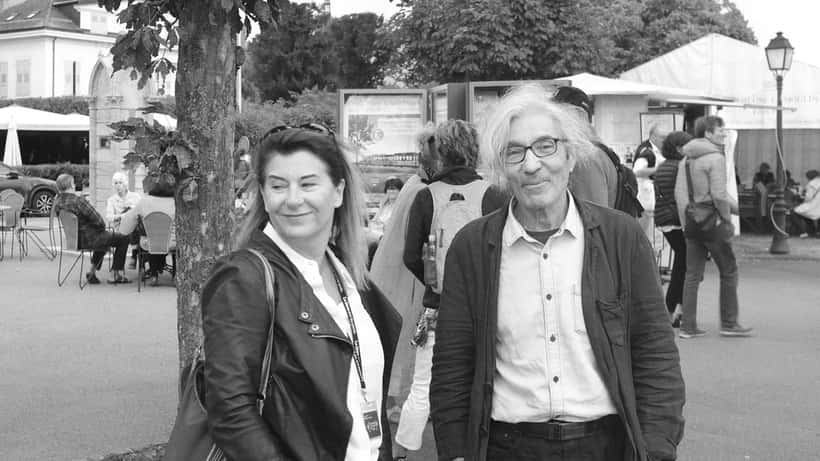
Boualem Sansal, the 81-year-old Franco-Algerian novelist, was inducted into the Royal Academy of French Language and Literature of Belgium on April 25, 2026 — just months after being released from an Algerian prison where he had spent over a year on charges of "undermining national unity." The same day, he told French television that he intends to leave France entirely: "La France, c'est fini pour moi." He cited his intention to move to Belgium or Switzerland and announced plans to sue Algerian President Tebboune personally in court.
His case — arrest, conviction, failed appeal, international diplomatic intervention, release, and now exile — has become one of the most visible illustrations in recent memory of what can happen to a dual national or prominent writer who travels to a country where their published work is deemed politically threatening. For Canadians — particularly writers, journalists, academics, and dual citizens — the legal lessons are worth understanding.
What Happened to Boualem Sansal
Sansal was arrested on November 16, 2024, upon arriving at Algiers airport. Algerian authorities charged him with undermining national unity, a criminal offence under Algeria's Penal Code that carries severe prison sentences. In March 2025, he was convicted and sentenced to five years imprisonment and a fine of 500,000 Algerian dinars.
His appeal was heard in July 2025. The Algiers Court of Appeal upheld the sentence in full. France's Foreign Ministry issued a formal statement describing the ruling as "incomprehensible and unjustified" and calling for a humanitarian resolution, according to the official record published by the French diplomatic service.
On November 12, 2025, following a personal appeal by German President Frank-Walter Steinmeier to Algerian President Tebboune, Sansal was pardoned and immediately transferred to a hospital in Berlin for treatment of prostate cancer — not to France, whose diplomatic leverage in Algiers had been constrained by ongoing bilateral tensions.
The legal ordeal continued after his release. In February 2026, Algeria revoked Sansal's Algerian nationality — a move widely interpreted as punitive, timed shortly after his election to the prestigious Académie française in January 2026 with 25 of 26 votes. He is now solely a French national. As of April 2026, he has announced both his intention to sue President Tebboune personally and his plan to relocate out of France.
Why Speech Laws Abroad Create Real Risk for Canadians
Canada's Charter of Rights and Freedoms guarantees freedom of expression under Section 2(b). But that constitutional protection ends at the Canadian border.
What many Canadians — and especially those with dual citizenship or professional ties to other countries — do not fully appreciate is that their existing published work, social media presence, or academic writing can create genuine legal liability the moment they enter a jurisdiction with different laws. Algeria's Penal Code contains provisions that allow prosecution of individuals for content deemed to threaten national security, national unity, or the state. Similar laws, with varying degrees of enforcement, exist across many countries in the Middle East, North Africa, Central Asia, Southeast Asia, and parts of sub-Saharan Africa.
For a novelist whose books critique a political system, this risk may seem obvious. For a journalist, blogger, academic researcher, or even a social media commentator who has published critical opinions about a foreign government, the risk may appear theoretical — until it is not. Sansal had visited Algeria many times without incident before his arrest. The arrest came without warning.
Dual Citizens Have Limited Consular Protection
A critical legal reality for Canadian dual nationals: if you hold citizenship in both Canada and a country that does not recognize dual citizenship, Canada's consular services may be severely limited in assisting you if you are arrested in your other country of citizenship.
Algeria, like a number of states, considers a dual national who also holds Algerian citizenship to be exclusively Algerian when on Algerian soil. In such circumstances, the Canadian Embassy in Algiers has no automatic right of consular access — no right to visit you in detention, no formal standing to negotiate on your behalf. The Government of Canada's official travel advisory for Algeria explicitly notes that Canadians who are also Algerian nationals may receive limited consular assistance, and that the situation in the country carries elevated risk for travellers who hold dual citizenship.
Sansal held French and Algerian citizenship simultaneously. France's ability to intervene on his behalf was significantly constrained for exactly this reason — it required a third country's diplomatic engagement, Germany's, to secure his release. The outcome was fortunate. Many less prominent cases do not reach that resolution.
For Canadians who hold dual citizenship in countries with similar frameworks — particularly those in the MENA region, Central Asia, or elsewhere where dual citizenship is not formally recognised — understanding this gap in consular protection before travelling is essential, not optional.
What a Canadian Lawyer Can Do Before You Travel
A lawyer specialising in international law or immigration can provide practical advice before you travel to a high-risk jurisdiction. That preparation typically covers several areas.
Pre-travel risk assessment. This involves a review of the legal framework in your destination country, specifically around speech laws, national security legislation, and any extradition treaty arrangements with Canada. Your publications, social media history, academic work, and professional affiliations may all be relevant inputs.
Dual citizenship mapping. A lawyer can clarify your legal status in your other country of citizenship and the precise limits of Canadian consular protection that apply in your specific situation — which varies materially depending on the country.
Document and asset preservation. A lawyer can advise on what documentation should remain in Canada and what powers of attorney or emergency instructions to put in place for family members before you travel.
Emergency contact protocols. A lawyer can establish clear instructions for people in Canada about what to do if you are detained abroad — which Canadian government channels to contact, what the realistic timeline looks like, and which advocacy organisations such as PEN International to alert immediately.
A Real Risk for Canadian Writers and Journalists
Canada has a significant community of writers, academics, and journalists with professional or personal ties to countries where freedom of expression is more restricted. Many travel routinely and have never had a problem.
But the legal mechanisms that enabled Sansal's arrest in November 2024 — the broad "national unity" charges, the speed of detention at a port of entry, the limitation on consular access — exist in dozens of countries that Canadians visit for family, professional, or research purposes. His case is extreme in its visibility. The underlying legal infrastructure is not unique to Algeria.
For Canadian writers, journalists, academics, and dual citizens planning travel to countries with significant speech or press restrictions, a consultation with a Canadian lawyer who specialises in international law is not an overreaction — it is due diligence. A legal advisor through Expert Zoom can review your specific risk profile, clarify your consular protection situation, and help you travel better prepared.
This article does not constitute legal advice. Consult a qualified lawyer for guidance specific to your circumstances before travelling abroad.
