 Emilie Wang
Baisakhi — one of the most significant Sikh religious observances — falls on Tuesday, April 14, 2026. Hundreds of thousands of Canadians across the country are marking the occasion, following a weekend of major parades in Vancouver and anticipation of the Khalsa Day celebration in Toronto on April 26. But for many workers across Canada, a question arises every year: am I entitled to time off for Baisakhi, and does my employer have to pay me?
Baisakhi 2026: A Major Celebration Across Canada
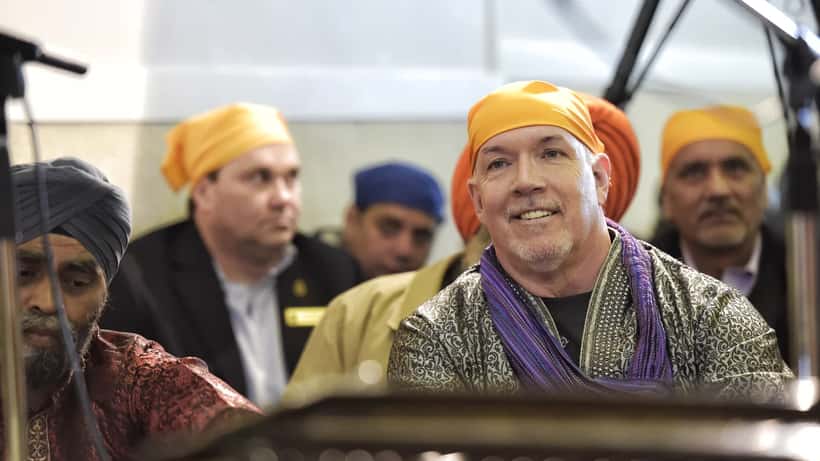
The Vancouver Vaisakhi Parade, organized by the Khalsa Diwan Society at the Ross Street Temple, drew up to 250,000 attendees this past Saturday, April 11 — making it one of Vancouver's largest single-day festivals. In Toronto, the Khalsa Day Parade is scheduled for April 26, running from Exhibition Place to City Hall with an expected start at 1:00 PM, continuing a tradition that makes it Canada's third-largest parade. April has also been designated Sikh Heritage Month in Canada, reflecting the size and cultural contribution of the country's Sikh community.
For Sikh employees, April 14 is not optional. Visiting a gurdwara, participating in a Nagar Kirtan, and observing langar are religious obligations, not preferences. And under Canadian human rights law, that distinction matters enormously.
The Legal Framework: Duty to Accommodate
Every province and territory in Canada has human rights legislation requiring employers to accommodate employees' religious beliefs and practices. At the federal level, the Canadian Human Rights Act applies to federally regulated industries including banks, airlines, and telecommunications. In Ontario, the Ontario Human Rights Code is the governing statute; British Columbia, Alberta, Quebec, and other provinces have equivalent protections.
The legal obligation is called the duty to accommodate, and it requires employers to provide time off for religious observances — even those that are not statutory holidays — up to the point of undue hardship. This is a high threshold. In most circumstances, allowing a single employee to swap shifts, use a vacation day, or take an unpaid day off does not constitute undue hardship.
According to the Ontario Human Rights Commission's policy on creed and religious observances, employers must explore accommodation options including:
- Special or compassionate paid leave
- Scheduling changes or shift swaps
- Use of lieu time earned for working statutory holidays
- Compressed workweek arrangements
- Simple day substitution with another employee
Refusing to provide any accommodation for a religious holiday observance is discriminatory under Canadian law. An employer who denies a request without exploring any of the above options exposes itself to a human rights complaint.
Does Your Employer Have to Pay You?
Here is where it gets more nuanced. The duty to accommodate does not automatically mean paid time off. In most provinces, religious holidays beyond the standard statutory list do not trigger mandatory pay. An employer may offer unpaid leave as the accommodation — and in many cases, that satisfies the legal obligation.
Ontario stands as a partial exception: it requires that two Christian holidays (Christmas Day and Good Friday) be paid. No equivalent requirement exists for Baisakhi, Eid al-Fitr, Diwali, Yom Kippur, or other non-Christian observances under current provincial law — a gap that human rights advocates have called out as creating an unequal playing field for workers of non-Christian faiths.
However, many collective agreements and employer policies provide paid personal days or float holidays precisely for this purpose. Employees who have already used such days, or who work in federally regulated sectors, may have additional entitlements worth checking.
What If My Employer Refuses?
If an employer denies a request for religious accommodation without a credible undue hardship justification, the employee has several avenues:
1. File a human rights complaint. Provincial human rights tribunals and the Canadian Human Rights Tribunal accept complaints alleging failure to accommodate religious observances. These processes are free to the complainant and can result in remedies including compensation and policy changes.
2. Contact an employment lawyer. A qualified employment lawyer can assess whether the denial amounts to a breach of the applicable human rights code and advise on options including a formal complaint or negotiated resolution.
3. Consult a union representative. Unionized employees should review their collective agreement and file a grievance if applicable.
The practical barrier is that most employees do not know their rights, and employers sometimes rely on that knowledge gap. With Baisakhi arriving tomorrow, April 14, it is worth knowing that the law is on the side of employees who make good-faith requests.
Employers: What Good Accommodation Looks Like
For employers, Baisakhi is also a practical planning moment. Best practice includes:
- Publishing your religious accommodation policy and making it easy to find in your employee handbook
- Training managers on how to handle religious accommodation requests without inadvertently denying them
- Building flexibility into scheduling during known religious observance periods (Eid al-Fitr, Diwali, Holi, Baisakhi, Rosh Hashanah) to reduce last-minute conflicts
- Documenting requests and responses to demonstrate good-faith engagement with accommodation obligations
Employers who handle accommodation requests well build more trusting workplaces and reduce the risk of human rights complaints — both of which have measurable business value.
Know Your Rights Before April 14
If you are a Sikh Canadian planning to observe Baisakhi tomorrow and you are uncertain whether your employer's position on your request is lawful, the Ontario Human Rights Commission's guide on religious accommodation provides a clear explanation of rights and employer obligations. Equivalent guidance is available from human rights commissions in every Canadian province.
Employment and human rights law can be complex, especially when workplace policies do not align cleanly with legal obligations. If you face pushback from your employer, consulting an employment lawyer for a brief review of your situation can clarify your options quickly — and may cost far less than you expect.
Disclaimer: This article provides general legal information, not legal advice. Employment and human rights law varies by province. Consult a qualified employment lawyer for advice specific to your situation.
