 Julia Vachon
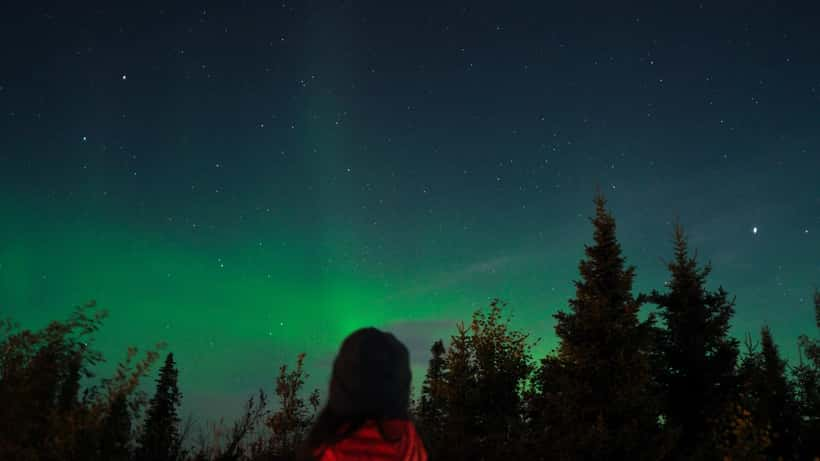
A rare G2-class geomagnetic storm struck Canada in the first week of October 2026, painting skies from Yellowknife to southern Ontario in curtains of green and violet. Triggered by twin M1.4-class solar flares from Active Region 4549 on October 6, the event sent aurora chasers scrambling — and renewed investor interest in Canada's fast-growing northern lights tourism sector. But experts warn that the rush to buy into a "can't-miss" aurora lodge or tour operation carries financial risks that most Canadians have not planned for.
The Aurora Economy Is Real — and Growing
This is no longer a niche hobby economy. According to the Government of Canada, the federal agency CanNor committed $2,209,505 in June 2026 to eight projects supporting tourism infrastructure across the territories — with one Yukon initiative specifically expanding a micro-grant program for new tourism businesses. The investment reflects what territorial governments have been documenting for years: aurora borealis tourism is one of the fastest-growing travel segments in the country.
The Northwest Territories alone recorded over $200 million in tourist spending in a single fiscal year during a previous peak, with aurora-seeking visitors rising 38 per cent year-over-year at the height of solar cycle activity. Whitehorse saw 31 per cent more international visitors in the first quarter of 2026 compared to the same period in 2025, according to territorial tourism reports. The current solar cycle, Solar Cycle 25, is tracking near its predicted maximum — meaning aurora activity through 2026 and into 2027 is expected to remain elevated.
That combination — high solar activity, rising visitor numbers, and active federal investment — has pushed a wave of Canadians to ask their financial advisors whether now is the right moment to buy into a northern tourism venture.
What the Expert Sees That You Don't
Wealth managers who specialize in small business and alternative asset investment see a pattern emerge every time a spectacular aurora event dominates social media. "There's an aurora effect," says the pattern — after a strong geomagnetic storm, inquiries about northern lodge investments spike within 48 hours. Most of those inquiries, however, are driven by emotion and spectacle rather than a clear-eyed read of the underlying business model.
The fundamental challenge with aurora tourism is that it is radically seasonal. The northern lights are only reliably visible from late September through late March — roughly 22 weeks of the year. Outside that window, most aurora-focused operations run at a fraction of capacity or shut down entirely. For an investor expecting stable returns, that creates a compressed income cycle that demands specific tax and cash-flow planning that a general investment account simply does not provide.
There is also the grant-access question. Federal programs like CanNor's territorial tourism micro-grants, and provincial programs in Yukon and Alberta, are available to operators — but only if the business is structured to qualify. A personal investment made through an informal handshake arrangement with a lodge owner, without proper incorporation and shareholder documentation, forfeits access to potentially $15,000 or more in non-repayable grant funding.
Finally, capital cost allowance (CCA) — Canada's tax depreciation system for business assets — can substantially reduce the taxable income from a profitable lodge investment. Snowmobiles, viewing platforms, thermal equipment, and accommodation infrastructure all qualify for CCA deductions. Without a wealth manager or tax advisor reviewing the structure upfront, most small investors leave these deductions unclaimed.
When an Aurora Lodge Investment Actually Makes Sense
The broader Canadian tourism industry has generated record returns, but aurora-specific investments sit in a distinct risk category. They perform well under three conditions: the solar cycle remains active (which forecasters expect through at least 2027), the business is diversified with a complementary summer offering (hiking, canoeing, fishing), and the investor has structured their ownership to access available tax and grant tools.
A qualified wealth manager can model the actual return profile of an aurora tourism investment across a five-year horizon, accounting for seasonality, weather variance (clouds can kill a full viewing season), and the reality that strong aurora events — like the G2 storm on October 6 — attract enormous media attention but do not necessarily translate into bookings for the following season unless marketing infrastructure is already in place.
A Concrete Scenario: Before and After Financial Advice
Consider a situation like Lisa's. She is 48 years old, lives in Ottawa, and has $180,000 in savings she wants to put to work. After seeing spectacular aurora photos flood her social feed following the October 2026 storm, she finds a Whitehorse lodge owner willing to sell a 30 per cent stake for $150,000. The lodge grosses approximately $82,000 in revenue over a four-month aurora season.
If Lisa invests without consulting a wealth manager: Her 30 per cent share of net income comes to roughly $12,400 after lodge operating costs. That income lands on her personal tax return, taxed at her marginal rate of approximately 33 per cent, generating a $4,092 federal and provincial tax bill. She has no summer revenue. In Year 2, a cloudy November cuts bookings by 22 per cent and her share drops to $9,700. She discovers the lodge does not qualify for the CanNor micro-grant because the business was registered as a sole proprietorship and her ownership was never formalized. Over five years, she nets approximately $58,000 before tax — just under 39 per cent of her original investment, with no clear exit pathway.
If Lisa books a $400 consultation with a wealth manager before signing: The advisor identifies three immediate changes. First, the lodge should incorporate as a corporation, and Lisa's stake should be documented as a shareholder agreement — this unlocks the small business deduction and the CanNor micro-grant eligibility. Second, Lisa's portion of lodge equipment (snowmobiles, thermal viewers, cabin heating systems) qualifies for a Year 1 CCA deduction of approximately $8,200, reducing her taxable share of income from $12,400 to $4,200 — a tax bill of roughly $1,386 instead of $4,092, saving $2,706 in the first year alone. Third, the advisor connects the owner to a summer-season tourism package through the same CanNor program, adding approximately $18,000 in warm-season revenue by Year 2, of which Lisa's share is $5,400.
Over five years, the structured version of the same $150,000 investment delivers approximately $86,400 in net income — a difference of $28,400 compared to the unadvised scenario, driven by $13,530 in CCA tax savings and $14,870 in additional revenue from summer diversification and grant-funded upgrades.
The $400 consultation fee paid back 71 times over. That is not a hypothetical — it reflects what properly structured small tourism investments look like in Canada compared to informal stake purchases.
What You Should Do Before the Next Aurora
The October 2026 storm has brought aurora borealis back into the national conversation at exactly the moment when solar activity, federal investment, and visitor demand are aligning in Canada's North. That alignment is real, and so is the financial opportunity — for investors who approach it the right way.
Before committing any capital to an aurora tourism venture, the Government of Canada's CanNor investment page provides a current list of funded programs worth reviewing. Then consult a wealth manager who has experience with small business structuring and seasonal income planning. They will help you map the actual five-year return, identify CCA opportunities, qualify for applicable grants, and structure your ownership so that a stunning night sky becomes a sound financial decision — not just a beautiful one.
Disclaimer: This article contains general financial information for educational purposes only. It does not constitute personalized financial advice. Consult a qualified financial advisor before making any investment decisions.
