 Megan Thériault
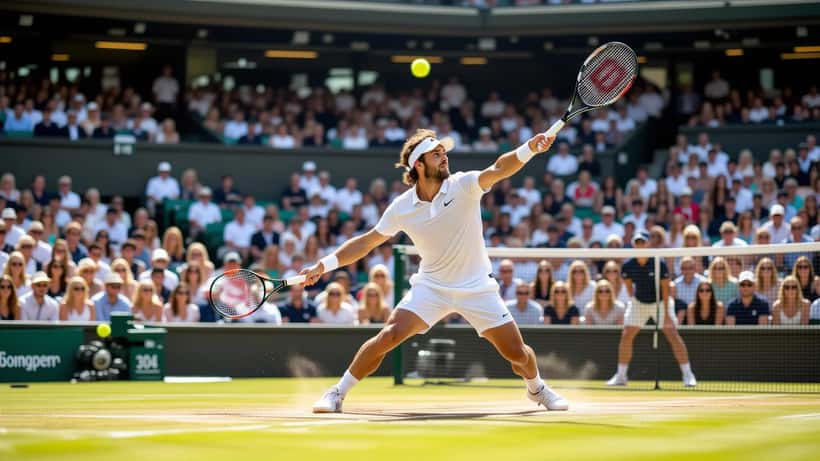
Arthur Fery has quietly become one of the most watched names on the British tennis circuit as the 2026 season unfolds. After leaving Stanford University to turn professional full-time, the young right-hander is navigating the same crossroads that has defined—or derailed—countless rising stars: converting junior and college promise into sustainable ATP Tour success. With a powerful serve, an aggressive baseline game, and a growing reputation for composure under pressure, Fery represents a new wave of athletes who blend elite academics with elite sport.
The Canadian audience following Fery’s progress is not limited to tennis fans. Sports agents, physiotherapists, performance psychologists, and financial planners all see his trajectory as a case study in how modern athletes build careers. The transition from college standout to touring professional is rarely linear, and the margins between a breakthrough season and a stalled ranking are thinner than the lines on a hard court. For every headline about a quarter-final run, there is an equally important story about load management, recovery protocols, tax residency, and brand positioning.
In early 2026, Fery’s schedule reflects a deliberate strategy. Rather than chasing every ranking point available on the lower-tier ITF circuit, his team has selected events that offer the best combination of surface fit, draw size, and ranking upside. That kind of tournament planning is increasingly data-driven. Analysts look at opponent handedness, surface speed, altitude, and even weather patterns to give a player the highest probability of advancing. The days when a coach simply circled events on a calendar are fading; today, success often depends on the quality of the advisory team behind the player.
One of the quiet challenges Fery faces is physical durability. The men’s tour is punishing, with back-to-back weeks on hard courts, clay, and grass. Even a slight imbalance in shoulder rotation or hip mobility can escalate into a season-altering injury. Sports medicine specialists emphasize that prevention is cheaper than rehabilitation; readers interested in the latest thinking on this can explore our overview of sports injury prevention and recovery. A well-structured prehab routine, combined with load monitoring and sleep tracking, can extend a career by several years. Young players who ignore these signals often pay the price in their mid-twenties, when the accumulated wear begins to outweigh natural athleticism.
The mental side of the game deserves equal attention. Turning professional means losing the structured environment of college tennis, where teammates, academic schedules, and institutional support provide stability. On the road, a player is responsible for travel logistics, nutrition, recovery, and the emotional rollercoaster of independent competition. Performance psychologists note that the players who make the jump successfully are often those who build routines and support systems before they need them. Visualization, breathing techniques, and regular debriefs with a mental-performance coach can prevent the confidence dips that follow early-round losses.
Off the court, the business of being Arthur Fery is just as important as the backhand. Endorsement interest tends to follow results, but it also follows narrative. A well-articulated personal brand—one that highlights values such as education, resilience, and sportsmanship—can attract sponsors even before a player cracks the top one hundred. Financial advisors who work with young athletes recommend separating short-term prize money from long-term wealth-building from day one; the same principles we covered in our look at young athlete wealth management apply here. The temptation to upgrade lifestyles after a few good paydays is real, and it has trapped many promising careers. Structuring income through the right entities, understanding tax treaties, and planning for life after tennis are conversations that should happen early, not after a first big contract.
Canada’s sports ecosystem offers several parallels. The country has produced tennis players who combined strong developmental programs with off-court professionalism to reach the top of the game. Canadian fans watching Fery’s rise can recognize the same markers: a clear technical identity, a team that communicates well, and a willingness to invest in the less glamorous parts of the job. The path from promising junior to established professional is not glamorous, but it is reproducible.
Looking ahead, the 2026 grass-court season will be a critical window. Fery’s game is well-suited to faster surfaces, and the prestige of the British summer events offers both ranking points and visibility. A deep run at a Challenger event or a qualifying berth at a major—especially during the grass swing that builds toward Wimbledon—would reshape his trajectory and attract the kind of attention that leads to better wildcards and stronger draws. For context on how experts read the season ahead, see our Wimbledon 2026 expert predictions. Grass rewards bold serving and net instincts, qualities that Fery has shown in flashes. The question is whether he can produce them consistently across an entire tournament.
For anyone building a career in a competitive field, Fery’s story carries lessons beyond tennis. Specialist advice matters. Whether the challenge is injury prevention, financial planning, or mental performance, the highest achievers tend to be those who consult experts before crises arrive. A tennis player’s entourage is essentially a micro-consulting firm, with each adviser contributing a narrow but critical slice of expertise. The same principle applies to entrepreneurs, executives, and creatives who operate in high-stakes environments.
As the 2026 season progresses, Arthur Fery will continue to test that principle in real time. His results will be measured in rankings and prize money, but the real scoreboard is the quality of the team and systems he assembles around himself. If those pieces fall into place, the trending topic of today could become the established name of tomorrow.
Those following his progress—or managing their own high-performance careers—can learn from the approach: define the goal, build the right support network, protect the body and mind, and treat every season as a long-term investment rather than a series of short-term sprints. In a marketplace of expertise, the athletes who separate themselves are usually the ones who ask for help before they think they need it.
