 Clara Dubois
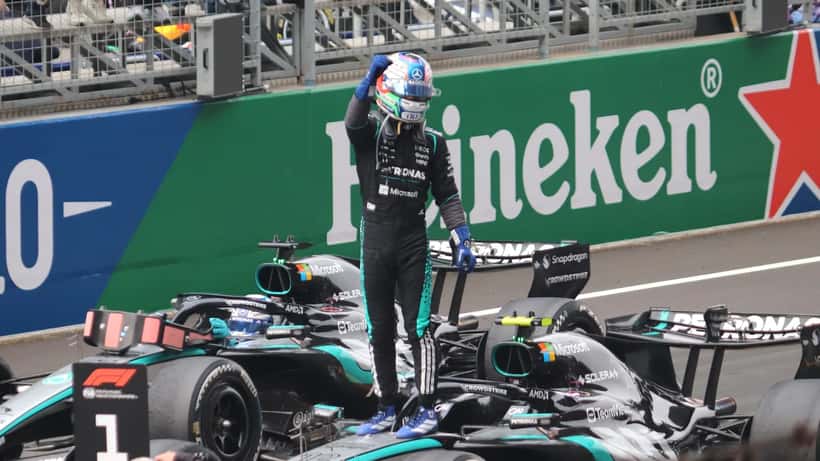
Kimi Antonelli became the youngest driver in Formula 1 history to lead the world championship after winning the Canadian Grand Prix on May 24, 2026. The 19-year-old Italian extended his advantage over Mercedes teammate George Russell to 43 points with his fourth consecutive victory. While racing fans celebrate his raw talent, Antonelli's rise reveals how artificial intelligence and data analytics have revolutionised the way motorsport teams identify, evaluate and develop young drivers.
Antonelli's journey from karting in Bologna to championship leader in just three years represents a new model of driver development. Mercedes fast-tracked him through junior categories after he collected five titles in Formula 4 and Formula Regional. His rookie F1 season in 2025 yielded three podiums and a seventh-place championship finish. By the 2026 season opener in Australia, he had already demonstrated race-winning pace. What enabled such rapid progression was not simply natural ability, but a systematic, technology-driven approach to talent identification.
How AI Identifies Racing Talent
Modern driver development programmes rely on data analytics platforms that process thousands of variables from every competitive session. These systems track lap times, sector splits, tyre degradation curves, fuel-adjusted pace and overtaking efficiency across multiple championships simultaneously. Machine learning algorithms identify patterns that human scouts might miss — a driver's ability to adapt to wet conditions, consistency under pressure, or improvement trajectory relative to age and experience.
Mercedes' junior programme uses simulator data alongside on-track performance. Young drivers complete structured sessions in motion platforms that replicate specific circuits, weather conditions and car setups. The simulator logs steering inputs, brake pressure traces, throttle application and gaze tracking. Data scientists compare these metrics against established benchmarks from current F1 drivers, generating predictive models of how a junior might perform in grand prix machinery.
Antonelli's simulator performances during 2024 and 2025 reportedly showed exceptional correlation with his on-track results. George Russell noted after the Chinese Grand Prix that Antonelli's "ability to learn from data and apply it immediately is what separates good drivers from great ones." That learning speed is measurable — and increasingly, it is measured by algorithms before a team principal ever watches a race.
Data-Driven Race Strategy
On race weekends, Antonelli benefits from real-time analytics that process terabytes of telemetry. Engineers monitor tyre temperature profiles, aerodynamic load distribution, energy deployment strategy and rival pace predictions. During the Japanese Grand Prix on March 29, 2026, Antonelli recovered from a poor start that dropped him to sixth place by leveraging data-driven pit stop timing. A safety car deployment allowed his engineers to optimise his strategy using probability models that calculated the optimal tyre change window.
The 2026 regulations have amplified the role of data in racing. New power units feature a more complex energy management system with a 50-50 split between combustion and electric power. Drivers must make real-time decisions about when to deploy boost energy based on battery state, track position and rival proximity. The steering wheel displays this information through interfaces designed by human-computer interaction specialists. Making the correct call at 300 kilometres per hour requires both instinct and data literacy.
Canadian Technology in Motorsport Analytics
Canada contributes meaningfully to the motorsport data ecosystem. Montreal and Toronto host technology companies that develop simulation software, telemetry platforms and machine learning tools used by professional racing teams. Canadian universities including McGill, the University of Toronto and the University of Waterloo produce graduates who work in data science roles across Formula 1, IndyCar and NASCAR.
The Government of Canada supports artificial intelligence research through programmes such as the Pan-Canadian Artificial Intelligence Strategy, which funds research at the Vector Institute in Toronto, Mila in Montreal and the Alberta Machine Intelligence Institute in Edmonton. These investments develop expertise in neural networks, reinforcement learning and predictive modelling — the same technologies that power modern driver development programmes.
Information Technology Careers in Motorsport
For Canadian students and professionals interested in motorsport, the career pathways increasingly run through computer science and data engineering rather than mechanical engineering alone. Teams now employ data scientists, simulation engineers, software developers and machine learning specialists in roughly equal numbers to traditional aerodynamicists and power unit designers.
A data scientist in Formula 1 might build models that predict tyre degradation based on track temperature, compound selection and driving style. A simulation engineer could programme virtual environments that test car setups without wind tunnel time. A software developer might build the real-time dashboards that strategists use during races. These roles require proficiency in Python, SQL, cloud computing platforms and statistical modelling — skills taught at Canadian technical institutes and universities.
When to Seek IT Expertise
The same data principles that identify racing champions apply to business and personal productivity. Canadian entrepreneurs running data-intensive operations — whether e-commerce platforms, financial services or logistics companies — need robust data infrastructure, predictive analytics and business intelligence tools. Attempting to build these capabilities without expert guidance often results in expensive technical debt, security vulnerabilities and missed opportunities.
A qualified information technology consultant can assess current systems, recommend cloud architecture, implement data pipelines and train staff on analytics tools. The investment typically pays for itself through improved decision-making, operational efficiency and competitive positioning.
Antonelli's 2026 season will test whether data-driven preparation can overcome experience. With four wins from five races and a commanding championship lead, the evidence so far suggests that technology has flattened the learning curve for young talent. The teenager from Bologna may be the first champion shaped as much by algorithms as by asphalt.
Consult an information technology or data analytics expert through Expert Zoom to implement predictive analytics, optimise your data infrastructure or build business intelligence systems tailored to your operational needs.
