 Elara Deschamps
When HBO's Euphoria Season 3 premiered on April 12, 2026, creator Sam Levinson made a striking choice: Fezco, the character played by Angus Cloud, is still alive in the story. "I couldn't keep him alive in real life but I could keep his character alive in the show," Levinson said. The tribute reignited attention on Cloud's death — and on the opioid crisis that continues to claim thousands of Canadian lives every year.
Who Was Angus Cloud and Why Is He Trending Now
Angus Cloud died on July 31, 2023, at his family home in Oakland, California. He was 25. The coroner confirmed an accidental overdose involving fentanyl, methamphetamine, cocaine, and benzodiazepines — a combination that has become distressingly common in what public health officials call "polysubstance" overdose deaths. Cloud had been struggling with grief following his father's death in the weeks before.
Euphoria Season 3 premiered nearly three years after his death, with the show's creative team dedicating the season to Cloud, fellow cast member Eric Dane, and producer Kevin Turen. Social media responses to the premiere have brought Cloud's story back into Canadian public conversation — and with it, renewed focus on a domestic crisis that has never stopped.
Fentanyl in Canada: The Scale of the Crisis
The numbers, updated by Health Canada in March 2026, are staggering. Between January and September 2025 alone, there were 4,162 apparent opioid toxicity deaths in Canada — 96% of them accidental. Fentanyl or fentanyl analogues were involved in 58% of those deaths.
Over the longer term, the toll is even more devastating: 55,032 Canadians have died from apparent opioid toxicity deaths since January 2016, according to the Public Health Agency of Canada's surveillance data. That is not a niche public health problem — it is a national emergency that has now claimed more lives than HIV/AIDS in its worst decades in Canada.
The crisis has a demographic pattern worth understanding. According to Health Canada's 2025 data:
- 74% of opioid overdose deaths are male
- The highest concentration is among adults aged 30–49
- 78% of deaths occur in British Columbia, Alberta, and Ontario
- In 2024, fentanyl was responsible for 75% of opioid-overdose deaths, representing a 32% increase since 2016
What makes fentanyl uniquely lethal is its potency and its invisibility. A dose 50 to 100 times more powerful than morphine, fentanyl is frequently used to cut street drugs without the buyer's knowledge. Heroin, cocaine, counterfeit prescription pills — virtually all illicit drug supplies in Canada are now considered potentially contaminated. This is why drug checking services have become a legitimate harm reduction tool, and why health officials emphasize that no use of an unregulated substance is completely safe.
The Polysubstance Reality
Angus Cloud's toxicology report — fentanyl combined with stimulants and benzodiazepines — reflects a pattern that Health Canada now tracks explicitly. In 2025, 70% of Canadian opioid overdose deaths also involved a stimulant, and a significant proportion involved benzodiazepines, which depress the central nervous system in ways that compound fentanyl's respiratory effects.
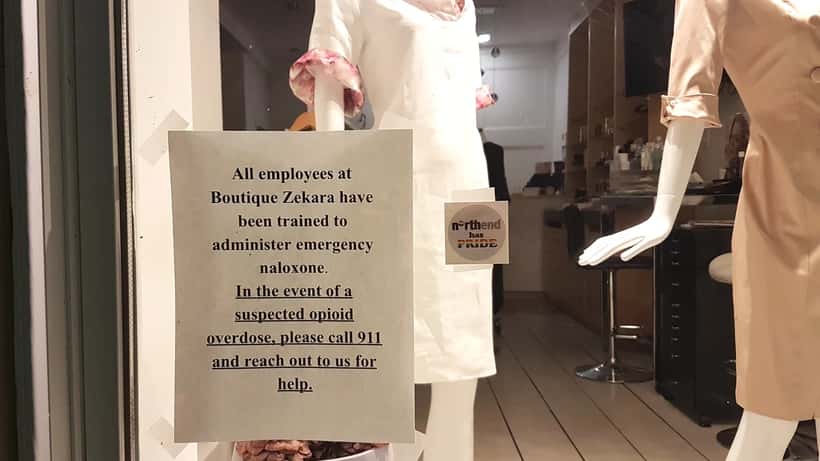
This matters clinically because it complicates the standard overdose response. Naloxone (Narcan), the opioid reversal medication widely available across Canada at no cost, reverses fentanyl's effects — but does not address stimulant or benzodiazepine toxicity. Multiple naloxone doses and immediate emergency medical care are almost always required in polysubstance overdose situations.
Public health nurses and addiction medicine physicians stress that recognizing the signs of overdose — slow or stopped breathing, blue lips, unresponsive — and calling 911 immediately remains the most important intervention any bystander can take. Canada's Good Samaritan Drug Overdose Act provides legal protection to anyone who calls 911 during an overdose, regardless of their own drug use at the time.
Seeking Help: Resources Across Canada
If you or someone you know is struggling with substance use, these national resources provide immediate, confidential support:
National Overdose Response Service (NORS): 1-888-688-6677 — a 24/7 overdose prevention service that can stay on the line during drug use and summon emergency services if needed.
Canada.ca substance use resources: The federal government's Get Help with Substance Use page connects individuals and families with provincial services, opioid treatment programs, and peer support networks.
Opioid agonist therapy (OAT): Medications like methadone and buprenorphine/naloxone (Suboxone) are evidence-based treatments for opioid use disorder. Physicians and addiction specialists can prescribe these treatments, which substantially reduce overdose risk and support long-term recovery.
When to Consult a Healthcare Professional
Substance use disorders exist on a spectrum, and the point at which casual or experimental use becomes a medical concern is not always obvious from the outside — or even to the person experiencing it. A family physician or addiction medicine specialist can conduct a structured assessment, discuss treatment options without judgment, and help navigate the complex landscape of available services.
This is especially relevant for families. A parent, sibling, or partner who suspects a loved one is using fentanyl or other opioids faces a genuinely difficult situation: how to raise the concern without triggering defensiveness, and how to find appropriate help quickly. Addiction medicine professionals are trained to support both the person using drugs and the people who love them.
The stories of Angus Cloud and the thousands of Canadians who die from opioid poisoning each year are not tragedies reserved for a particular background, income level, or community. According to Health Canada data, overdose deaths are now the leading cause of death for males aged 20–49 and females aged 20–39 in Canada. It is a public health reality that affects every province, every demographic, and increasingly, every family.
Getting help early — before a crisis — remains the most effective strategy. Expert Zoom connects Canadians with qualified health professionals, including physicians experienced in addiction medicine and mental health, who can provide assessment and guidance in a timely, confidential setting.
Disclaimer: This article provides general health information for educational purposes only. If you or someone you know is experiencing a medical emergency, call 911 immediately. For substance use support, contact a healthcare professional or one of the national resources listed above.
