 Maya MacDonald
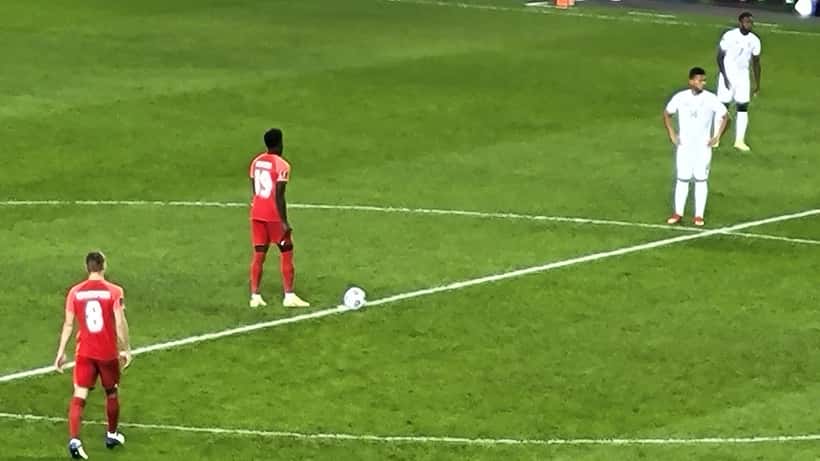
Bayern Munich and Canada left back Alphonso Davies returned to the pitch for Canada's national team training camp in early June 2026, more than 18 months after rupturing his anterior cruciate ligament during the 2024–25 club season. When asked about a World Cup comeback, the 25-year-old told reporters he was "happy to be back" but stopped short of committing to a date, deferring to his rehabilitation team.
For Canadian amateur athletes — and the parents of the roughly 750,000 youth soccer players registered with Canada Soccer — Davies' careful return path is more than a sports story. It is a real-time clinical case study in how an ACL injury that once ended careers is now navigated by a multidisciplinary team of orthopedic surgeons, physiotherapists, sports medicine physicians, and strength coaches.
What an ACL tear actually involves
The ACL is one of four major knee ligaments. A complete rupture, like the one Davies suffered, requires surgical reconstruction in most athletes under 35. The Canadian Orthopaedic Association estimates 50,000 ACL reconstructions are performed in Canada each year, with soccer responsible for roughly 28 percent of sport-related cases.
The standard procedure replaces the torn ligament with a graft — usually from the patient's own patellar tendon or hamstring. Recovery follows a predictable but unforgiving timeline:
- Weeks 0 to 2: pain management, swelling control, knee extension restoration
- Weeks 2 to 12: progressive range of motion, single-leg strengthening
- Months 3 to 6: jogging, plyometrics, sport-specific drills
- Months 6 to 9: cutting, pivoting, return to non-contact training
- Months 9 to 12+: return to competitive play, with criteria-based clearance
Davies, who underwent surgery in early 2025, is now in month 16. That timeline is conservative by elite-athlete standards — many players return at nine to ten months. The fact that his team has chosen to wait reflects a growing consensus among sports medicine specialists that early return correlates with re-injury risk.
The re-injury problem is real
A 2024 meta-analysis in the British Journal of Sports Medicine found that athletes who return to soccer within nine months of ACL reconstruction have a 23 percent risk of a second ACL injury within two years. That risk drops to 7 percent when return is delayed past 12 months and tied to specific functional benchmarks.
Davies has had three additional injuries in the second half of last season — exactly the pattern sports medicine doctors warn against. Repeated minor injuries on a recently reconstructed knee usually signal that proprioception, neuromuscular control, or quadriceps strength has not fully recovered.
For a parent watching a 16-year-old club player rush back from ACL surgery, the takeaway is uncomfortable but clear: time off the field is the single most modifiable risk factor for a second tear.
Who you should actually see
A sports medicine doctor coordinates the recovery; an orthopedic surgeon performs the reconstruction and clears return to play; a physiotherapist runs the daily rehabilitation. In Ontario alone, more than 4,200 registered physiotherapists list sports rehabilitation as a clinical focus, but only a fraction have ACL-specific experience.
The Canadian Academy of Sport and Exercise Medicine maintains a directory of credentialed sport medicine physicians, and the Public Health Agency of Canada injury prevention page lists publicly funded screening resources for youth athletes.
A specialist can deliver three things a general practitioner usually cannot:
- A criteria-based return-to-sport assessment using validated tests like the Limb Symmetry Index
- A periodized strength program that progresses safely from rehabilitation to performance
- Honest conversations about whether a season should be missed entirely
For OHIP-covered consultations, a referral from a family doctor is typically required. Private clinics offer faster access but cost CAD 150 to 300 per session, depending on the province and the practitioner's credentials.
Insurance and provincial coverage
ACL reconstruction surgery itself is covered by all provincial health plans. Physiotherapy coverage varies dramatically: Ontario offers limited publicly funded physiotherapy after hospital discharge, while British Columbia and Alberta require most patients to use private extended health benefits or pay out of pocket.
A typical post-surgical rehabilitation program runs 30 to 50 physiotherapy sessions over 9 to 12 months. At CAD 100 per session, the out-of-pocket cost for an uninsured patient can exceed CAD 4,500 before return to sport.
Many Canadian athletes use sport injury insurance through their provincial soccer association, which can cover up to CAD 5,000 in rehabilitation costs. Parents of competitive youth players should verify whether their child's registration includes this coverage before an injury occurs.
What Davies' return teaches young Canadian players
The most important number in Davies' rehabilitation is not his speed test or his vertical jump. It is the calendar. By waiting past the 12-month mark and prioritizing repeated functional testing, his team has given him the best statistical chance of a 10-year career instead of a recurring-injury cycle.
For any Canadian player or parent navigating an ACL diagnosis in 2026, the questions to ask a sports medicine specialist are concrete: What functional benchmarks must my child clear before returning? How many supervised rehabilitation sessions are planned? What is the documented re-injury rate at this clinic? A specialist who answers those questions clearly is the one worth seeing.
