 Victoria Stewart
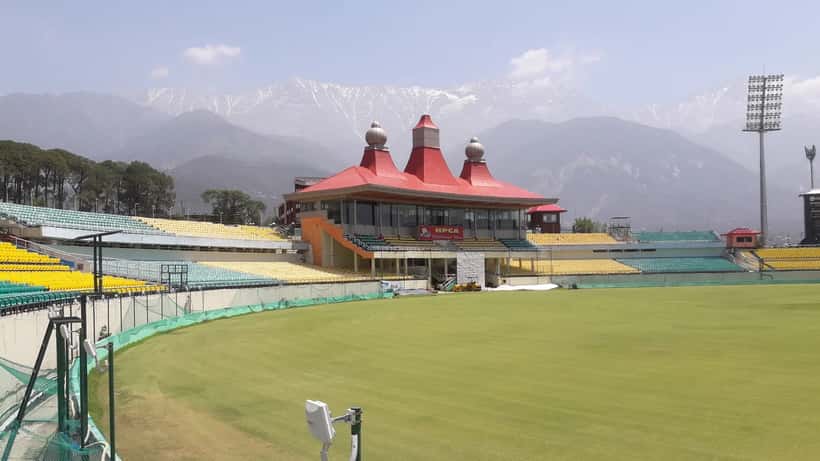
The first-ever bilateral ODI series between Afghanistan and India began June 13, 2026, at the rain-swept HPCA Stadium in Dharamsala. Shubman Gill won the toss and chose to bowl against Hashmatullah Shahidi's squad — days after India crushed Afghanistan by an innings and 300 runs in the only Test match. For Canadian fans, particularly the country's large South Asian diaspora, this series is historic. But the financial story behind the two squads is just as striking as the scorecards.
A Landmark Series — and a Staggering Pay Gap
This ODI series marks the first bilateral cricket engagement ever played between India and Afghanistan. It arrives with Rohit Sharma making history as India's oldest ODI player at 39 years and 44 days, surpassing Mohinder Amarnath's record set back in 1989. Rain delayed the toss in Dharamsala, adding suspense to an already charged atmosphere.
For cricket fans in Greater Toronto, Brampton, Surrey, and Calgary, these matches matter beyond sport. Canada is home to over one million South Asian-origin Canadians for whom India and Afghanistan represent cultural cornerstones. But the economic realities separating the two squads offer a financial lesson that applies well beyond the pitch.
According to the BCCI's official 2025-26 Annual Player Retainership announcement, India's Grade A+ cricketers — Rohit Sharma, Virat Kohli, and Jasprit Bumrah — receive ₹7 crore per year in central retainers alone, roughly $870,000 CAD. They also earn ₹15 lakh per Test appearance ($25,000 CAD), ₹6 lakh per ODI, and ₹3 lakh per T20I. Afghanistan's Grade A contracted players, meanwhile, receive between $700 and $1,000 per month — a maximum of $12,000 per year before match fees.
When $700 a Month Meets ₹18 Crore: The IPL Wildcard
The IPL complicates this picture — dramatically. Rashid Khan, Afghanistan's greatest cricketing export and one of the world's premier leg-spinners, fetched ₹18 crore from SunRisers Hyderabad in the IPL 2026 auction, roughly $2.6 million CAD for a single season. Noor Ahmad commanded ₹10 crore from Chennai Super Kings. AM Ghazanfar went to Mumbai Indians for ₹4.80 crore.
These sums are life-changing. For Rashid Khan, whose net worth has grown to an estimated ₹25-30 crore through IPL contracts, PSL fees, BBL appearances, and brand endorsements, the IPL transformed a career. But here is the financial reality that often goes unnoticed: IPL contracts are seasonal. They last one year, are subject to auction, and can be non-renewed on a franchise's whim. A player earning ₹18 crore this season may earn zero from the IPL next season — due to injury, form slumps, or simply being outbid. Meanwhile, Grade B Afghan national contracted players, earning $400 to $600 per month in domestic retainers, have no supplementary safety net if league income dries up.
Variable Income and Why It Creates a Wealth Planning Crisis
This extreme income volatility is not unique to cricket players. It is, in fact, one of the most common financial challenges facing Canadian households today.
Canada's South Asian communities are among the country's fastest-growing and most entrepreneurially active demographic groups. Many are self-employed business owners, freelance consultants, commissioned salespeople, real estate investors, or hold income sources across multiple countries. Statistics Canada data consistently shows that visible minority households experience higher income volatility than the national average — driven by contract work, irregular employment patterns, and international remittances.
Afghan-Canadian and Indo-Canadian families watching this series often navigate exactly these pressures. A business owner in Brampton might earn $120,000 in one year and $40,000 the next. A consultant in Vancouver might collect a $200,000 contract fee in spring and nothing for eight months. Without planning, both are susceptible to the same trap as the Grade B Afghan cricketer banking on next season's league invitation.
What Wealth Management Looks Like in Practice
Without a strategy, high but irregular income disappears into tax exposure, lifestyle inflation, and missed savings opportunities. The approach that works for volatile income — whether you're a cricketer, a contractor, or a small business owner — involves a few consistent principles.
In peak income years, maximizing RRSP contributions reduces taxable income and shelters compounding growth for retirement. Building a TFSA buffer during high-earning years creates a tax-free reserve to draw on during lean periods without triggering CRA attention. For Canadians with international income — from India, the UAE, Pakistan, or elsewhere — structured CRA reporting of global earnings is essential to avoid costly reassessments. And for families sending regular remittances abroad, a financial planning framework for athletes and variable-income earners can help model how much to send without compromising long-term Canadian retirement targets.
Planning Now, Not After the Next Auction
As Gill's men take on Afghanistan in Dharamsala today, the financial gap between the two squads illustrates what happens when income is left unplanned. Rashid Khan's ₹18 crore season is an extraordinary windfall — but franchise cricket creates no pension, no employer matching, no guaranteed income beyond the current contract. India's BCCI-structured players fare better, but even they face the finite window of a professional sports career.
For Canadians earning variable income, the logic is identical. The time to plan is not after the big year ends — it is during the big year. A licensed wealth management advisor can structure tax-efficient savings, model multi-year income scenarios, and help Canadian families make the most of high-earning periods before the next economic weather delay reshuffles the numbers.
This article provides general financial information only and does not constitute personal financial advice. Consult a licensed wealth management advisor for guidance specific to your circumstances.
