 Julia Vachon
Canadian searches for Aer Lingus spiked this week as travellers locked in summer 2026 fares to Ireland, with the airline listing return seats from Toronto (YYZ) and Montreal (YUL) from around CAD 2,109 for late-August departures. But the ticket price is only the first number that matters. The bigger, quieter cost of an Irish holiday hides in how you pay for everything once you land — and most Canadians hand over 2.5% to 7% more than they need to without ever seeing the charge.
Aer Lingus runs its direct Dublin–Toronto service (flight EI126) six days a week, roughly a seven-hour-and-fifteen-minute hop, with additional Canadian departures from Montreal and connections through Ottawa and Vancouver. Demand is real, and the fares are firm. That makes this the right moment to plan the part of the trip nobody markets: your money.
The fee you never agreed to
Two separate charges quietly inflate what you spend in euros. The first is the foreign transaction fee. Most Canadian credit cards add 2.5% to every purchase made in a non-Canadian currency, according to guidance from major issuers such as CIBC. On a modest CAD 3,000 spent across a two-week trip — hotels, dinners, car rental, the Cliffs of Moher tour — that is CAD 75 skimmed off the top for doing nothing.
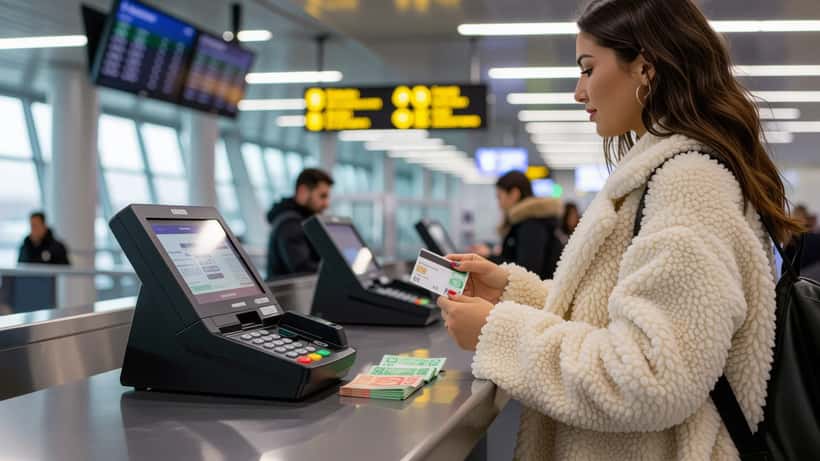
The second charge is worse because it looks like a favour. When a Dublin restaurant terminal or a Galway hotel front desk asks, "Would you like to pay in Canadian dollars?", that is dynamic currency conversion (DCC). Saying yes lets the merchant's payment processor set the exchange rate instead of Visa or Mastercard — and that rate is typically 3% to 7% worse than the network rate. Consumer analyses put the average DCC markup near 7%, with a documented range from 2.6% all the way to 18%.
Stack a 2.5% card fee on top of a 7% DCC markup and a single dinner can cost nearly 10% more than the menu price. That is money a currency-savvy traveller simply keeps.
Why a quick plan pays for itself
A wealth-management professional will tell you the same thing they tell clients about investment fees: small percentages, applied repeatedly, compound into real dollars. The fix here is almost free, but it has to be set up before you fly, not improvised at a payment terminal after a long flight.
The single most reliable move is to always decline dynamic currency conversion. When a terminal offers you a choice, pick euros — the local currency — every time. Your card network then converts at its own wholesale-style rate, which is close to the true market rate. Choosing Canadian dollars is the one button that guarantees you pay more.
The second move is choosing the right card before departure. A handful of Canadian cards waive foreign transaction fees entirely; the Scotiabank Passport Visa Infinite+ is a commonly cited example that removes the 2.5% surcharge on all non-Canadian purchases. For a family taking an Aer Lingus flight to Ireland and spending several thousand dollars over two weeks, a no-FX-fee card can pay for its annual cost in a single trip.
What to actually do before you fly
Treat your travel money like a small financial project with a checklist:
- Audit your wallet. Check the fine print on each card. If every card you own charges 2.5%, consider applying for a no-foreign-transaction-fee card at least a month before departure so it arrives and activates in time.
- Tell your bank you are travelling. A card frozen for "suspicious" Dublin activity on day one is an expensive, avoidable headache.
- Carry a small euro cushion in cash. Order euros from your Canadian bank before you leave rather than using an airport exchange kiosk, which typically posts the worst rates of the whole trip. A little cash covers taxis, tips and any small vendor who does not take cards.
- Skip the airport and hotel exchange desks. Their spreads are wide by design. If you must withdraw cash abroad, use a bank ATM and — you guessed it — decline the DCC offer the ATM screen presents.
- Screenshot your rates. Note your card's fee and your bank's cash-order rate so you can spot when a merchant terminal is quietly overcharging you.
Bigger trips deserve a real conversation
For most holidaymakers, the card-and-cash plan above is enough. But if your Irish trip is part of something larger — a multi-week European tour, a property viewing, an extended stay to visit family, or a move — the currency question becomes a genuine financial-planning one. Timing a larger CAD-to-EUR conversion, deciding whether to hold euros, and understanding how foreign spending interacts with your credit and cash flow are exactly the sorts of questions a wealth-management or personal-finance expert answers well. A short consultation before a five-figure trip can save far more than it costs.
The Financial Consumer Agency of Canada, the federal body that oversees banks and payment providers, publishes plain-language guidance on how credit card charges — including foreign currency conversion — actually work, and is a neutral place to check your own card's terms before you book. You can review its credit card information for Canadians directly.
The bottom line
Aer Lingus has made the Canada-to-Ireland route easy and, by long-haul standards, affordable in 2026. The seats from CAD 2,109 are the headline. The 2.5% card fee and the 7% dynamic currency conversion trap are the fine print — and they are entirely within your control. Decline DCC, pack the right card, carry a little cash, and you keep the money that would otherwise vanish one payment terminal at a time. For a bigger trip, spend twenty minutes with an expert first. The plane ticket you cannot discount; the currency fees, you can almost erase.
