 Dimitri
 What separates a trustworthy car mechanic from one that leaves you stranded with a bigger bill? In Canada, over 78% of vehicle owners say finding a reliable mechanic ranks among their top automotive concerns [Canadian Automobile Association, 2024]. Whether you drive a Honda Civic through Toronto traffic or a Ford F-150 across Alberta highways, these seven criteria will help you identify the right shop before you hand over your keys.
1. Red Seal Certification and Provincial Licensing
A Red Seal-certified automotive service technician has passed the Interprovincial Standards exam, confirming skills recognized across all Canadian provinces and territories. The Red Seal program, administered by the Canadian Council of Directors of Apprenticeship (CCDA), requires completion of a four-year apprenticeship plus 7,200 hours of supervised work before candidates can sit for the exam.
When you search for a car mechanic near me, ask the shop directly whether their technicians hold Red Seal endorsement. Provinces like Ontario and British Columbia mandate that automotive service technicians be licensed through their respective trades authorities. A shop staffed by certified journeypersons signals investment in competence — not just an air compressor and a set of wrenches.
How to verify: Check the mechanic's credentials through your provincial apprenticeship authority. In Ontario, that's the Ontario College of Trades database. In B.C., use SkilledTradesBC's public registry.
2. Transparent Written Estimates Before Any Work Begins
Canadian consumer protection laws require mechanics to provide written estimates before performing repairs. In Ontario, the Consumer Protection Act mandates that repair costs cannot exceed the estimate by more than 10% without the customer's explicit consent. Quebec's Consumer Protection Act includes similar provisions under sections 168–172.
A car mechanic near me who hands you a detailed written estimate — listing parts, labour hours, and applicable taxes — demonstrates both legal compliance and professional respect. Walk away from any shop that pressures you to authorize work verbally or refuses to itemize costs.
| Province | Estimate Rule | Overage Limit |
|---|---|---|
| Ontario | Written estimate mandatory | 10% max without consent |
| Quebec | Written estimate mandatory | Cannot exceed without approval |
| British Columbia | Disclosure required | Must notify before exceeding |
| Alberta | Written on request | Reasonable deviation only |
3. Genuine Online Reviews From Local Drivers
Star ratings alone mean little. Look for reviews that describe specific repairs — a timing belt replacement on a Subaru, a transmission rebuild on a Dodge Ram — rather than vague praise. Google Business Profile reviews are the most accessible starting point. Cross-reference with reviews on the Better Business Bureau (BBB) Canada page for any formal complaints.
Pay attention to how the shop responds to negative reviews. A mechanic who addresses complaints publicly, offers to re-examine the vehicle, or explains what happened shows accountability. Defensive or dismissive replies are red flags.
According to the Competition Bureau of Canada, businesses cannot pay for fake reviews or suppress legitimate negative feedback without disclosure. If a shop's profile shows only five-star reviews with identical phrasing, approach with caution.
What to Watch For in Reviews
- Consistent mentions of honest pricing and no surprise charges
- Descriptions of the mechanic explaining the problem clearly
- Repeat customers who mention returning over several years
- Photos of completed work or the shop environment
4. Warranty on Parts and Labour
A reliable car mechanic near me stands behind their work. Most reputable Canadian shops offer a minimum 12-month or 20,000-kilometre warranty on labour. Parts warranties vary by manufacturer — OEM (Original Equipment Manufacturer) parts typically carry a one-to-two-year warranty, while aftermarket parts range from 90 days to a lifetime depending on the brand.
Ask the shop to specify their warranty terms in writing before you approve repairs. If a mechanic hesitates to guarantee their own work, consider that a clear warning sign. Some national chains like Midas and Canadian Tire offer standardized warranty programs across locations, while independent shops set their own policies — neither approach is inherently better, but the terms must be documented.
Key takeaway: A shop that uses OEM or premium aftermarket parts and backs them with a written warranty is investing in your return business — not just a quick fix.
5. Specialization That Matches Your Vehicle
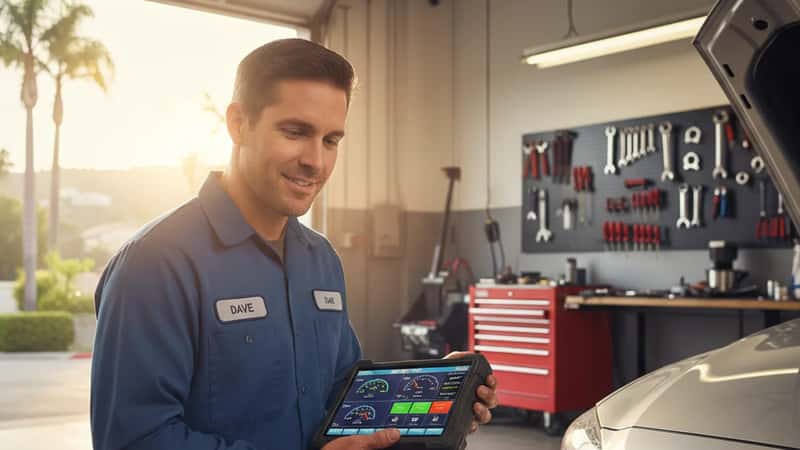
Not every garage handles every make and model equally well. A shop specializing in European vehicles (BMW, Volkswagen, Audi) will have different diagnostic tools and training than one focused on domestic trucks (Ford, Chevrolet, RAM). The Automotive Industries Association of Canada (AIA Canada) reports that modern vehicles contain over 100 million lines of software code, making manufacturer-specific diagnostic equipment essential for accurate troubleshooting.
When searching for a car mechanic near me, narrow your options by asking whether the shop regularly services your vehicle's make. A mechanic who works on Toyota Corollas daily will diagnose a P0171 lean code faster than a generalist seeing the model for the first time.
Steps to Confirm Specialization
- Call the shop and ask which vehicle brands they service most frequently
- Check whether they use manufacturer-specific scan tools (not just generic OBD-II readers)
- Ask about ongoing training — do technicians attend brand-specific courses or certifications?
6. Clean, Organized Shop With Modern Equipment
Walk into the service bay before committing to repairs. A professional garage keeps workstations organized, floors clean, and equipment calibrated. Look for a modern vehicle lift, a computerized alignment machine, and a dedicated diagnostic station. These are not luxuries — they are baseline tools for any shop handling 2020-and-newer vehicles.
Marcus Chen, who runs a three-bay independent garage in Mississauga, Ontario, puts it this way:
"Customers notice when the shop is clean. But what matters more is the equipment behind the bays. If we can't plug into the vehicle's CAN bus with up-to-date software, we're guessing — and guessing costs the customer money."
A cluttered, poorly lit shop with outdated equipment may charge less per hour, but the risk of misdiagnosis can cost you far more in repeat visits. Sarah, a Winnipeg commuter, learned this when a budget garage replaced her catalytic converter without scanning the upstream O2 sensor first. The new converter failed within two months because the root cause — a faulty sensor sending incorrect fuel mixture data — was never addressed. A properly equipped shop would have caught the issue in the initial diagnostic scan.
7. Fair Labour Rates Aligned With Regional Averages
Labour rates for car mechanics in Canada vary significantly by province and shop type. Understanding the local range prevents you from overpaying — or from choosing a suspiciously cheap shop that cuts corners.
A car mechanic near me charging within these ranges — adjusted for your province and urban density — is pricing competitively. Rates well below the average often mean uncertified labour or aftermarket parts of questionable quality. Rates far above may reflect dealership overhead rather than superior service.
Bottom line: Compare at least three shops before committing. Request itemized quotes for the same repair to see where the price differences lie — parts markup, labour hours, or diagnostic fees.
Disclaimer: The information on this page is provided for general informational purposes only and does not constitute professional mechanical or legal advice. Always consult a certified automotive technician for your specific vehicle needs.