
A flickering light or a dead outlet may seem minor, but electrical faults cause over 30,000 residential fires in Canada each year [Electrical Safety Authority, 2023]. Knowing how to find the right electrician near you — and what separates a licensed professional from a risky hire — can protect both your home and your budget.
This article compares the three main ways Canadians hire an electrician, breaks down real costs by province, and gives you a step-by-step checklist so the next call you make is the right one.
Licensed Electrician vs. Handyman: Why Credentials Matter in Canada
Every Canadian province requires electricians to hold a valid Certificate of Qualification (CQ) issued under the Red Seal Interprovincial Standards Program. A Red Seal electrician has completed roughly 9,000 hours of apprenticeship training and passed a national exam [Red Seal Program, 2024]. A general handyman, by contrast, is not licensed to perform electrical work — and hiring one for anything beyond changing a lightbulb can void your home insurance.
Key takeaway: In Ontario, the Electrical Safety Authority (ESA) must issue a permit for most electrical jobs. In British Columbia, Technical Safety BC plays the same role. Ask any electrician you contact for their permit number before work begins.
Verifying credentials takes less than five minutes. Search your province's licensing database online or call the regulating body directly. If an electrician cannot provide a licence number, move on.
Three Ways to Find an Electrician Near You in Canada
Canadians typically choose between three hiring channels, each with different trade-offs for speed, cost, and trust.
Online Expert Platforms
Platforms like Expert Zoom connect you with vetted professionals who answer questions in real time. You describe your issue, upload photos of the problem, and receive guidance — often within minutes. This option works well when you need a quick diagnosis before committing to an in-person visit.
Referrals and Local Directories
Word of mouth remains the most common route. Ask neighbours, colleagues, or your building manager for recommendations. Provincial trade associations — such as the Ontario Electrical League (OEL) or the Electrical Contractors Association of Alberta (ECAA) — also maintain searchable member directories.
Emergency Service Providers
For urgent issues like a burning smell, sparking outlets, or a total power loss, call a 24/7 emergency electrician. Expect to pay a premium: after-hours rates typically run 1.5 to 2 times the standard hourly fee.
| Channel | Speed | Cost | Verification |
|---|---|---|---|
| Online expert platform | Minutes | Low (consultation fee) | Profile-verified |
| Referral / directory | 1–3 days | Market rate | Self-verified |
| Emergency provider | Under 1 hour | 1.5–2× premium | Licence required |

What Electricians Cost Across Canadian Provinces
Electrician rates in Canada vary by province, job complexity, and urgency. The table below reflects 2025–2026 averages for a licensed journeyman electrician.
| Province | Hourly Rate (CAD) | Service Call Fee | Source |
|---|---|---|---|
| Ontario | $80–$130 | $75–$150 | ESA / HomeStars, 2025 |
| British Columbia | $85–$140 | $80–$125 | Technical Safety BC, 2025 |
| Alberta | $90–$145 | $80–$130 | ECAA, 2025 |
| Quebec | $70–$120 | $60–$100 | CMEQ, 2025 |
| Manitoba | $75–$115 | $65–$110 | Manitoba Hydro, 2025 |
A simple outlet replacement typically costs $150–$300 including parts. A full panel upgrade (100 A to 200 A) runs between $2,500 and $4,500 depending on the province and the condition of existing wiring [Canadian Electrical Code, Section 6, 2024].
Most electricians charge a flat service-call fee just to show up. Ask about this fee upfront — it is sometimes waived if you proceed with the repair.
Five Steps to Vet an Electrician Before You Hire
Follow this checklist before signing a contract or handing over a deposit.
- Confirm the licence. Ask for the electrician's Certificate of Qualification number and verify it with your province's regulatory body (ESA in Ontario, Technical Safety BC in British Columbia, RBQ in Quebec).
- Check insurance. A legitimate electrician carries at least $2 million in general liability insurance and Workplace Safety and Insurance Board (WSIB) coverage. Request a certificate of insurance.
- Get three written quotes. Each quote should itemize labour, materials, permits, and the expected timeline. Avoid anyone who gives only a verbal estimate.
- Read recent reviews. Look for consistent patterns across platforms — not a single glowing review, but a track record of on-time, on-budget work.
- Ask about permits. Any work that modifies wiring, adds circuits, or touches the electrical panel requires a permit in every province. Your electrician should pull the permit, not you.
When Rachel, a homeowner in Calgary, skipped step two, she discovered too late that her electrician had no insurance. A water heater installation went wrong, damaged the subfloor, and she absorbed the full $4,200 repair bill. The lesson: never assume — always verify.
Common Electrical Jobs and When You Need a Permit
Not every electrical task requires a permit — but most do. Here is a quick reference for the most common residential jobs.
| Job | Permit Required? | Typical Cost (CAD) |
|---|---|---|
| Outlet or switch replacement (same location) | No | $100–$200 |
| New outlet or circuit installation | Yes | $200–$500 |
| Panel upgrade (100 A → 200 A) | Yes | $2,500–$4,500 |
| EV charger installation (Level 2) | Yes | $1,000–$2,500 |
| Smoke/CO detector hardwiring | Varies by province | $150–$400 |
| Knob-and-tube rewire (full home) | Yes | $8,000–$15,000 |
Electric vehicle charger installations are rising sharply across Canada. Natural Resources Canada reports that the number of registered EVs surpassed 500,000 in 2024 [NRCan, 2024]. If you are considering a Level 2 charger, ensure your panel can handle the additional 40-amp circuit. Many older homes in Toronto, Montreal, and Vancouver still run on 100-amp panels and need an upgrade first.
If you have questions about whether your electrical issue requires professional attention, getting a quick expert opinion before booking a full appointment can save both time and money.
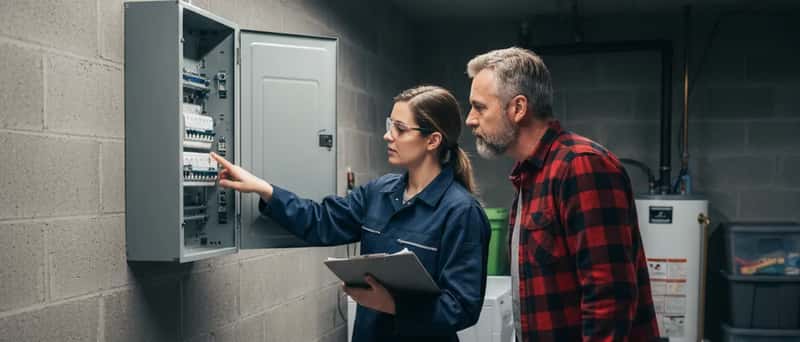
Red Flags That Signal an Unqualified Electrician
Spotting warning signs early prevents costly mistakes. Walk away from any electrician who:
- Refuses to show a licence or permit number. This is the single most reliable indicator.
- Offers a price dramatically below competitors. A quote 40% below market usually means cut corners, unlicensed workers, or unpermitted work.
- Asks for full payment upfront. Standard practice is a 10–30% deposit with the balance due on completion.
- Skips the inspection. After permitted work, the province sends an inspector. If your electrician discourages this step, the work may not be code-compliant.
- Cannot explain the scope of work. A competent electrician walks you through what will happen, why, and how long it will take — in plain language.
Unpermitted electrical work can surface during a home sale. In Ontario, the ESA can require homeowners to open walls for inspection if permits are missing, adding thousands in remediation costs [ESA Compliance Bulletin, 2024].
Disclaimer: The information in this article is provided for general guidance only and does not constitute professional electrical or legal advice. Always consult a licensed electrician and your provincial regulatory body for your specific situation.
